The Golden Eternity of a Boy King
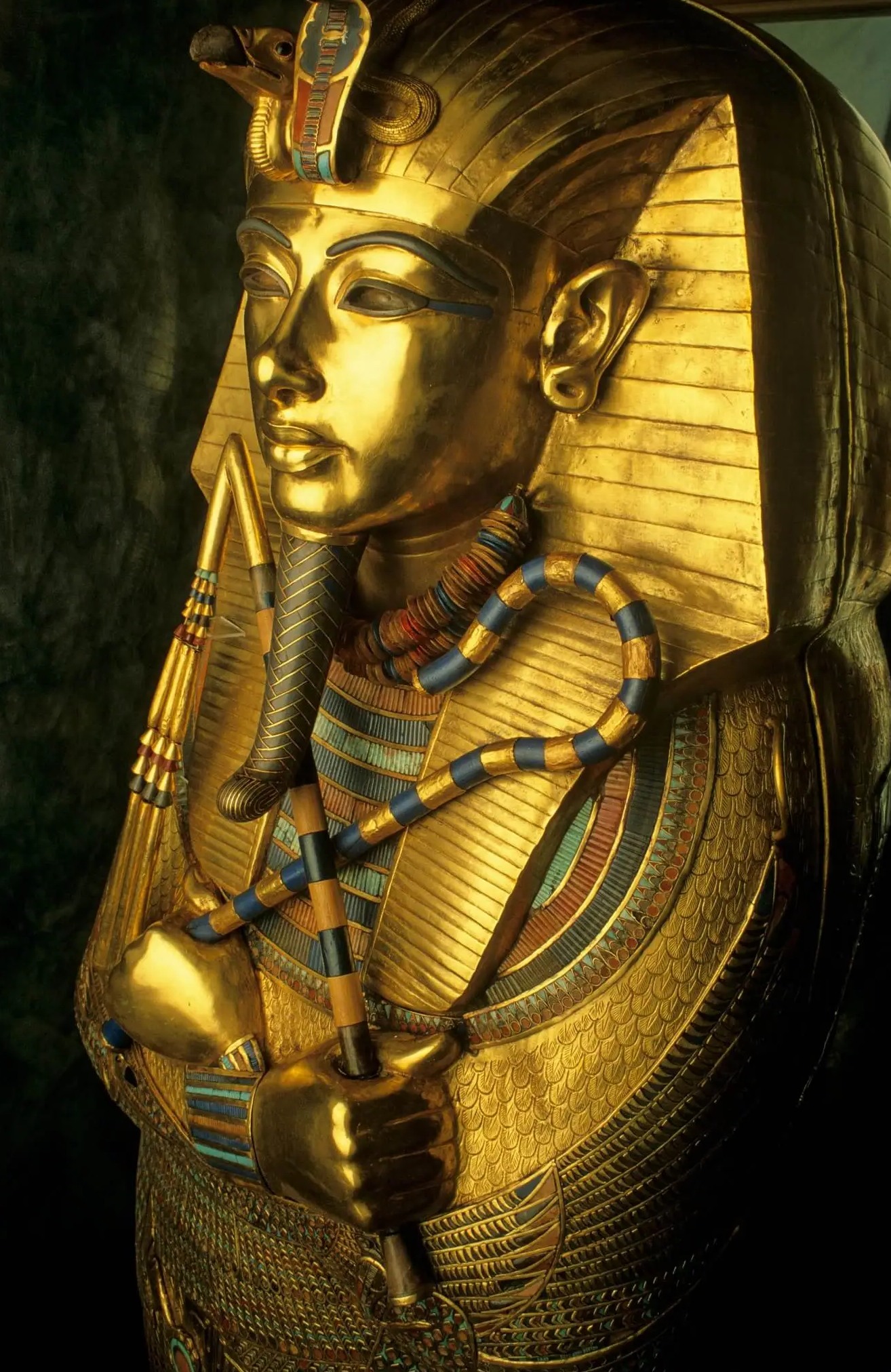
Innermost Coffin of Tutankhamun
c. 1332–1323 B.C.
Now in the Grand Egyptian Museum
Few objects in human history embody royal divinity as powerfully as the innermost coffin of Tutankhamun.
Crafted from solid gold and weighing more than 110 kilograms, this extraordinary masterpiece formed the final shell encasing the young king’s mummified body. Unlike the outer coffins — which were gilded wood — this one was hammered from precious metal itself. It was not merely ornamented with gold; it was gold.
In ancient Egyptian belief, gold was not valued solely for its rarity or beauty. It was considered the flesh of the gods — incorruptible, radiant, eternal. To encase the pharaoh in solid gold was to declare him transformed, no longer mortal, but divine.
The king is depicted in the form of Osiris, lord of resurrection. His arms cross over his chest, holding the crook and flail — symbols of kingship and divine authority. Inlays of colored glass and semi-precious stones trace intricate patterns across the broad collar and headdress, while protective goddesses spread their wings across the surface, guarding him for eternity.
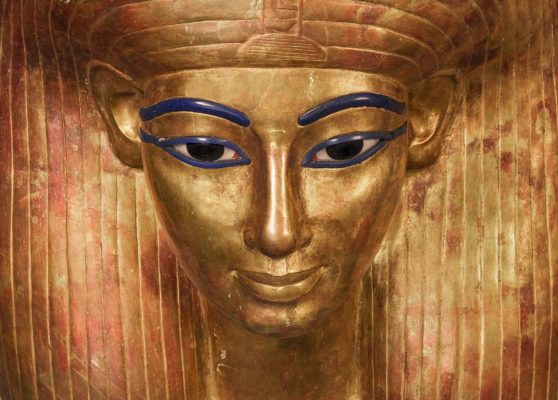
Despite Tutankhamun’s brief reign and early death, this coffin stands as one of the most breathtaking achievements of New Kingdom craftsmanship. Every contour reflects theological intent: the serene face, the idealized features, the gleaming surface designed to shine like the sun in the darkness of the tomb.
Discovered in 1922 within his nearly intact burial chamber in the Valley of the Kings, the coffin remains a symbol not only of royal splendor, but of Egypt’s profound vision of the afterlife — where death was not an end, but a passage into divine rebirth.
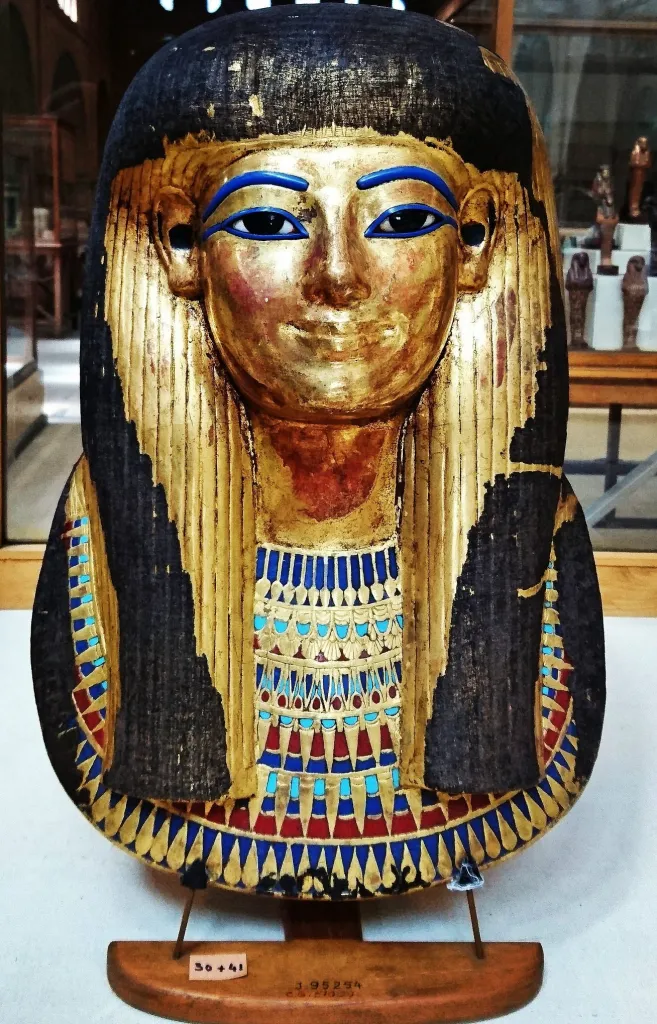
Today, housed in the Grand Egyptian Museum, it continues to captivate the world. In its luminous surface, we see more than a boy king — we see eternity forged in gold.