Faiyum Mummy Portrait of a Bearded Man
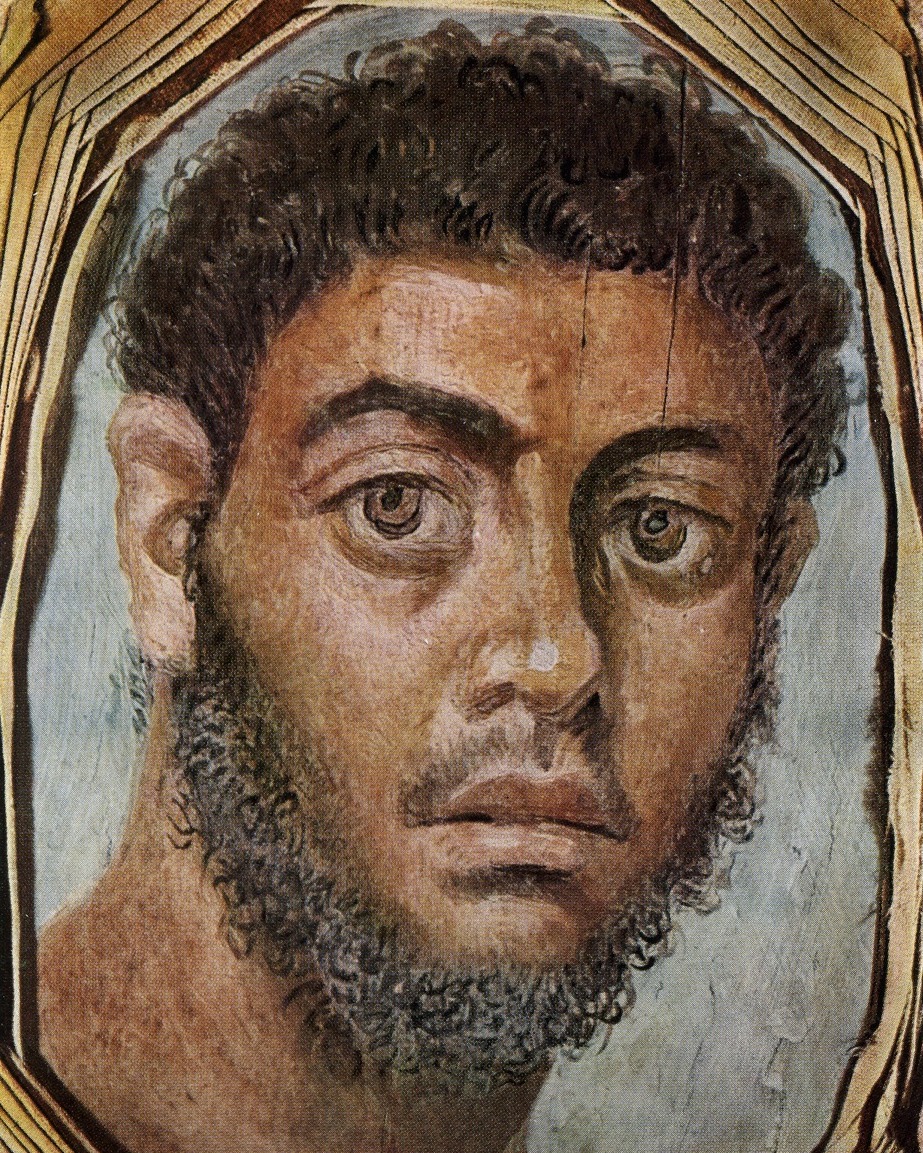
c. 1st–3rd century A.D.
Now in the Ägyptisches Museum
In the quiet gaze of this bearded man, we meet a face from nearly two thousand years ago — not stylized, not idealized, but startlingly human.
This portrait belongs to the remarkable group known as the Faiyum mummy portraits, created in Roman Egypt between the 1st and 3rd centuries A.D. Painted on wooden panels and placed over the faces of mummified individuals, these works fuse ancient Egyptian funerary tradition with Greco-Roman artistic realism.
The man’s features are rendered with careful attention: deep-set eyes that seem moist with life, a strong nose, textured beard, and subtle modeling of light and shadow across his cheeks. The encaustic technique — pigment mixed with hot wax — allowed artists to create luminous skin tones and remarkable depth, preserving expressions with vivid immediacy across centuries.
Unlike the timeless, symbolic faces of pharaonic coffins, this portrait captures individuality. It suggests status, personality, perhaps even temperament. His clothing and hairstyle reflect Roman fashion, while his burial practice remains deeply Egyptian — a powerful testament to cultural blending under Roman rule.
These portraits are among the earliest surviving examples of panel painting in the Western tradition. They feel intimate and direct, collapsing time. Standing before one, the distance between ancient and modern narrows; the eyes still meet ours.
In this bearded face, preserved by desert sands and devotion, we see not a distant relic — but a person who once lived, loved, and was remembered.