Grace in the Reeds 🎯🌾 Henuttawy, wife of Menna, accompanies her husband on a hunt in the marshes (detail)
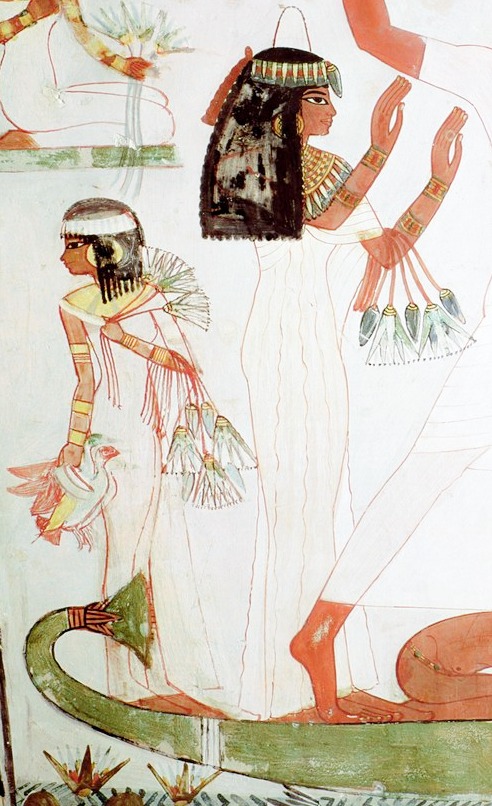
New Kingdom, 18th Dynasty, reign of Thutmose III–Amenhotep III, c. 1419–1370 B.C.
Theban Tomb 69 (TT69), Sheikh Abd el-Qurna, Thebes
In the vibrant marshlands of eternity, Henuttawy stands beside her husband, sharing in a moment that is both lively and symbolic.
The scene comes from the tomb of Menna, an overseer of fields during the flourishing reigns of Thutmose III and Amenhotep III. In this painted detail, Menna is shown hunting birds amid the papyrus thickets — a dynamic image of movement and skill — while Henuttawy accompanies him with elegant poise.
Marsh hunting scenes were not merely recreational depictions. In Egyptian belief, the marsh symbolized regeneration, fertility, and the triumph of order over chaos. By casting his throw-stick among flocks of birds, Menna asserts vitality and mastery — a promise that he will continue to thrive in the afterlife.
Henuttawy’s presence is equally meaningful. Gracefully dressed in fine linen, adorned with elaborate jewelry and a perfumed cone atop her wig, she embodies beauty, status, and conjugal devotion. Her steady proximity emphasizes partnership beyond death — the assurance that husband and wife would remain united in eternity.
The artistry of TT69 is renowned for its clarity, rhythm, and vivid detail: delicate birds flutter mid-flight, fish dart beneath transparent waters, and papyrus stalks sway with stylized precision. Life pulses through the composition, even though it was created for a tomb.
This is not merely a hunting scene — it is a declaration of abundance, harmony, and enduring love. In the painted marshes of Thebes, movement never ceases, and companionship never fades.