Power Cast in Blue Fire Glazed Faïence Inlays Depicting Subdued Enemies of Egypt
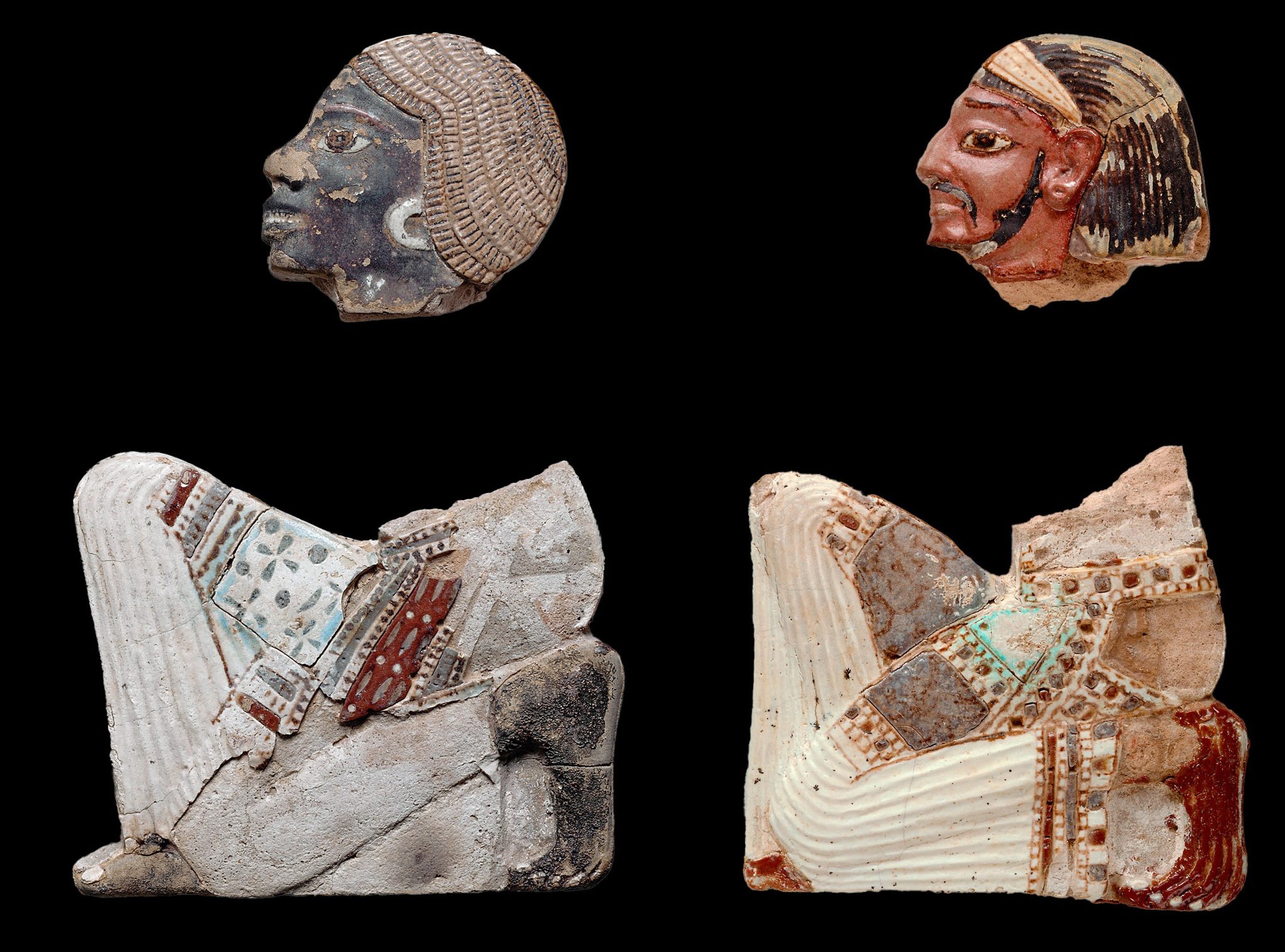
New Kingdom, 20th Dynasty, reign of Ramesses III, c. 1198–1166 B.C.
From the palace of Ramesses III, Tell el-Yahudiya (ancient Ney-ta-hut), Leontopolis
Now on display at the Kunsthistorisches Museum (INV 3897b, INV 3897d)
Brilliant blue and green, shimmering like captured sky, these glazed faïence inlays once adorned the royal palace of Ramesses III. Though small in scale, their message was monumental.
Each fragment depicts bound captives — foreign enemies shown in distinctive hairstyles and dress — symbolizing Egypt’s triumph over rival peoples. In Egyptian royal ideology, such imagery was not merely decorative; it was political theology. The pharaoh was the guarantor of cosmic order (ma’at), and the subjugation of enemies represented the restoration of harmony over chaos.
Faïence, with its luminous glaze, was associated with rebirth and divine radiance. By rendering defeated foes in this vivid material, the palace floors or walls would have visually reinforced the king’s dominance with every step taken across them. Power was literally underfoot.
Ramesses III, often considered the last great warrior pharaoh of the New Kingdom, faced invasions from the so-called Sea Peoples and conflicts along Egypt’s borders. These inlays formed part of a larger artistic program celebrating his victories and eternal authority.
Today, displayed far from the Nile in Vienna, the fragments still carry their ancient charge. In their glossy surfaces, we glimpse a world where art, politics, and cosmology were inseparable — and where even the smallest decorative piece proclaimed the might of a king.