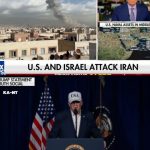
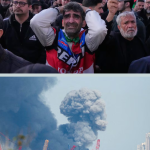
Middle East on the Brink: U.S. and Iran Trade Heavy Blows as Military Escalation Intensifies
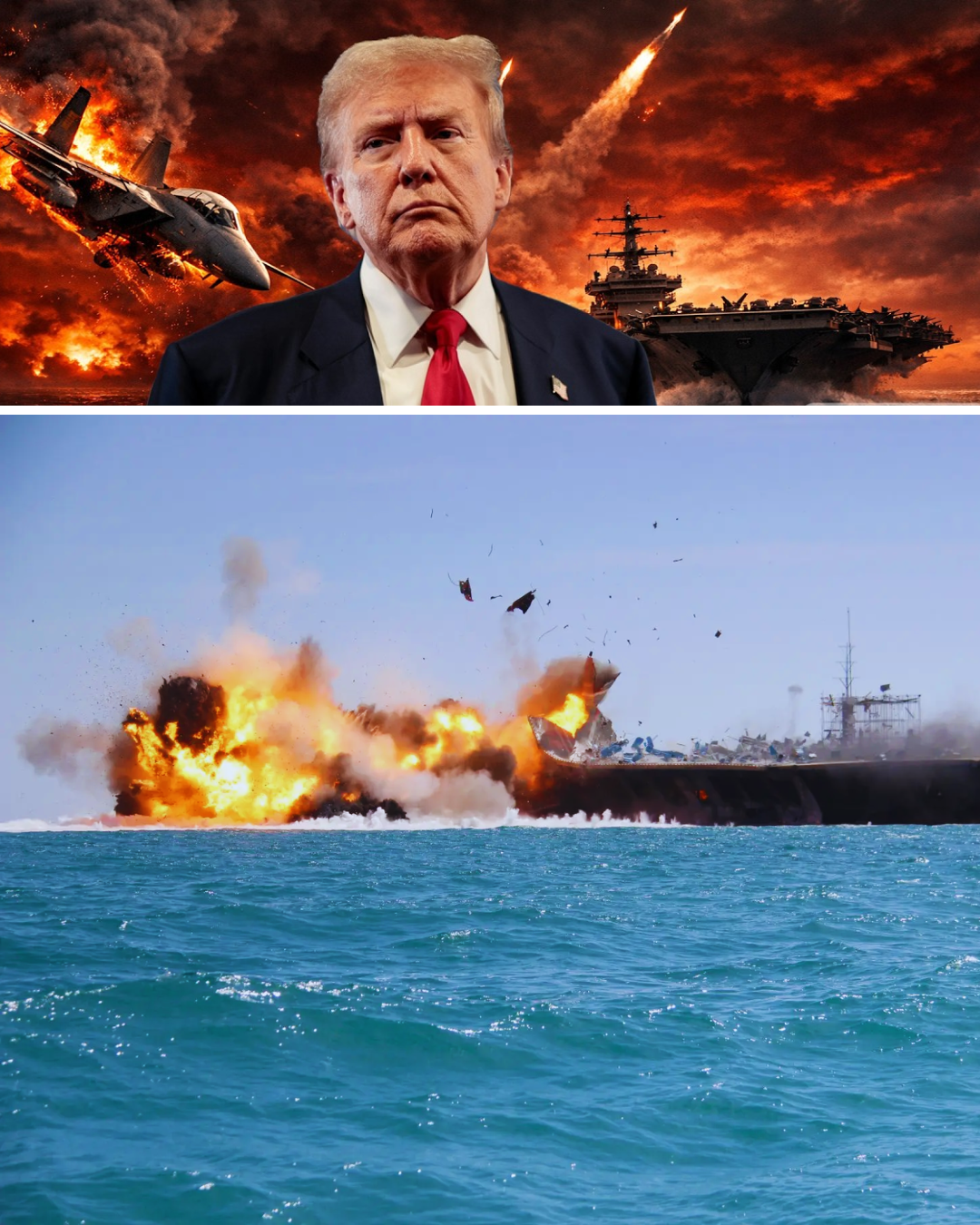
TEHRAN/WASHINGTON – The Middle East has entered a perilous new phase of direct military confrontation as Iran and the United States trade conflicting reports of significant combat losses. Following a series of coordinated strikes by U.S. and Israeli forces, Tehran has launched a widespread retaliatory campaign, claiming to have downed American fighter jets and inflicted heavy casualties on U.S. personnel, while Washington asserts it has effectively neutralized Iran’s naval and air defense capabilities.
Claims of Aerial Combat and Naval Retreats
The escalation reached a fever pitch on Tuesday when the Tasnim news agency, citing Iran’s Khatam al-Anbiya Central Command, reported that domestically produced Iranian defense systems had successfully shot down three U.S. fighter jets. Among the targeted aircraft was an F-15 fighter operating near the Iranian border. While the U.S. Department of Defense confirmed the loss of three aircraft and noted that the pilots had ejected safely, Washington offered a different narrative, attributing the crashes to “friendly fire” or technical errors within Iran’s own air defense network rather than a direct hit from hostile fire.
Simultaneously, Brigadier General Ali Mohammad Naeni, spokesperson for the Islamic Revolutionary Guard Corps (IRGC), announced the commencement of “True Promise 4,” a retaliatory operation. Naeni claimed that in the first 48 hours of the campaign, Iran had killed or wounded approximately 650 U.S. soldiers through a barrage of drone and missile strikes targeting bases and warships across the region. Most notably, Tehran claimed its operations forced the USS Abraham Lincoln carrier strike group to retreat from Iranian coastal waters toward the southeastern Indian Ocean.
U.S. Responds with Massive Firepower
In sharp contrast to Tehran’s narrative of victory, Admiral Brad Cooper of the U.S. Central Command (CENTCOM) painted a picture of devastating precision strikes against Iranian assets. According to Cooper, U.S. forces have struck nearly 2,000 targets within Iran using over 2,000 warheads. The Admiral stated that these strikes have severely degraded Iran’s air defense systems and destroyed hundreds of ballistic missiles, launchers, and unmanned aerial vehicles (UAVs).
Furthermore, the U.S. military claimed to have decimated the Iranian Navy. Admiral Cooper asserted that 17 Iranian vessels, including a submarine, had been destroyed, leaving no Iranian naval assets operational in the Persian Gulf, the Strait of Hormuz, or the Gulf of Oman.
Regional Spillover and Civilian Infrastructure
The conflict has rapidly transcended the borders of the primary combatants. Following the initial joint U.S.-Israeli strikes on February 28, Iran launched retaliatory attacks against military targets in Bahrain, Saudi Arabia, Qatar, Iraq, and the United Arab Emirates (UAE). However, regional governments have reported that these strikes quickly expanded to include civilian infrastructure, such as hotels, airports, and energy facilities.
In Qatar, Foreign Ministry spokesperson Majed al-Ansari warned that “all red lines have been crossed,” citing continuous attacks on sovereign territory and residential areas. While most Iranian missiles were reportedly intercepted, falling debris has caused fires and fatalities. Meanwhile, Iranian UAVs have managed to bypass some air defenses, causing chaos in regional commercial and travel hubs like the UAE.
Washington Mobilizes for Long-Term Conflict
As the intensity of the conflict drains munitions faster than anticipated, the Trump administration is moving to put the U.S. defense industry on a war footing. President Donald Trump is scheduled to meet with executives from major defense contractors, including Lockheed Martin and RTX (formerly Raytheon), to discuss accelerating production.
The Pentagon is reportedly preparing a $50 billion supplemental budget proposal to replenish stockpiles. Sources indicate that the conflict with Iran has consumed long-range missiles at a rate exceeding the supply recently provided to Ukraine. In a stern message to the industry, the administration has warned contractors to prioritize production over shareholder profits, threatening to terminate contracts with firms deemed inefficient.
Diplomatic Breakdown and Human Cost
The surge in violence follows what U.S. Secretary of State Marco Rubio described as a “total failure of negotiations.” Rubio stated that President Trump ordered the strikes because Iran was utilizing diplomatic talks as a cover while preparing for its own offensive. “Iran would have struck first if we didn’t,” Trump echoed, asserting that the preemptive strikes had neutralized the majority of Iran’s offensive capabilities.
Conversely, Tehran has accused Washington and Tel Aviv of “sabotaging diplomacy” by launching strikes just hours after the conclusion of discussions that both sides had previously described as “progressive.” Iranian Foreign Ministry spokesperson Esmaeil Baghaei warned that the consequences of this “lawlessness” would soon engulf the world, urging the international community to intervene.
The human toll of the four-day escalation is staggering. The Iranian Red Crescent reported at least 787 deaths within Iran, while fatalities have also been confirmed in Israel, among U.S. service members, and across several Gulf nations. As both sides remain entrenched, the international community watches with growing alarm at a conflict that threatens to reshape the geopolitical landscape of the 21st century.