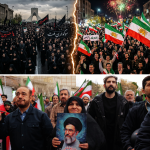
Washington Unveils Strategic Rationale for Decisive Military Intervention in Iran
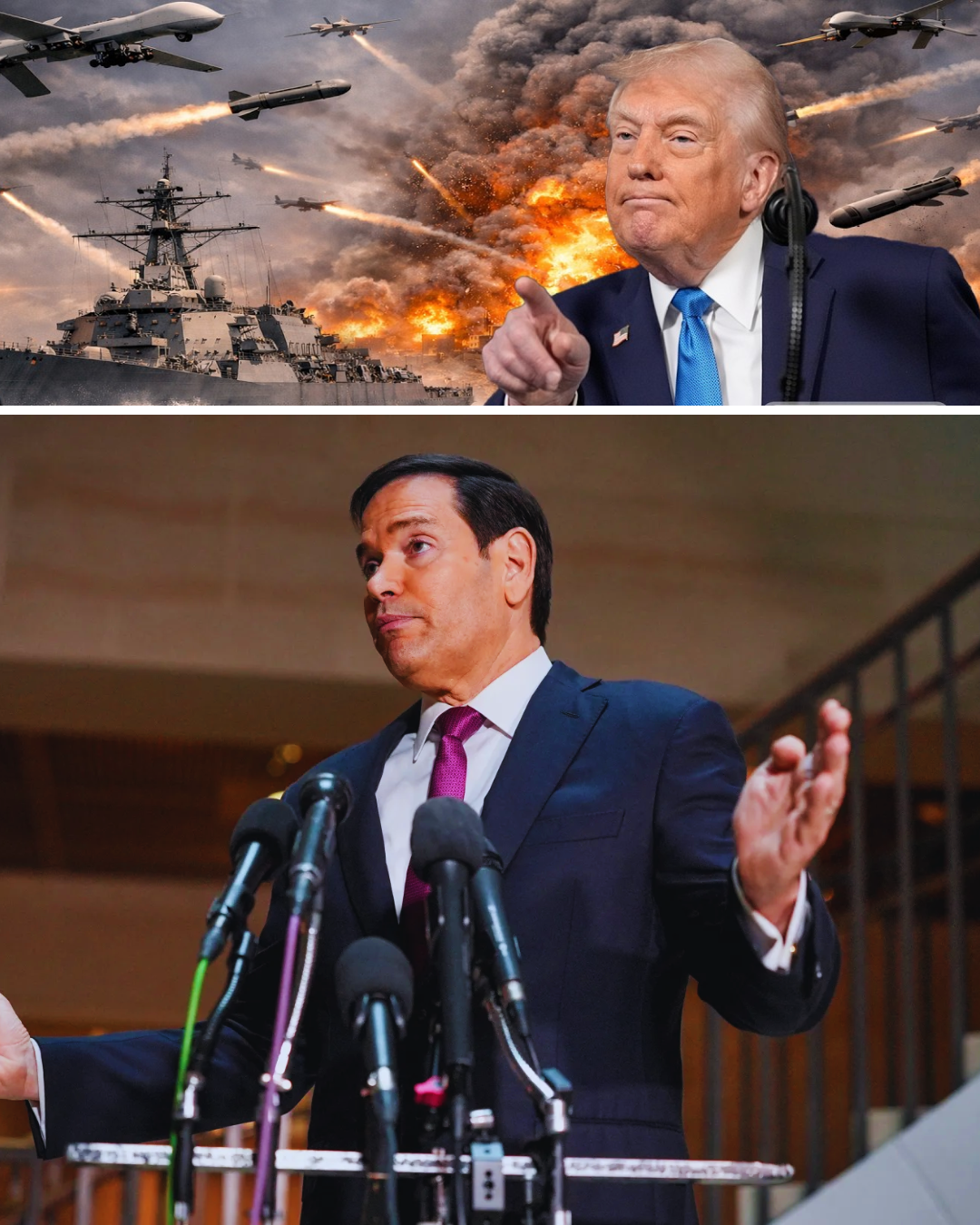
WASHINGTON D.C. — Breaking days of calculated silence, the United States government has finally revealed the strategic motivations and personal catalysts behind the unprecedented joint military campaign with Israel against the Islamic Republic of Iran. The operation, which has effectively decapitated Iran’s top leadership and neutralized its core military assets, marks the most significant shift in Middle Eastern geopolitics in decades.
The Pre-emptive Rationale
U.S. Secretary of State Marco Rubio, in a candid briefing on March 3, defended the decision to launch “Operation Epic Fury,” asserting that years of diplomatic efforts had not only failed but had been weaponized by Tehran. According to Rubio, the Iranian regime was utilizing negotiations as a smokescreen to advance its regional threats, leaving the U.S. with an “unacceptable risk.”
President Donald Trump further solidified this stance, characterizing the strikes as a necessary pre-emptive measure. Rejecting the notion that Israel had pressured Washington into the conflict, the President suggested that the U.S. had, in fact, been the driving force behind the synchronized offensive. “Iran would have attacked first if we hadn’t,” Trump stated. “I got him before he got me,” he added, referring to the death of Supreme Leader Ayatollah Ali Khamenei. The President linked the decision to recent threats against his life, framing the military action as a direct response to Iran’s long-standing policy of state-sponsored assassination and regional destabilization.
Decapitation and Military Neutralization
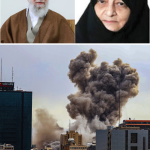
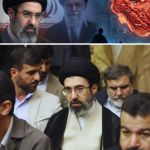
The campaign has resulted in a staggering loss for Iran’s command structure. U.S. Central Command (CENTCOM) confirmed that the strikes successfully targeted and eliminated not only the Supreme Leader but also several tiers of potential successors and high-ranking military officials. President Trump noted with grim irony that “the people we wanted are dead, and another group of leaders just died too,” suggesting that Tehran is struggling to find a stable figure to fill the power vacuum.
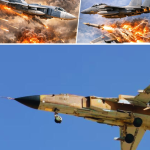
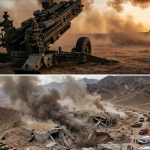
On the military front, CENTCOM reported the total destruction of 11 Iranian naval vessels in the Gulf of Oman. The U.S. military maintains that Iran’s air defense systems, naval capabilities, and ballistic missile stores have been significantly degraded, if not entirely “wiped out.”
Regional Retaliation and Global Shocks
The conflict has not remained contained within Iranian borders. In a desperate bid to retaliate, Tehran launched waves of missiles and drones across the Middle East, striking targets in at least six neighboring countries, including the UAE and Bahrain. These counter-attacks have caused civilian casualties and structural damage to luxury resorts, shopping malls, and residential areas—sites that were never intended to be battlegrounds.
The human cost is mounting. Reports indicate at least 787 fatalities in Iran, alongside the deaths of 11 Israelis and 6 U.S. service members. The maritime sector has also faced severe disruption, with tankers being targeted near the Strait of Hormuz, prompting global shipping giants like Maersk to suspend transit through the vital waterway.
International Alignment and the End of Diplomacy
The U.S. has found a firm ally in Germany. Following a bilateral meeting, German Chancellor Friedrich Merz echoed the need for a fundamental change of power in Tehran, stating that both nations are committed to restoring “peace and freedom” to the Middle East.
Domestically, the Trump administration has signaled a definitive end to the era of appeasement. Responding to reports that some Iranian officials were seeking a return to the negotiating table, the President was unequivocal: “It is too late.” Washington appears set on ensuring the permanent removal of the current regime’s nuclear and military threats, disregarding any last-minute diplomatic overtures from the crumbling Iranian leadership.
As the region braces for further volatility, the international community watches with bated breath. What began as a precision strike has evolved into a total recalibration of power, leaving the world to wonder what will rise from the ashes of the current Iranian administration.