Scientists Identify 51,200-Year-Old Cave Painting in Indonesia as Earliest Known Evidence of Human Storytelling
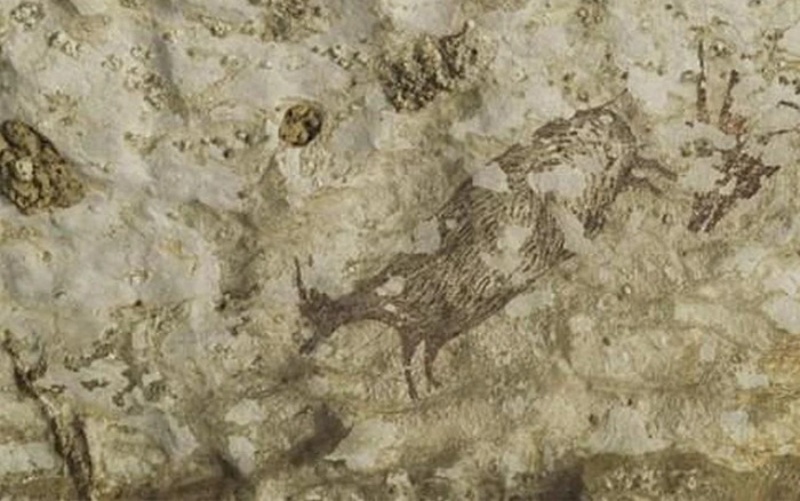
In a study published on July 3rd in the journal Nature, scientists discovered what is believed to be the world’s oldest work of art on the Indonesian island of Sulawesi, dating back over 50,000 years.
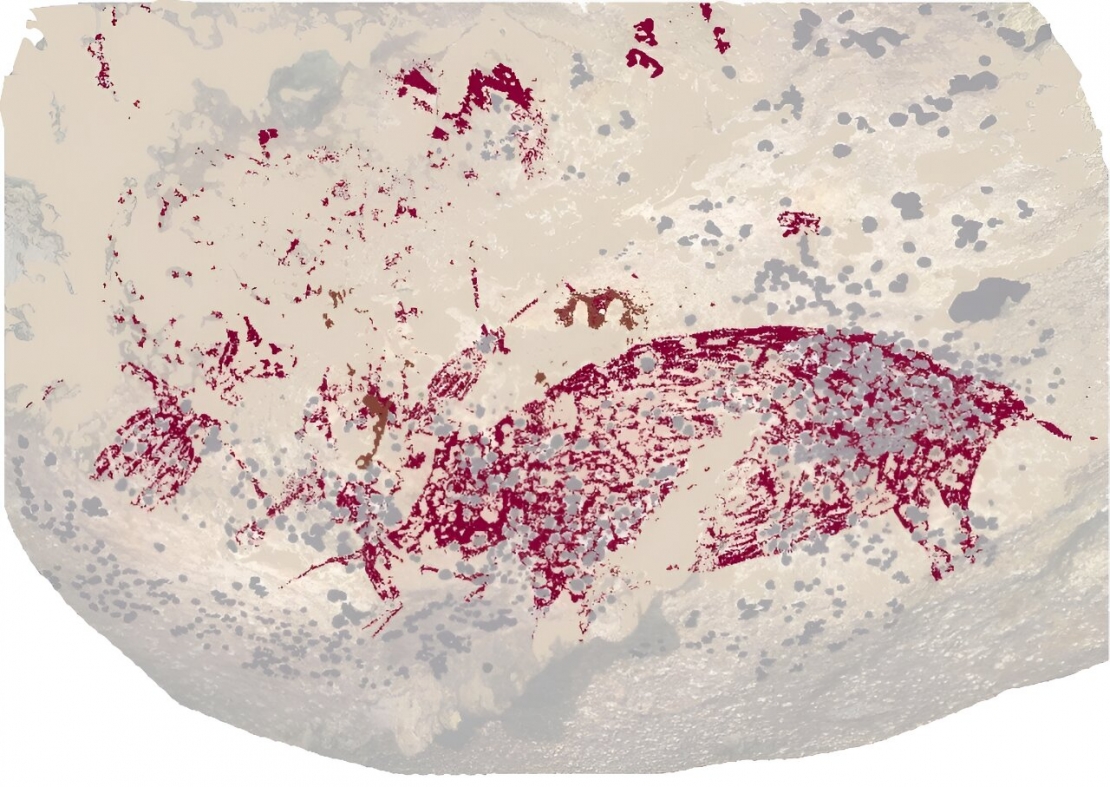
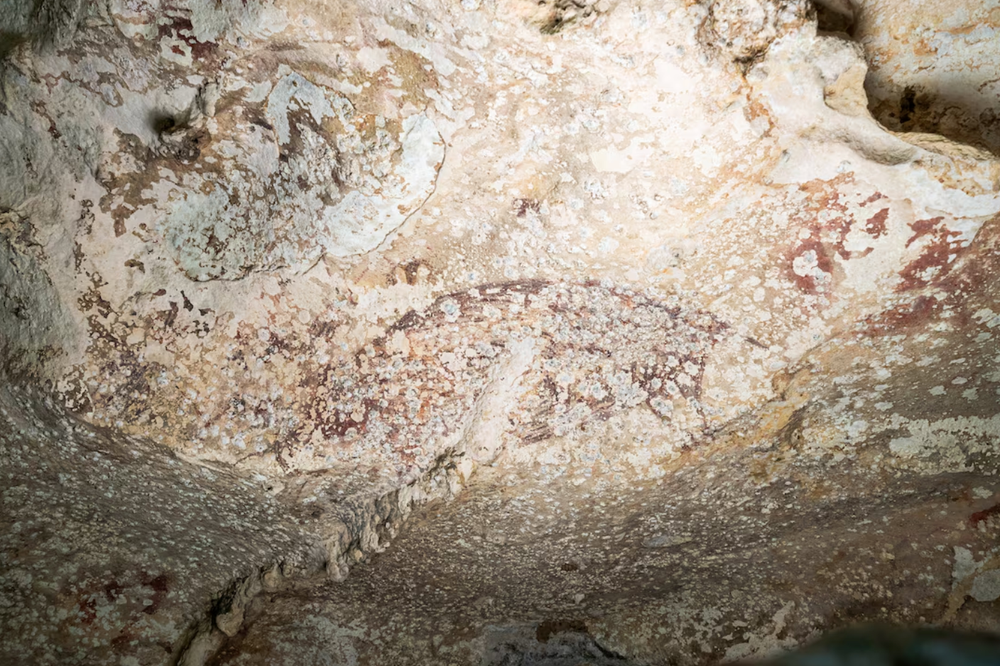
According to AFP, the painting, measuring 92 cm x 38 cm, was discovered inside the Leang Karampuang cave in the Maros-Pangkep region of South Sulawesi. It depicts three people surrounding a red wild boar. Other images of the boar were also found in the cave. At the time of its discovery, the painting was in a poorly preserved state.
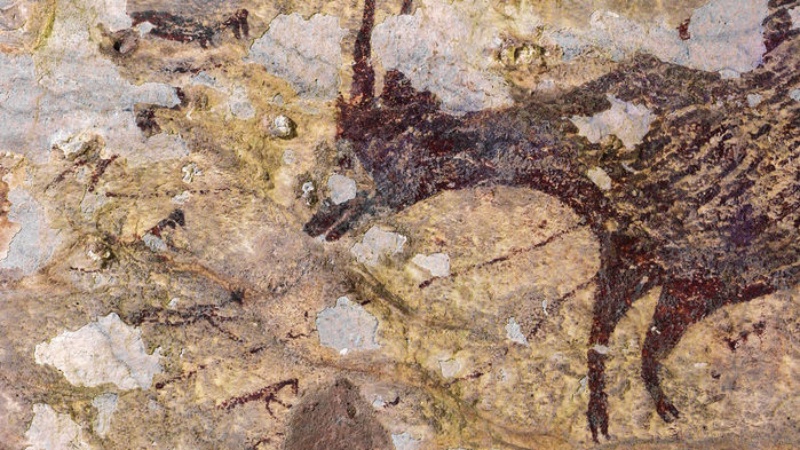
Research using laser technology suggests the painting is approximately 51,200 years old – breaking the previous 2019 record, also in Indonesia, which was estimated to be around 45,500 years old.
Maxime Aubert, an archaeologist at Griffith University in Australia and co-author of the study, stated, “This is the first time we’ve crossed the 50,000-year mark,” adding that this is “the oldest evidence of how humans tell stories.”
Meanwhile, archaeologist Adam Brumm of Griffith University, another author of the study, said, “The contrast of the images placed side-by-side – how they are positioned in relation to each other and how they interact – is clearly intentional and it conveys an unmistakable sense of action. Clearly, something is happening between the people in the paintings and a story is being told.”
Aubert added, “The earliest rock art in Sulawesi is not ‘simple.’ It’s quite advanced and demonstrates the mental capacity of the people of that time.” The researchers did not have much information about the authors of the paintings. However, Aubert speculates that the paintings may have been created by the first group of people who migrated through Southeast Asia before arriving in Australia around 65,000 years ago.
AFP quoted him as saying: “The discovery of very ancient cave art in Indonesia reinforces the view that Europe was not the birthplace of this art as has long been thought. It also suggests that storytelling is a much older part of human history in general and art history in particular than previously believed.”
He added: “It’s probably only a matter of time before we find even older evidence.”
Chris Stringer, an anthropologist at the Natural History Museum in London, who was not involved in the study, commented that the dating given for the Indonesian cave art is “quite provocative” because it is much older than what has been found elsewhere, including in Europe. Previously, a “lion-man” statue found in Germany was dated to approximately 40,000 years old.
Mr. Stringer told AFP that the research team’s findings seem plausible but need further confirmation through dating. He shared: “In my view, this finding reinforces the idea that expressive art was first produced in Africa, before 50,000 years ago, and that the concept became widespread as humans migrated to other places.”
However, “if this is true, much new supporting evidence from other regions, including Africa, has yet to emerge,” he said.