Regional Conflagration: Hezbollah Vows “Last Stand” as Iran-US Clashes Intensify
BEIRUT/WASHINGTON – The Middle East has entered a perilous new phase of escalation as Hezbollah’s leadership pledges to fight “until the last breath” in response to intensifying Israeli ground and air operations in Lebanon. Simultaneously, direct military confrontations between Iran and the United States have reached unprecedented levels, with both nations claiming substantial losses inflicted on the other, while the Trump administration moves to place the American defense industry on an urgent war footing.
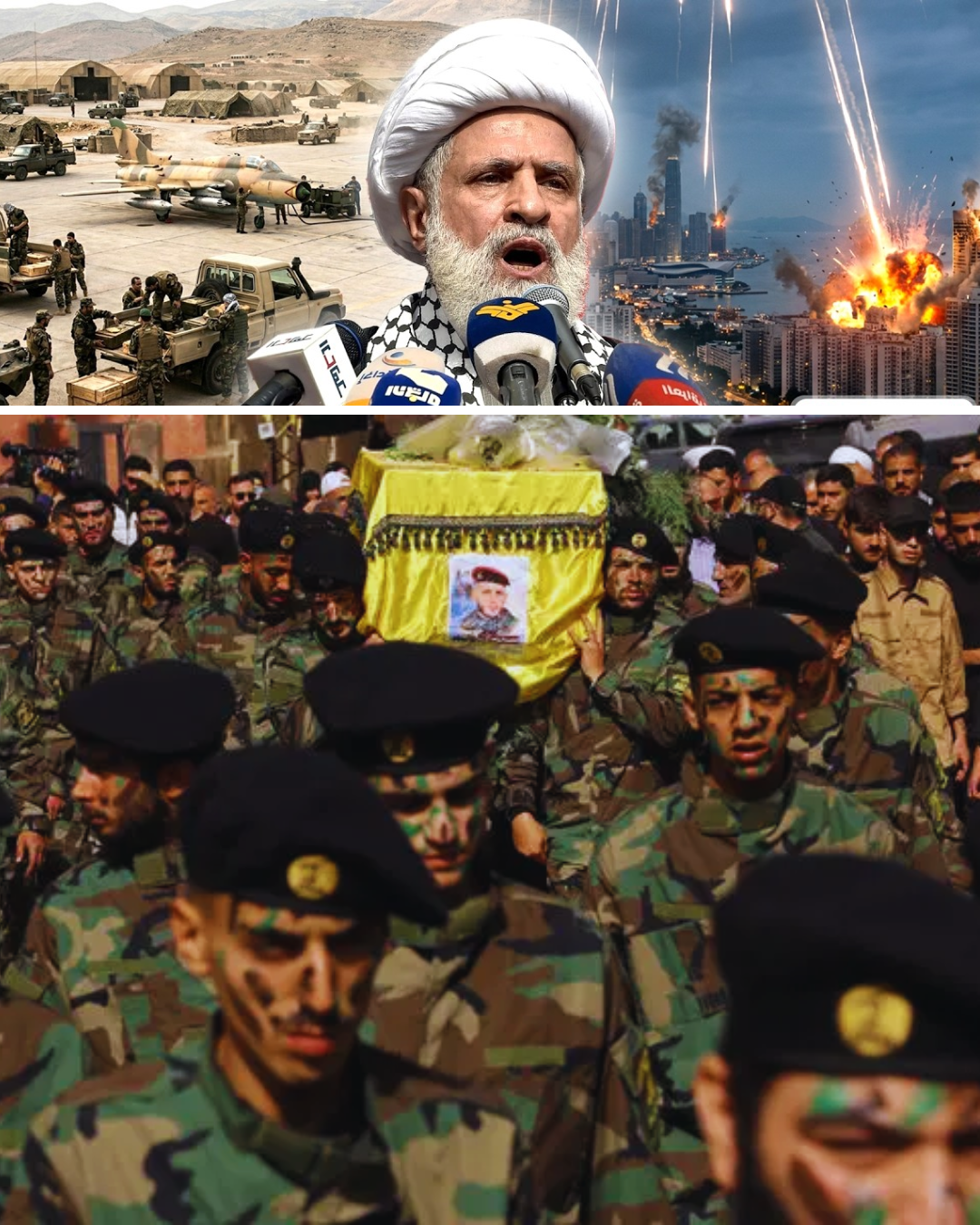
Hezbollah’s Defiance Amidst Ground Incursions In his first televised address since the surge in hostilities on October 1st, Hezbollah leader Naim Qassem adopted a posture of absolute defiance. Qassem categorically rejected accusations that Hezbollah initiated the current conflict, framing their actions as a legitimate defense against “acts of aggression” by Israel and the United States. Describing the conflict as a “war of survival,” the leader emphasized that the group’s choice is to confront the enemy until the end, ruling out any possibility of surrender.
The Israeli military has significantly expanded its footprint in Lebanon, launching ground incursions into southern border towns and villages. The humanitarian impact has been severe; Lebanese authorities report that at least 72 civilians have been killed and over 83,000 residents displaced since the start of the campaign. Tensions are also rising internally, as the Lebanese government recently moved to ban Hezbollah’s military activities and demanded they surrender their weapons—a directive Qassem criticized as a “deepening mistake” by the administration.
On the tactical front, the Israeli Defense Forces (IDF) issued immediate evacuation orders for dozens of villages south of the Litani River, covering approximately 8% of Lebanese territory . Israeli military spokespersons warned that any presence south of the river would be considered a direct threat to life. These warnings were followed by devastating strikes in the Beirut suburbs and eastern cities like Baalbek, where air raids were conducted without prior warning.
Direct Iran-US Confrontation The conflict has now transcended regional proxies, involving direct and lethal exchanges between Tehran and Washington. Iranian state media claimed that their indigenous defense systems successfully downed three U.S. fighter jets, including an F-15, near the Iranian border. Tehran also asserted that its “True Promise 4” operation resulted in 650 U.S. military personnel killed or wounded within the first 48 hours. Furthermore, the Islamic Revolutionary Guard Corps (IRGC) claimed that missile and drone strikes on the USS Abraham Lincoln forced the aircraft carrier to retreat from the region after sustaining damage.
Conversely, the U.S. military paints a picture of overwhelming dominance. Vice Admiral Brad Cooper of CENTCOM stated that U.S. forces have neutralized nearly 2,000 Iranian targets. According to Cooper, American strikes have “severely degraded” Iran’s air defenses and destroyed hundreds of ballistic missile launchers and drones. He further claimed that the Iranian navy has been effectively neutralized, with no operational vessels remaining in the Persian Gulf or the Strait of Hormuz.
Regional Fallout and Industrial Mobilization The escalation has spread to the broader Gulf region, with Iran launching retaliatory strikes against U.S. military targets and civilian infrastructure in Bahrain, Saudi Arabia, Qatar, and the UAE. Qatari officials have denounced the attacks, stating that “all red lines have been crossed” and that infrastructure and residential areas have been continuously targeted. The volume of Iranian drones launched at regional hubs now rivals the numbers used in major front-line operations, causing significant disruptions to international trade and travel.
Faced with a rapidly diminishing stockpile of precision munitions, the Trump administration has signaled a massive industrial mobilization. President Trump is scheduled to meet with major defense contractors, including Lockheed Martin and RTX, to demand a surge in production. The Pentagon is drafting a $50 billion supplemental budget to replace weapons expended in the conflict, specifically targeting a massive increase in Tomahawk cruise missile production to 1,000 units per year. This move underscores Washington’s readiness for a prolonged military engagement as the region remains engulfed in flames.