US Submarine Sinks Iranian Warship: A Historic Shift in Naval Warfare Amid Escalating Regional Conflict
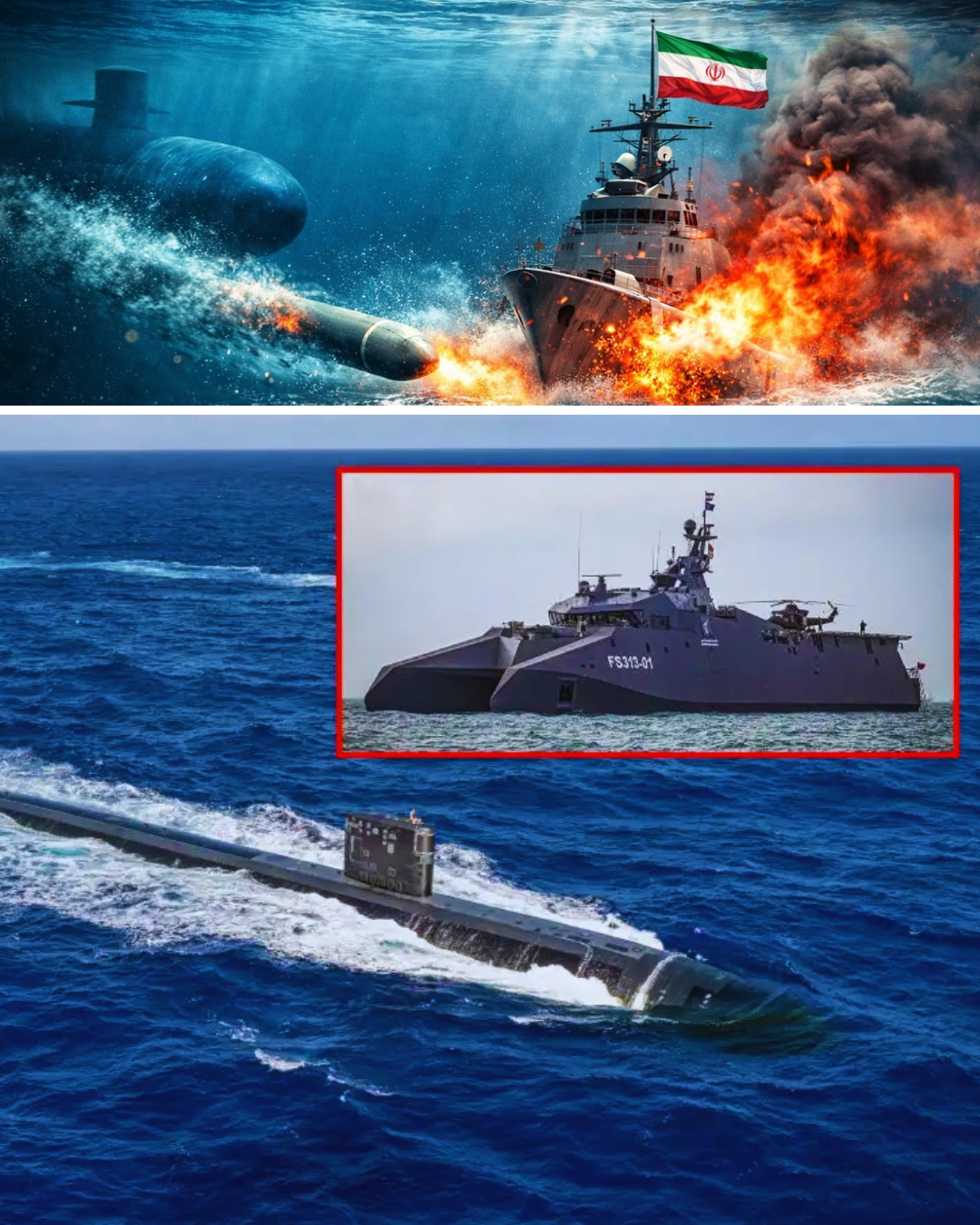
INDIAN OCEAN – In a dramatic escalation of hostilities between Washington and Tehran, a U.S. Navy submarine has successfully engaged and sunk the Iranian frigate IRIS Dena in the Indian Ocean. The incident marks the first time since 1945 that a U.S. submarine has utilized torpedoes to destroy an enemy surface vessel, signaling a stark transition from decades of strategic deterrence to active offensive operations.
The Fatal Strike: No Room for Maneuver
The strike occurred off the coast of Sri Lanka, where a U.S. submarine deployed a Mark 48 (Mk 48) heavyweight torpedo. Video footage released by the U.S. Department of Defense illustrates the sheer power of the weapon, showing the explosion lifting the IRIS Dena’s stern out of the water before the vessel plunged into the depths within minutes.
Military analysts emphasize that the Iranian crew of 180 had virtually no chance to evade or counter the attack. Retired Navy Captain Thomas Shugart noted that the IRIS Dena, while equipped with long-range anti-aircraft missiles, lacked the sophisticated sonar and anti-submarine warfare (ASW) technologies required to detect a modern U.S. nuclear-powered submarine.
“The ship likely had no knowledge of the submarine’s presence until the moment of impact,” Shugart explained. He further noted that using submarines to engage surface targets is a lower-risk alternative to airstrikes when facing advanced air defense systems.
The humanitarian toll remains high. Sri Lankan naval forces managed to rescue 32 sailors, while the bodies of 87 others have been recovered. Search and rescue operations continue for the remaining crew members.
The Mark 48: A Legacy Reborn
The use of the Mk 48 torpedo represents a technological leap from the unguided, slow-moving weapons of World War II. Expert James Holmes highlighted that the modern Mk 48 can operate with or without wire guidance and possesses both active and passive acoustic homing capabilities. Its ability to re-engage a target if a first pass misses makes it one of the most lethal assets in the U.S. naval arsenal.
This engagement ends an 80-year hiatus for U.S. submarine torpedo combat. Analysts attribute this long gap to the nature of the Cold War and subsequent conflicts, where naval dominance was either uncontested or maintained through air power.
Expansion of the “Furious Rage” Campaign
While the naval engagement dominated headlines, U.S. military leadership announced an intensification of airstrikes across the Iranian mainland. General Dan Kaine, Chairman of the Joint Chiefs of Staff, confirmed that Iran’s retaliatory capabilities have been significantly degraded, with ballistic missile fire down by 86% and drone attacks reduced by 73%.
Defense Secretary Pete Hegseth stated that the campaign aims for total air superiority within a week. The White House has outlined four strategic pillars for the mission:
-
Destruction of the ballistic missile program.
-
Termination of Iran’s regional naval presence.
-
Elimination of Iranian-backed proxy forces.
-
Absolute prevention of nuclear weapons development.
Political Tensions and Public Skepticism
In Washington, the conflict has fueled a bitter partisan divide. A bipartisan effort to curb the bombing campaign and require Congressional authorization failed in the Senate by a narrow 52-47 vote. Republican senators largely rejected the resolution, granting the administration continued freedom of movement in the region.
However, domestic support remains precarious. CNN polling indicates that approximately 60% of Americans oppose the use of force and express skepticism regarding the lack of a clear post-war transition plan. Concerns have also been raised over civilian casualties, including reports of a strike hitting a girls’ primary school in southern Iran, though the Pentagon maintains it does not target civilians.
The Shadow of Ground Intervention
Secretary Hegseth has refused to rule out the deployment of ground troops, though he emphasized that the U.S. would not be drawn into an “endless war” akin to the occupation of Iraq. “We don’t need to send 200,000 people there for 20 years to achieve our objectives,” Hegseth remarked, asserting that decisive, bold action can achieve results without reckless overextension.
Despite these assurances, military analysts warn that even small-scale special operations could lead to “mission creep.” History shows that campaigns starting with air and naval superiority, such as those in Afghanistan, can quickly evolve into large-scale occupations, potentially creating a new “quagmire” along the shores of the Persian Gulf.