Ariel Combat and Targeted Strikes: Israel Neutralizes Launch Sites as Iran Claims “Capture” of High-Tech Drone
TEHRAN/TEL AVIV – The aerial confrontation between the Israel Defense Forces (IDF) and the Islamic Revolutionary Guard Corps (IRGC) has reached a fever pitch, marked by precision strikes on ballistic missile batteries and an unprecedented claim by Tehran regarding the electronic seizure of one of Israel’s most advanced unmanned aerial vehicles (UAVs).
Precision Strikes in Western Iran
Military tensions surged this week as the IDF confirmed a series of airstrikes targeting strategic assets in Iran’s Kermanshah province. Utilizing F-35 stealth fighters, Israeli forces reportedly neutralized a ballistic missile launcher seconds before it could be deployed. The IDF released footage showing the launcher engulfed in flames, underscoring their commitment to eliminating threats to the Israeli state.
“The Israeli Air Force will continue to target enemy launch sites to dismantle any capability aimed at our territory,” an IDF spokesperson stated. While the specific munitions used in the strike were not disclosed, military analysts suggest that the mission utilized high-precision stand-off weapons to bypass regional air defense networks.
The Electronic Capture of the Hermes 900
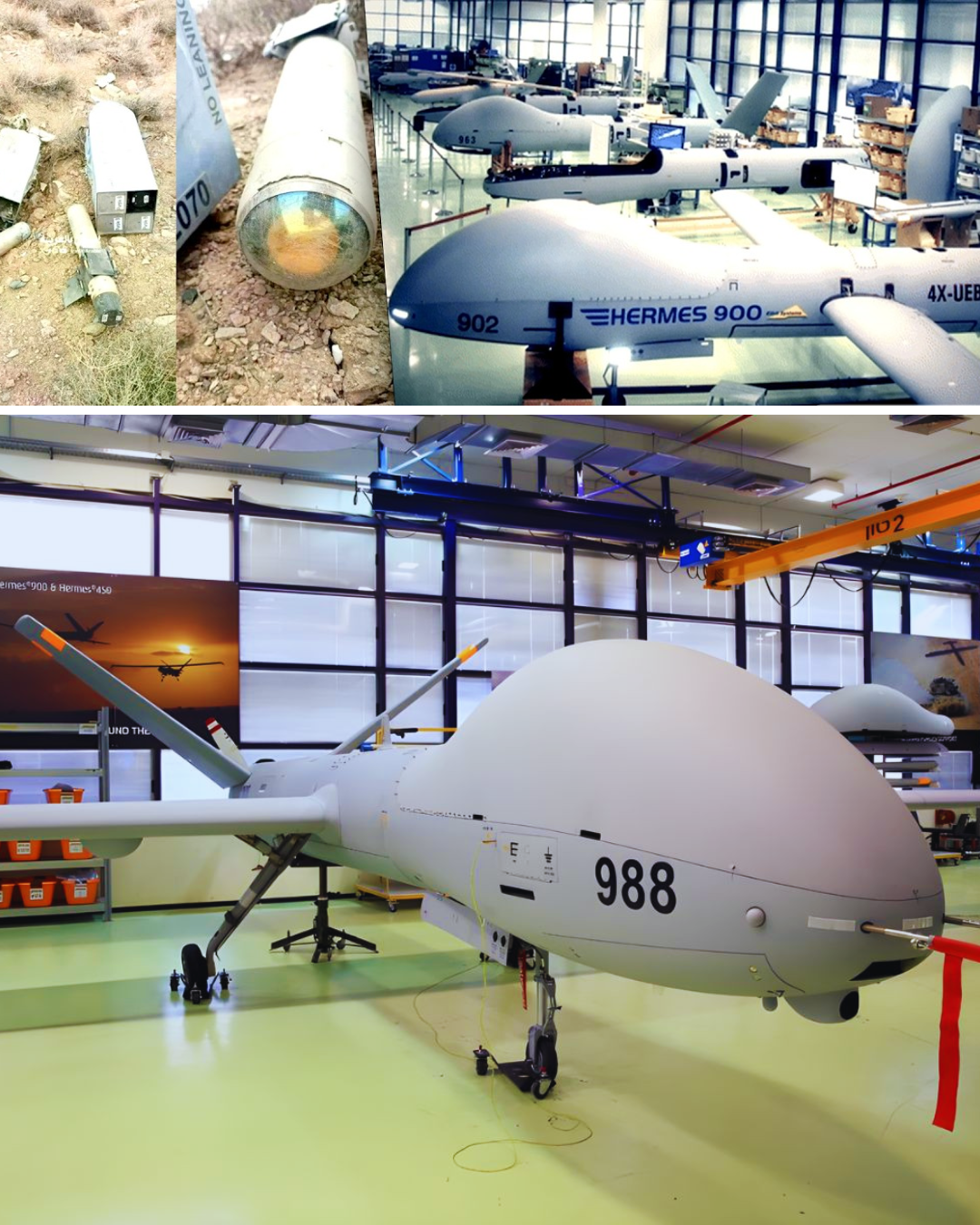
In a significant propaganda blow, the IRGC claimed on Wednesday to have seized an Israeli Hermes 900 UAV intact. According to Iranian state-run news agencies, Tasnim and Fars, the drone was intercepted over Iranian airspace using sophisticated electronic warfare systems that jammed its control signals and forced a landing.
“The enemy’s UAV violated our airspace but was quickly neutralized and brought down. It is currently in our possession and will provide critical insights into Israeli defense technology,” an IRGC representative claimed. The Hermes 900, developed by Elbit Systems, is a cornerstone of Israel’s surveillance and strike capabilities, valued at approximately $30 million per unit. Known for its 30-hour endurance and 350kg payload capacity, the potential loss of such technology to Tehran could have significant implications for regional intelligence security.
Retaliatory Waves and Strategic Targets
Tehran has not remained passive. Under “Operation True Promise 4,” the IRGC launched its 17th wave of retaliatory strikes, utilizing hypersonic missiles and swarms of attack drones. Iran claims these projectiles successfully bypassed U.S.-provided THAAD defense systems to strike Ben Gurion International Airport and the Israeli Ministry of Defense building in Tel Aviv.
Meanwhile, Israeli Prime Minister Benjamin Netanyahu’s office framed the ongoing conflict as a necessary campaign to prevent Iran from rebuilding its nuclear program in new underground bunkers. Despite these claims, the International Atomic Energy Agency (IAEA) reported that they have found no evidence of a nuclear weaponization effort in Iran, while Oman—acting as a mediator—indicated that diplomatic channels were progressing prior to the latest escalations.
A Leadership in Transition
The conflict is taking place against a backdrop of domestic mourning and political upheaval in Iran. Following the reported death of Supreme Leader Ayatollah Ali Khamenei in earlier U.S.-Israeli strikes, a council of senior clerics has convened to select a successor. Israeli Defense Minister Israel Katz issued a chilling warning to the incoming leadership: “Any leader appointed by Iran will be an unconditional target for elimination.”
Tehran has declared 40 days of national mourning, with a massive funeral ceremony scheduled for the late leader at the Imam Khomeini Prayer Square. Thousands of Iranians have taken to the streets in cities like Isfahan and Qom, demanding immediate military retaliation against Washington and Tel Aviv.
Regional Spillover
The “Furious Rage” campaign initiated by the Trump administration has seen the conflict spill over into neighboring Gulf states. Iranian retaliatory fire has reportedly impacted civilian infrastructure across the UAE, Bahrain, and Qatar. Reports surfaced of debris from interceptions falling near Dubai’s Jebel Ali port and luxury resorts on the Palm Jumeirah.
The chaos has grounded flights across the Middle East and forced educational and corporate sectors in the UAE to transition to remote operations. As the regional air defense net struggles to cope with the sheer volume of ballistic missiles and drones, the Middle East remains on a knife-edge, with no clear path to de-escalation in sight.