Deception and Escalation: Tactical Decoys in the Middle East Conflict Amidst Global Evacuation Efforts
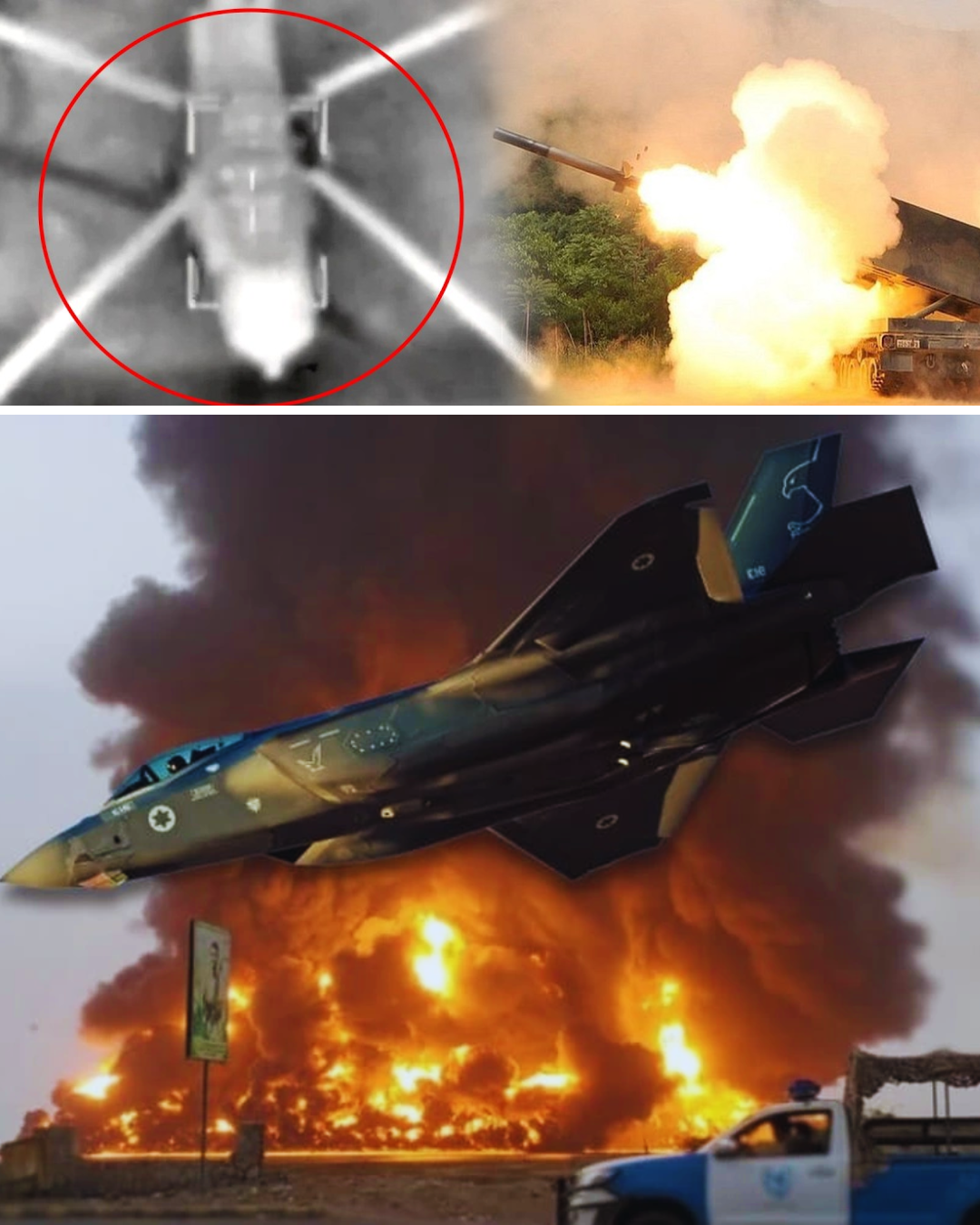
JERUSALEM/WASHINGTON – The intensifying military campaign between the U.S.-Israeli coalition and Iranian forces has entered a new phase characterized by psychological warfare and tactical deception. Recent reports suggest that a high-profile Israeli airstrike targeting an Iranian Mi-17 helicopter may have hit nothing more than a sophisticated 3D decoy, raising questions about the efficiency of expensive precision munitions against low-cost “visual traps.”
The Mirage of the Mi-17 Strike
The Israel Defense Forces (IDF) recently released footage of an F-35i “Adir” fighter jet engaging what was identified as an Iranian Mi-17 transport helicopter on the ground. However, defense analysts have pointed out significant anomalies in the video. Unlike a functional aircraft, the target remained perfectly still upon impact, with no visible movement from its rotors or typical debris scattering characteristic of a fueled metal airframe.
Patricia Marins, an independent defense analyst, suggested that the target was likely an anamorphic 3D painting or a high-fidelity decoy designed to mislead aerial reconnaissance. “Iran appears to be utilizing large-scale ground illusions to draw fire away from active assets,” Marins noted. Such tactics, reminiscent of those used in the Russia-Ukraine conflict, force adversaries to deplete millions of dollars in advanced missiles on worthless targets.
Despite the controversy, the IDF maintained that its operations successfully neutralized multiple ballistic missile launchers in Iran’s Qom province. The Israeli Air Force has vowed to continue its “Sovereign Lion” campaign until all threats to the state are eliminated.
Global Exodus as Security Deteriorates
As missiles and drones continue to crisscross the region, the international community has accelerated emergency evacuation procedures. The U.S. State Department has authorized the departure of non-essential personnel and families from embassies in Pakistan, Saudi Arabia, Oman, and Cyprus, citing heightened security risks following violent protests that resulted in at least 25 deaths in Pakistan.
Other nations are following suit:
-
South Korea: President Yoon Suk-yeol has ordered military transport and chartered aircraft to repatriate approximately 17,000 citizens from ten Middle Eastern countries.
-
Mexico: President Claudia Sheinbaum announced the successful evacuation of 279 nationals through neighboring states like Egypt and Turkey.
-
Bosnia and Herzegovina: The government is coordinating flights from Dubai to bring home over 1,000 citizens currently in the UAE and Qatar.
-
New Zealand: Two C-130 Hercules aircraft have been dispatched to ferry citizens to safe zones for further commercial travel.
A Synchronized Offensive
Military coordination between Washington and Tel Aviv has reached unprecedented levels. The allies have reportedly partitioned the theater of operations: U.S. forces are tasked with neutralizing the Iranian Navy and southern missile sites, while Israel focuses on long-range launchers in central Iran and administrative command centers in Tehran.
U.S. Central Command (CENTCOM) confirmed that over 1,000 American troops are now stationed in Israel to synchronize intelligence and target acquisition. President Donald Trump has lauded “Operation Epic Fury,” claiming the mission is “erasing” Iran’s missile arsenal at a pace that exceeds initial projections.
The Hormuz Chokehold and Ukraine’s Role
The conflict has severely impacted global maritime trade. The Iranian Revolutionary Guard Corps (IRGC) claims to have established full control over the Strait of Hormuz, a critical energy corridor. Reports of explosions near tankers in the Gulf have already caused Brent crude prices to spike, with further disruptions expected as major shipping firms like Maersk suspend transit through the region.
In an unexpected diplomatic turn, Ukrainian President Volodymyr Zelenskyy has offered to assist coalition partners by sharing expertise in countering Iranian-made drones. Having dealt with the “Shahed” series for over two years, Ukrainian military and intelligence specialists are reportedly preparing to work directly with Middle Eastern partners to stabilize maritime security and civil defense.
As “Operation Epic Fury” enters its second week, the Middle East remains a volatile chessboard where high-tech weaponry and low-tech deception continue to clash, leaving the global community on high alert.