Helicopter Assault Simulation on U.S. Marine Base Sparks Debate on Indo-Pacific Security
- NgoPhong
- March 9, 2026
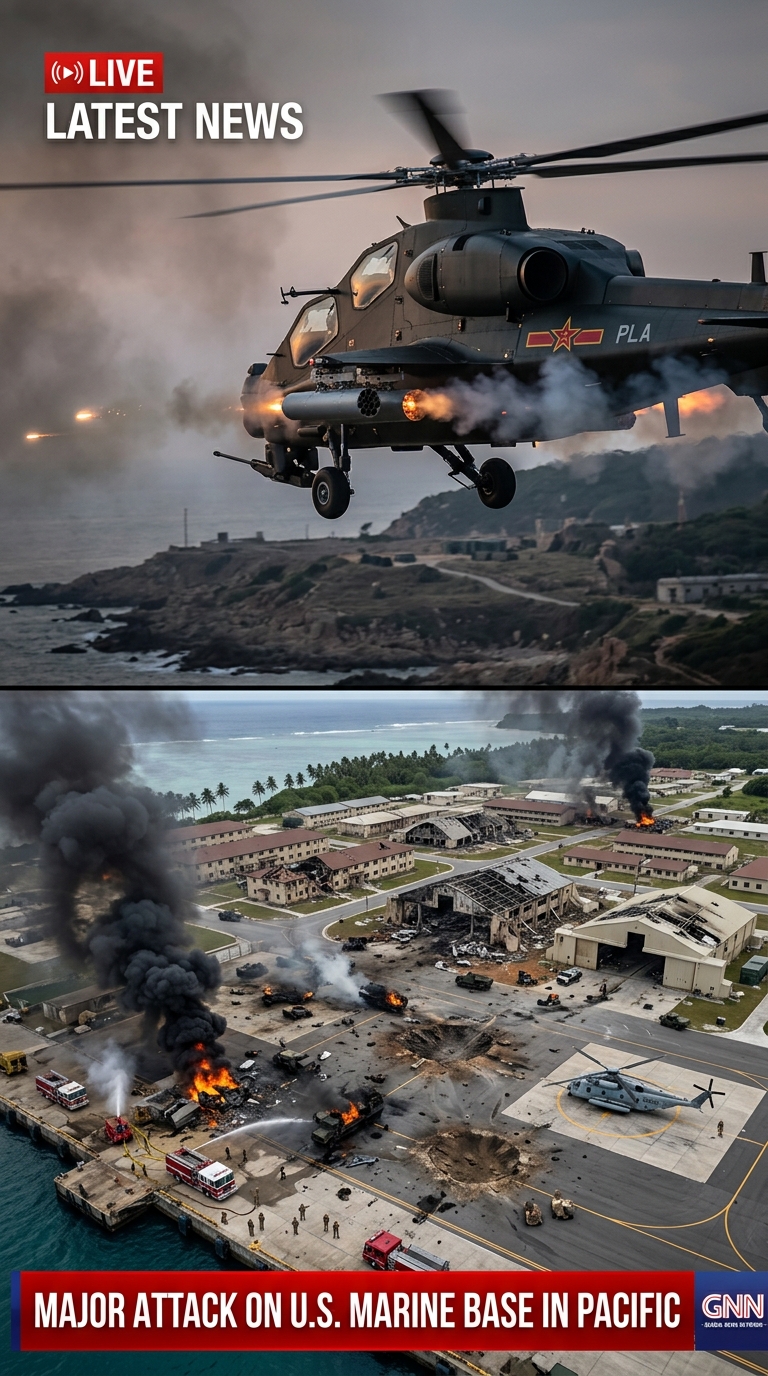
A dramatic military simulation depicting a helicopter assault on a U.S. Marine base in Okinawa has sparked renewed debate about the growing security challenges in the Asia-Pacific region. Although the scenario is fictional, analysts say it reflects real concerns about how quickly tensions could escalate in one of the world’s most strategically sensitive regions.
In the simulated scenario, a formation of Chinese Z-20 military helicopters launches a surprise assault against a U.S. Marine installation on Okinawa. Within minutes, the fictional exercise turns the base into a chaotic battlefield as forces scramble to respond to the sudden airborne attack. The scenario explores how modern warfare could unfold when speed, air mobility, and rapid decision-making dominate the battlefield.
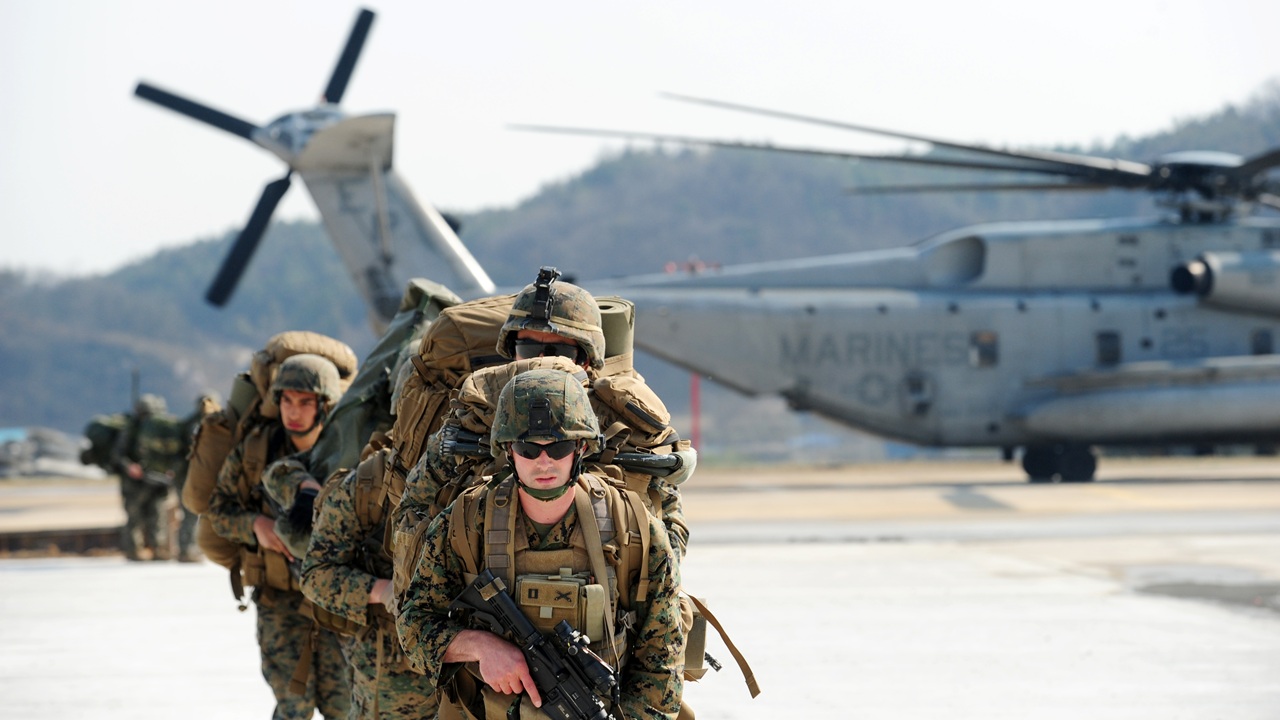
Okinawa plays a critical role in U.S. defense strategy in the Indo-Pacific. The island hosts thousands of American troops and multiple Marine Corps bases such as Camp Hansen and Camp Schwab, which support regional operations and joint training with Japan’s Self-Defense Forces.
Recent military exercises in the region underscore the importance of readiness. U.S. and Japanese forces regularly conduct amphibious and island-defense drills designed to prepare for potential conflicts across the First Island Chain. These exercises aim to ensure that allied forces can respond quickly to aggression and protect regional stability.
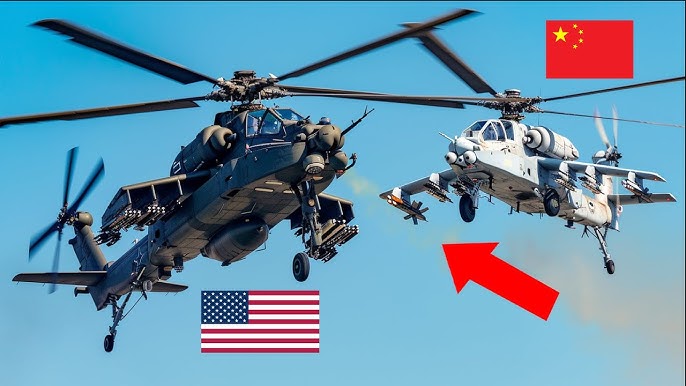
At the same time, security experts warn that China’s expanding military capabilities—including advanced missiles, naval forces, and aircraft—are reshaping strategic calculations across the Pacific. Increased Chinese activity has raised concerns about the vulnerability of key bases in Japan and the wider region.
The United States has responded by strengthening cooperation with allies and conducting more frequent joint drills. Analysts say these exercises demonstrate Washington’s commitment to defending its interests and maintaining deterrence against potential threats.

While the helicopter assault scenario remains purely hypothetical, it highlights an important reality of modern warfare: conflicts can evolve extremely quickly, and air power, intelligence networks, and allied coordination may determine the outcome within minutes.
For policymakers and military planners, the simulation serves as a reminder that maintaining stability in the Indo-Pacific requires constant vigilance, strong alliances, and advanced defensive capabilities. 🌏🚁🔥