Missiles Target USS Abraham Lincoln — How U.S. Naval Defenses Respond
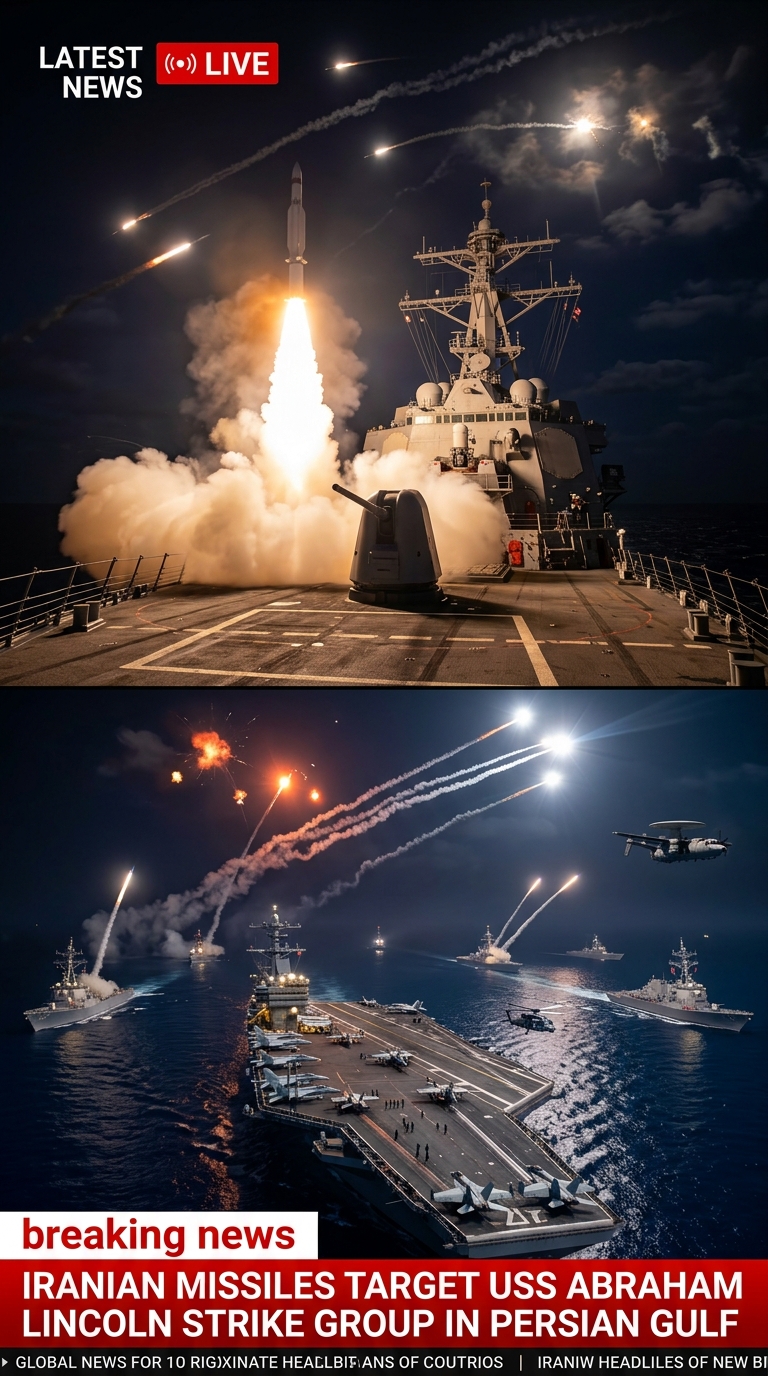
Rising tensions in the Middle East have increased the risk of missile and drone attacks against U.S. naval forces operating in the region. One dramatic scenario frequently discussed by defense analysts imagines Iranian missiles and drones targeting the U.S. aircraft carrier USS Abraham Lincoln while it operates in the Arabian Sea. Although such situations are often hypothetical, they reflect real military capabilities and the intense strategic rivalry unfolding in the region.
The USS Abraham Lincoln, a Nimitz-class nuclear-powered aircraft carrier, typically sails as part of a carrier strike group that includes guided-missile destroyers, cruisers, submarines, and dozens of aircraft. These forces work together to provide a layered defensive shield against air, missile, and drone threats.
Modern missile attacks are usually detected long before they reach their target. U.S. early-warning systems—including satellite sensors operated by the U.S. Space Force—can detect the heat signature of ballistic missile launches and quickly transmit warning data to ships and command centers.
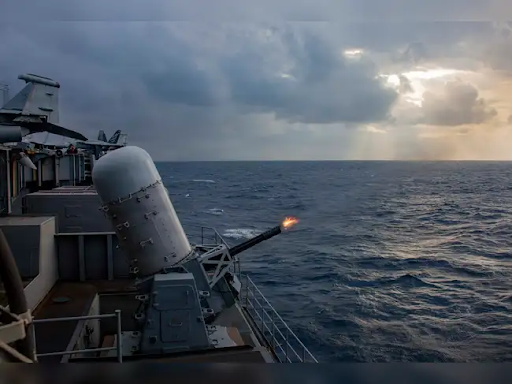
Once a threat is detected, escort warships activate the Aegis Ballistic Missile Defense system, one of the most advanced naval defense networks in the world. The system uses powerful radar and advanced computers to track multiple incoming missiles simultaneously and guide interceptor missiles toward them.
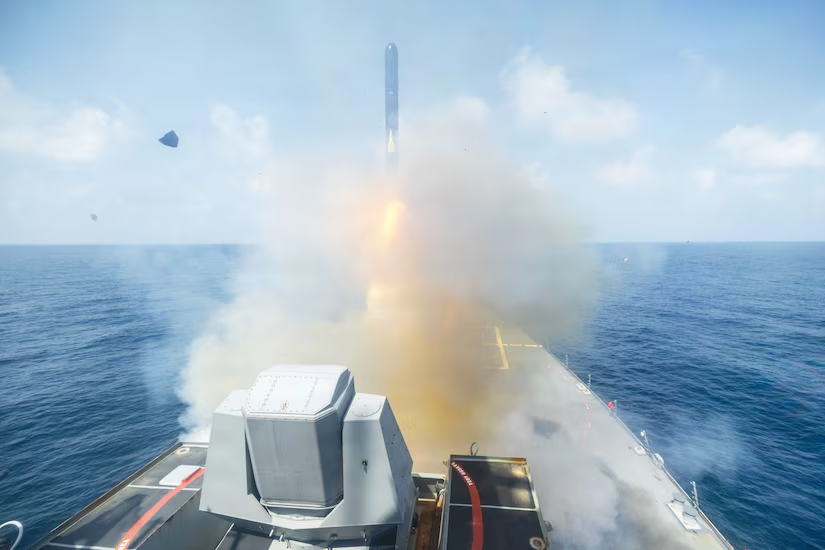
Among the most important interceptors are the SM-3 and SM-6 missiles. The SM-3 is specifically designed to destroy short- to intermediate-range ballistic missiles by colliding with them at high speed in space, a “hit-to-kill” technique sometimes compared to “hitting a bullet with another bullet.” Meanwhile, the SM-6 can engage aircraft, cruise missiles, and some ballistic threats, giving naval forces flexible air and missile defense capabilities.
In addition to ship-based defenses, carrier air wings provide another layer of protection. Aircraft such as F/A-18 Super Hornets can intercept threats at long range, while EA-18G Growlers conduct electronic warfare missions to jam enemy radar and drone guidance systems.
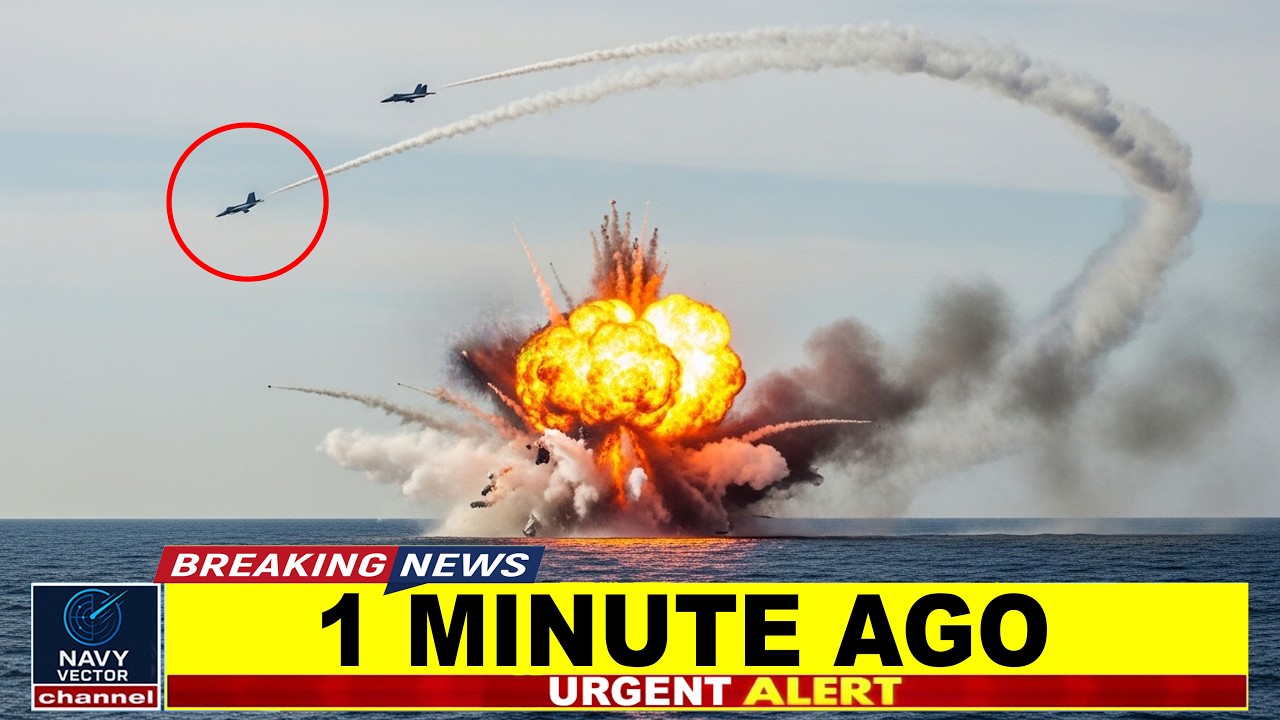
Recent reports indicate that Iran has claimed to target the USS Abraham Lincoln with missiles, but U.S. officials denied the carrier was hit, emphasizing that American naval defenses remained effective.
Together, these technologies illustrate a key reality of modern warfare: survival at sea depends not only on firepower, but on speed, sensors, and integrated defense systems capable of reacting within seconds. 🚀⚓🔥