🎙️ “THE MOMENT THE SILENCE SHATTERED” — INSIDE THE CLASH THAT ROCKED A STUDIO AND IGNITED A NATIONWIDE RECKONING 😳
The studio lights were too bright for what was about to happen.
What began as another tightly managed broadcast—scripts prepared, segments timed, tensions anticipated—quickly unraveled into something raw, unscripted, and impossible to contain.
“You cannot control my voice.”
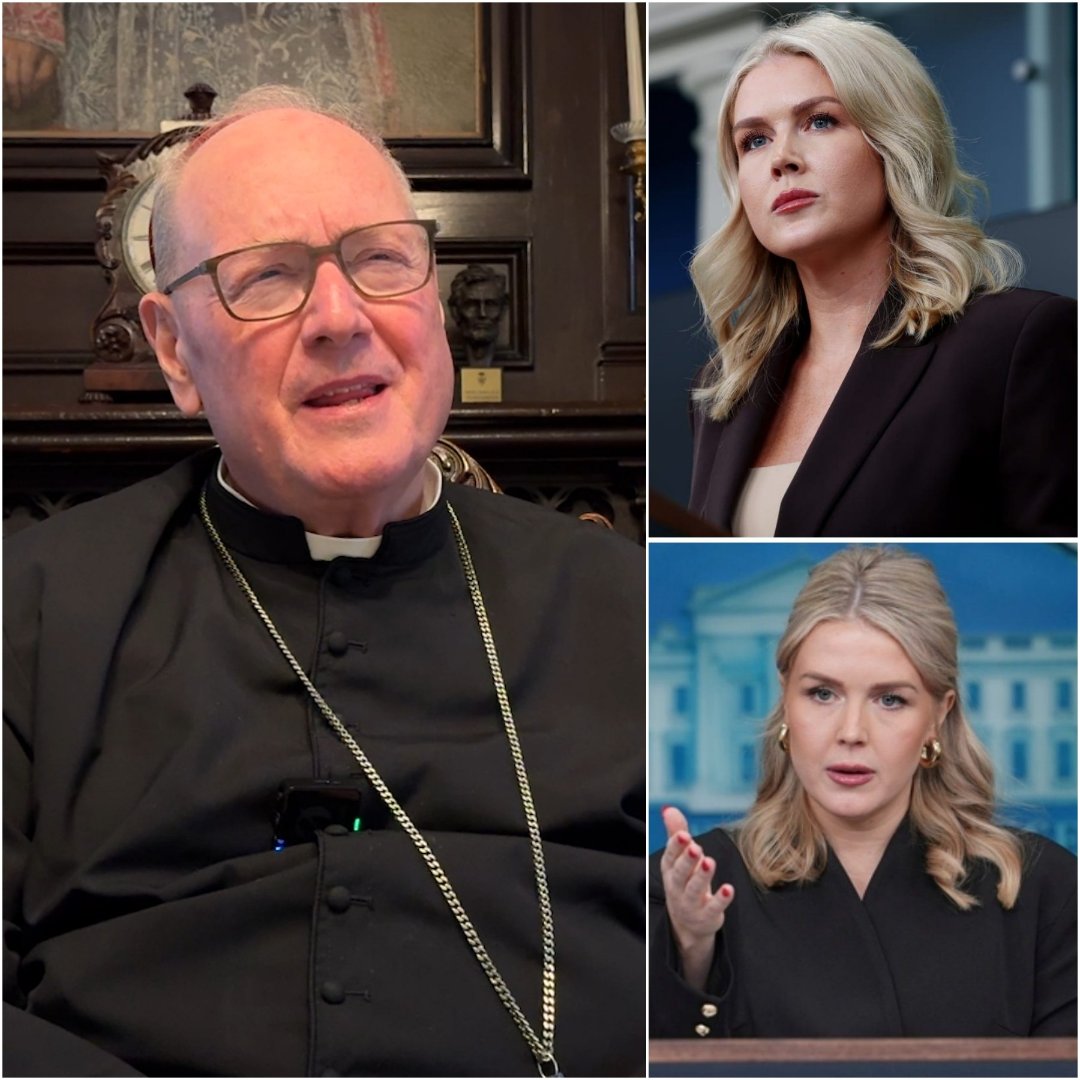
Cardinal Timothy Dolan’s words didn’t rise in volume. They didn’t need to. The calmness in his tone made them heavier—anchored by something deeper than performance.
Determination.
Conviction.
And perhaps, something that had been building for a long time.
A Breaking Point, Not a Beginning
To understand the moment, those close to the situation say, you have to look beyond the exchange itself.
“This didn’t come out of nowhere,” said a media analyst who has followed Dolan’s public appearances for years. “He’s not known for impulsive outbursts. If he spoke that directly, that sharply—it means something reached a threshold.”
For months—perhaps longer—conversations around faith, politics, and public values have grown increasingly polarized. Religious figures, once expected to remain above direct confrontation, now find themselves pulled into the center of cultural debates.
And in that environment, silence can begin to feel like complicity.
“I am speaking up for every spiritual leader… every person who has been forced into silence,” Dolan said.
It wasn’t just a response.
It was a declaration.
The Flashpoint
Karoline Leavitt’s reaction was immediate—and human.
“A hypocrite?!” she fired back, rising from her seat, her voice cutting through the studio air with unmistakable intensity.
In that instant, the exchange shifted from tension to confrontation.
Two worlds collided—faith and politics, moral authority and public messaging, restraint and reaction.
“She felt challenged—not just personally, but ideologically,” said one observer. “And she responded in kind.”
But what followed would define the moment.
The Line That Changed Everything
Cardinal Dolan didn’t match the volume.
He didn’t escalate.
Instead, he leaned forward—slightly, deliberately—and delivered a line that would echo far beyond the studio walls.
“Values?” he said slowly. “Then start living up to them—instead of just shouting them at the camera.”
The room froze.
Not because it was loud.
But because it was precise.
When Control Slips Away
Producers moved.
The host stepped in, voice strained but controlled, attempting to redirect the conversation, to bring it back into familiar territory.
But it was already gone.
The moment had escaped.
Within minutes, clips flooded social media. Hashtags surged. View counts climbed into the millions. What had been a contained exchange became a national—and then global—conversation.
“You could feel the shift,” said a digital strategist. “People weren’t just watching—they were reacting instantly. Choosing sides. Interpreting every word.”
A Divided Reaction
Supporters of Cardinal Dolan praised his directness, calling it long overdue.
“This is what leadership looks like,” one post read. “Speaking truth—even when it’s uncomfortable.”
Others saw it differently.
Critics argued that the exchange blurred lines that many believe should remain intact.
“There’s a difference between moral guidance and political confrontation,” one commentator noted. “Crossing that line carries consequences.”
And just like that, the moment expanded beyond the individuals involved.
It became symbolic.
The Question Beneath the Conflict
Why now?
Why that moment?
Why that level of directness?
Dr. Elena Ruiz, a sociologist specializing in public discourse, offers a perspective:
“Moments like this often reflect accumulated pressure. When individuals or institutions feel that their voice is being constrained, challenged, or misrepresented repeatedly, there comes a point where restraint gives way to assertion.”
In other words—
This wasn’t just about what was said in that minute.
It was about everything that came before it.
The Power—and Risk—of Speaking Out
Public figures walk a narrow line.
Speak too softly, and risk being ignored.
Speak too forcefully, and risk being criticized.
For Cardinal Dolan, that line was crossed deliberately.
“He knew what he was doing,” one insider suggested. “You don’t say something like that on live television without understanding the impact.”
And the impact was immediate.
Not just in headlines.
But in conversations.
At dinner tables. In offices. Across platforms.
People weren’t just reacting—they were reflecting.
Moment That Won’t Fade Quickly
The exchange lasted less than a minute.
But its aftershock continues.
Because it tapped into something deeper than disagreement.
It touched on identity.
On belief.
On what it means to live by the values we claim.
And perhaps most importantly—
On the courage—or the cost—of calling those values into question.
The Final Question
As the noise settles, one question remains:
What happens next?
Will moments like this become more common, as public figures push back more directly?
Or will they serve as cautionary examples of how quickly dialogue can turn into division?
There are no easy answers.
But one thing is certain.
Because in that brief, electrifying moment, Cardinal Timothy Dolan didn’t just break his silence.
He forced everyone else to confront theirs.