WORLD-FIRST RESCUE — TIMMY’S LONG JOURNEY BACK TO THE OCEAN
WORLD-FIRST RESCUE — TIMMY’S LONG JOURNEY BACK TO THE OCEAN
Off the quiet northern shores of Wismar, a rescue mission unlike anything attempted before is unfolding — one that could redefine how humanity responds to one of nature’s most heartbreaking crises: stranded whales.
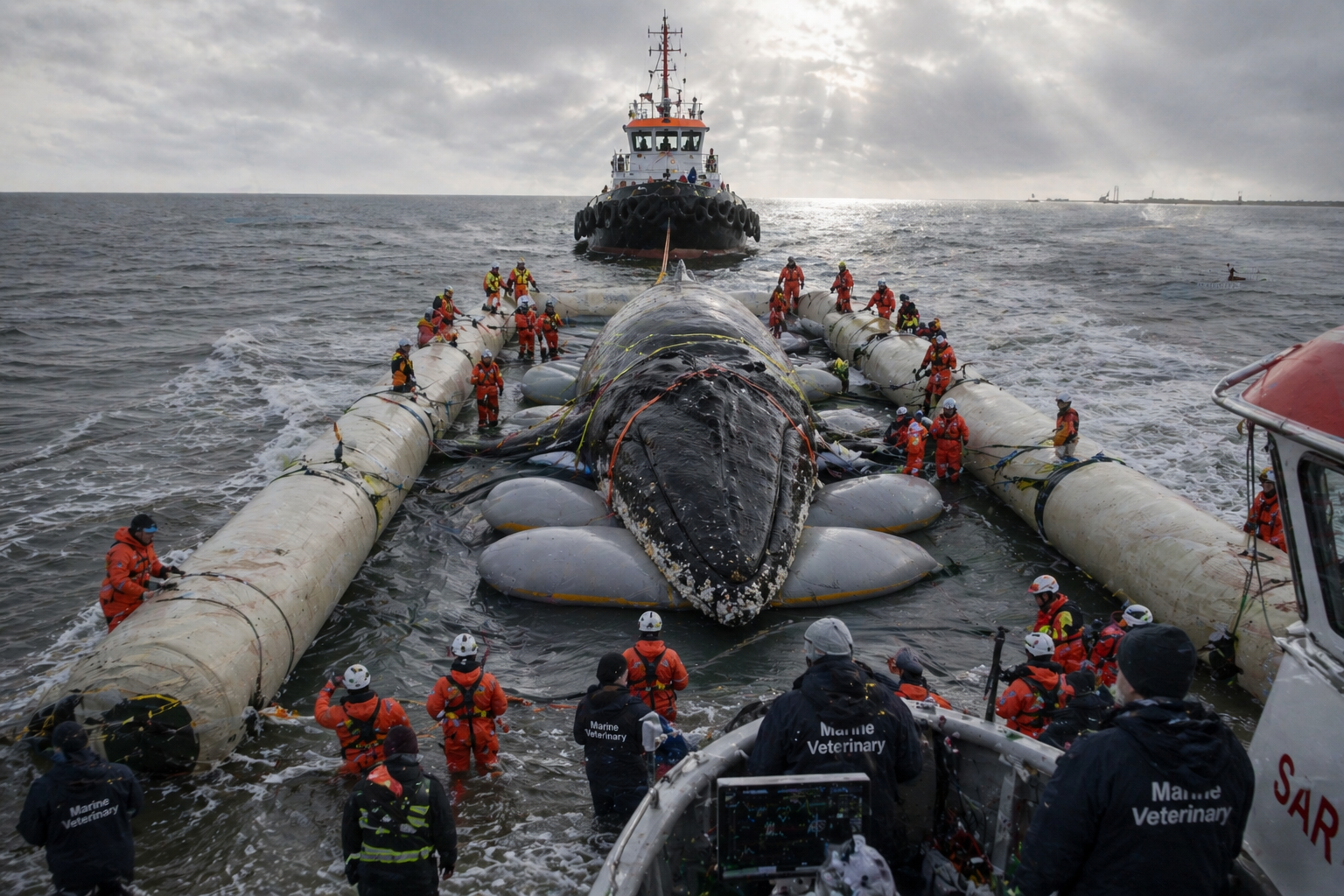
For weeks, a 13.5-meter humpback whale known as Timmy has been trapped in shallow coastal waters, his massive body gradually weakening under its own weight. Early rescue efforts — tugboats, dredging, even excavators — proved either ineffective or too dangerous. Each failed attempt narrowed the window for survival.
Now, in a bold shift from conventional methods, engineers and marine biologists have launched a world-first rescue strategy.
A Radical Plan Born From Urgency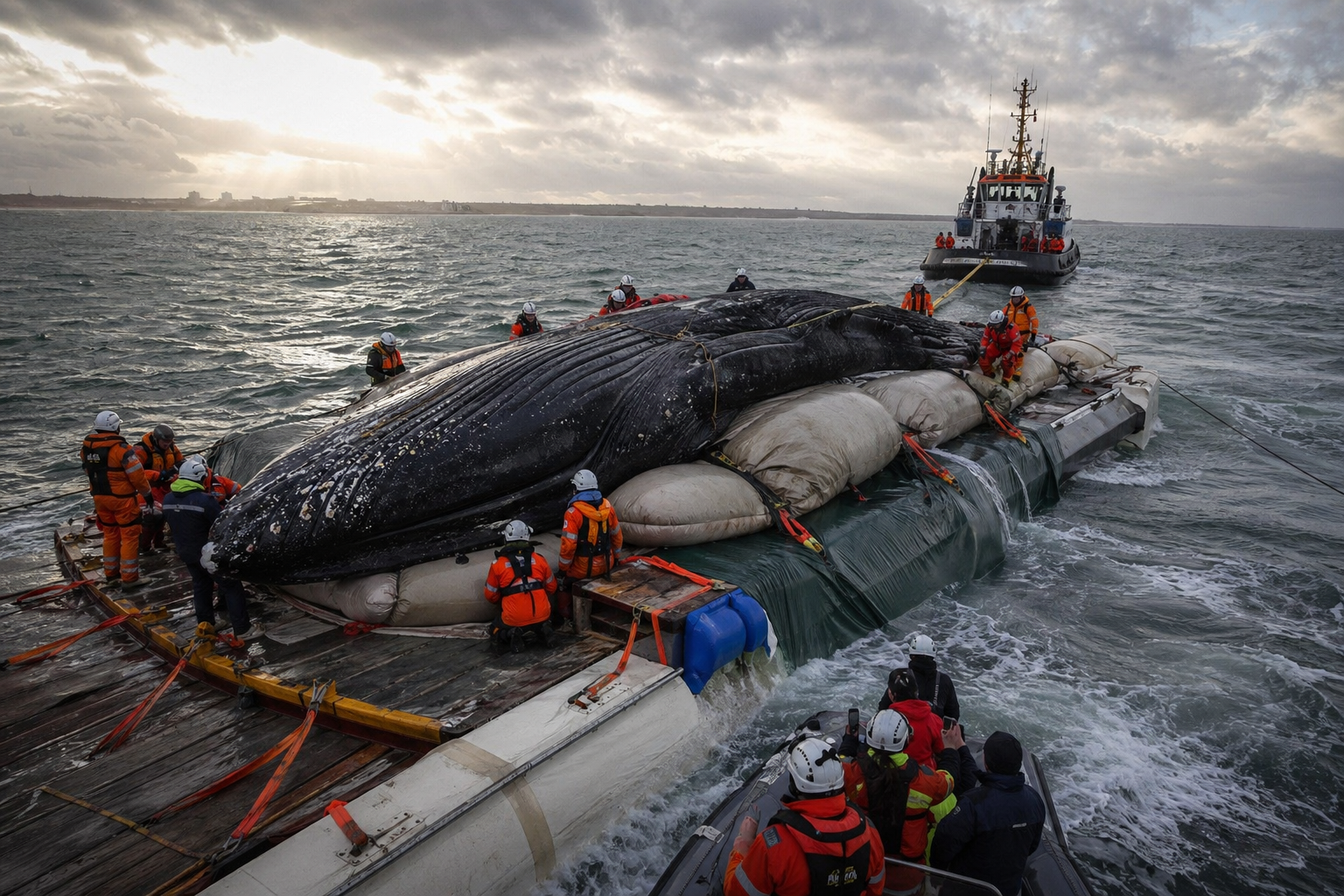
Instead of forcing the whale to move, rescuers decided to lift the ocean to him — metaphorically speaking.
Using industrial-grade air cushions, carefully positioned beneath Timmy’s body, teams are slowly elevating the whale with surgical precision. These cushions distribute weight evenly, reducing internal pressure — a critical factor, since stranded whales often suffer fatal organ damage from their own mass.
Beneath him lies a reinforced marine tarp, stretched tightly between two floating pontoons. This creates a flexible yet stable “floating cradle,” designed to move with both the whale and the sea.
It’s not just engineering — it’s choreography:
- Teams constantly monitor stress points on the whale’s body
- Water is pumped underneath to prevent skin damage and overheating
- Veterinarians track breathing, heart rate, and muscle response in real time
Every centimeter matters. Every second counts.
The Journey Ahead: Baltic to Atlantic
Once fully stabilized, Timmy will be towed out of the shallow Baltic waters, through a carefully planned maritime route toward the North Sea, and eventually into the open Atlantic Ocean — where humpback whales belong.
The journey spans hundreds of kilometers and presents new risks:
- Changes in salinity and temperature
- Wave stress during towing
- The whale’s unpredictable physical condition
A tugboat will move slowly, maintaining a speed that balances stability and urgency. Escort vessels will flank the platform, ready to intervene if conditions change.
Why This Matters Beyond One Whale
This operation isn’t just about saving Timmy — it’s a proof of concept.
Traditional whale rescues often rely on refloating during high tide or guiding animals back to sea. But for large whales stranded in complex coastal environments like the Baltic, those methods often fail.
If successful, this technique could:
- Provide a new global standard for rescuing large marine mammals
- Reduce mortality rates in future strandings
- Offer a safer, less traumatic alternative to heavy machinery
Marine conservationists across Europe are already watching closely. Some are calling it a potential turning point in wildlife rescue science.