The Weight of a Whisper: A Father’s Vigil in the Quiet Hours
The Weight of a Whisper: A Father’s Vigil in the Quiet Hours
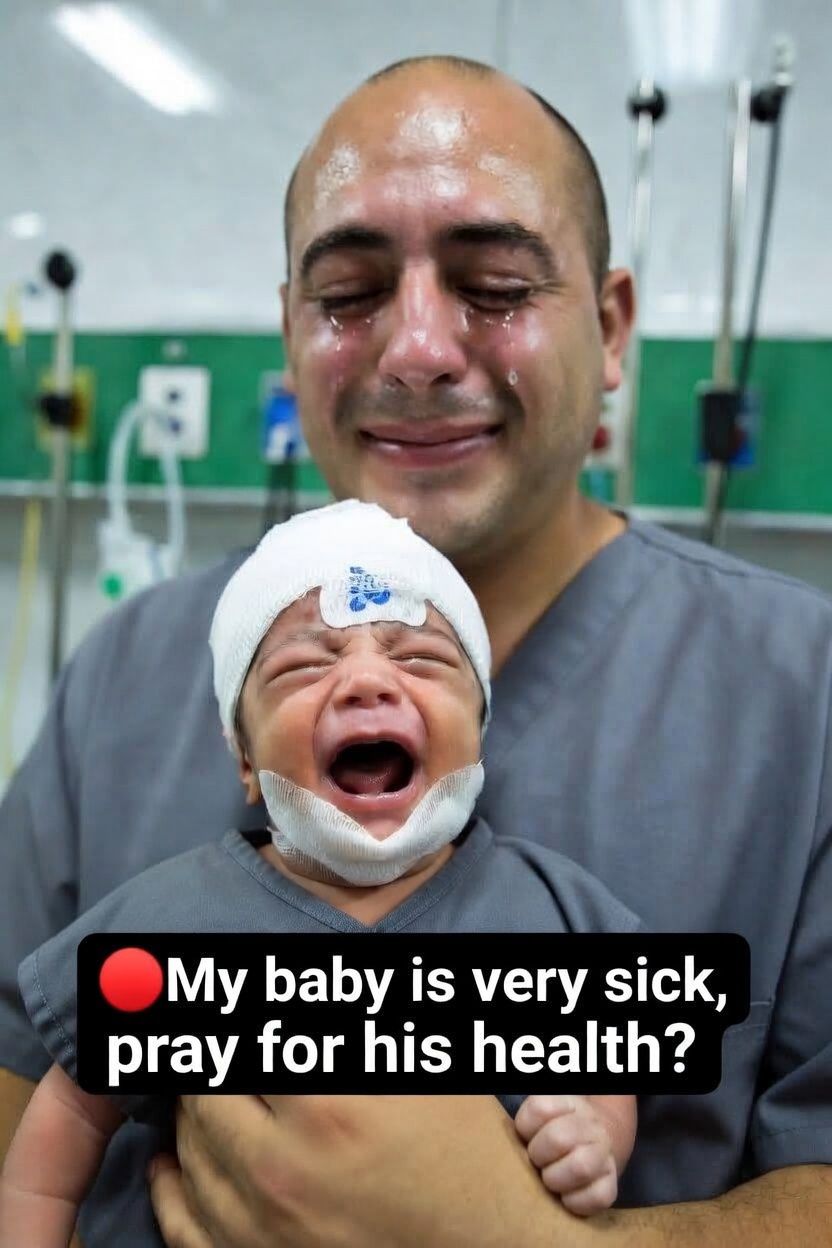
There is a specific kind of silence that exists only in the sterile hallways of a hospital at midnight. It is a silence thick with anticipation, punctuated only by the rhythmic hum of monitors and the soft, rhythmic breathing of those clinging to hope. In the center of this stillness, a father sits, his world condensed into the few square inches of a hospital bassinet. Under the unforgiving glare of fluorescent lights, the boundaries between strength and vulnerability dissolve, leaving behind nothing but the raw, unshielded essence of paternal love.
As he holds his tiny infant close, the weight of the moment becomes visible in the steady stream of tears tracing paths down his tired face. These are not just tears of sorrow; they are the physical manifestation of a fear so deep it defies language. Every small cry from the child feels like a thunderclap in the quiet room, a reminder of the fragility of the life he is sworn to protect. In this space, the traditional image of the stoic, unshakable father is replaced by something far more profound: a man who is brave enough to be broken by his devotion.
The words “All I can do is hope and pray” are not a sign of surrender, but a testament to the limits of human agency. In the face of medical uncertainty, where even the strongest hands cannot mend what is broken, the act of hoping becomes a form of resistance. It is a quiet, steady pulse of belief that carries a family through the minutes when the hours feel too long to bear. This father’s silent cry is an echo of every parent who has ever stood on the precipice of the unknown, offering up everything they have for one more stable heartbeat, one more peaceful breath.
Tonight, this scene serves as a poignant reminder of the universal bond that connects us all. It strips away the noise of the outside world, focusing instead on the most fundamental human experience: the desperate, beautiful, and often terrifying act of loving someone more than yourself. Love is revealed here as a paradox—it is the very thing that makes us most fragile, yet it provides the only strength capable of enduring the unendurable. In that heavy, quiet room, a father’s tears are a sacred language, speaking for millions who know that in the end, love is the only thing that truly remains.