The Final Salute: Steven Seagal and Kurt Russell’s Quiet Farewell to Chuck Norris (1940–2026)
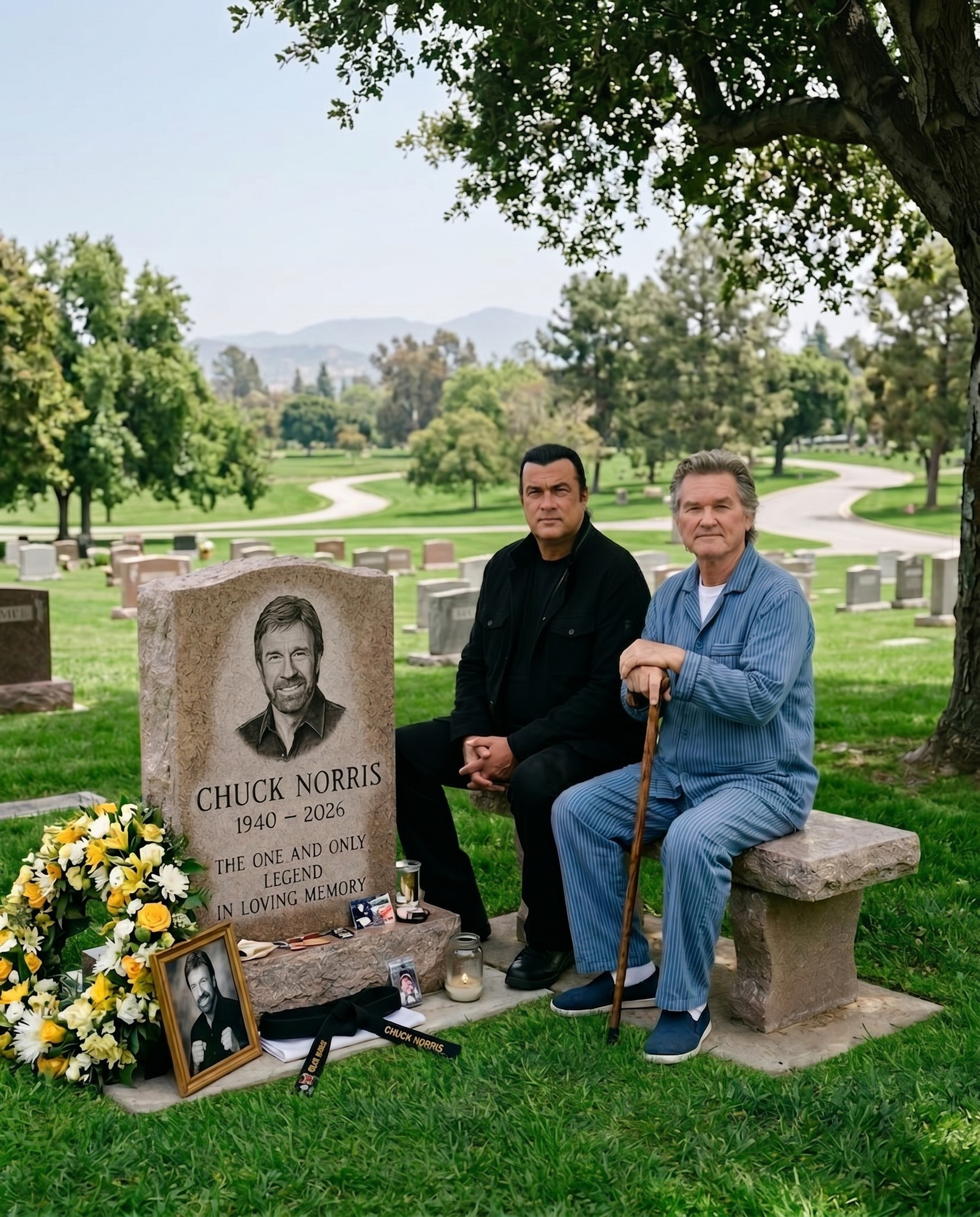
The Final Salute: Steven Seagal and Kurt Russell’s Quiet Farewell to Chuck Norris (1940–2026)
There are moments in the history of cinema that transcend the silver screen, moving beyond the artifice of scripts and stunts into the raw, aching reality of human loss. A photograph captured at a quiet cemetery has become one of those moments. In a scene defined by absolute stillness, Steven Seagal is seen sitting beside the gravestone of Chuck Norris, his eyes reflecting a weight of grief rarely glimpsed by the public. Next to him sits Kurt Russell, a man clearly battling his own health challenges. Dressed in pajamas and leaning heavily on a cane, Russell’s presence—despite his fragile state—serves as a powerful testament to a lifelong bond. Surrounded by yellow and white flowers and the soft flicker of candles, the gravestone bears a simple yet heavy inscription: “Chuck Norris, 1940–2026. The One and Only Legend. In Loving Memory.”
Chuck Norris was far more than an action star; he was a cultural phenomenon whose influence spanned generations. Born Carlos Ray Norris in 1940, his journey from a humble upbringing in Oklahoma to the heights of world karate championship and Hollywood stardom was a masterclass in discipline. Through iconic roles in “Missing in Action,” “Delta Force,” and “Walker, Texas Ranger,” he became a global symbol of strength. Yet, the internet’s endless “Chuck Norris Facts” only scratched the surface of the man. Those closest to him knew a person of deep faith and genuine warmth, a man whose real-life integrity often overshadowed his onscreen persona. His passing in 2026 at age 85 left a void in the hearts of millions that feels impossible to bridge.
For Steven Seagal, this loss is deeply personal. As fellow martial arts masters, Seagal and Norris shared a unique “warrior’s code” that went deeper than the industry they inhabited. Seagal has often regarded Norris not just as a contemporary, but as a true brother in arms. Seeing Seagal at the gravesite—stripped of his usual action-star bravado—is profoundly moving. It is a rare glimpse of vulnerability from a man known for his stoicism, showcasing the deep-seated respect he held for his fallen friend.
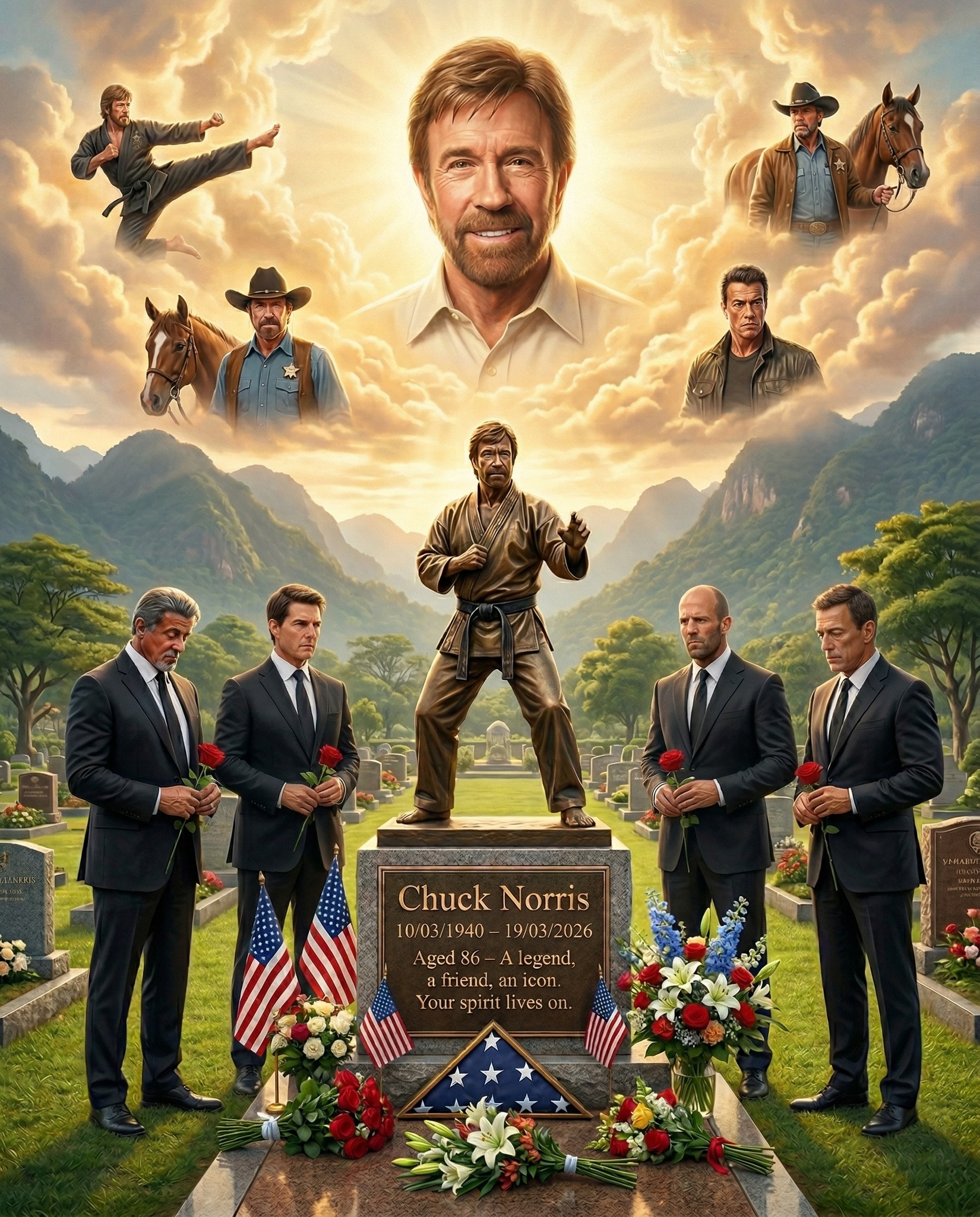
Kurt Russell’s arrival at the cemetery, despite his own ongoing recovery from illness, adds a layer of heartbreaking poignancy to the scene. Russell and Norris represented the rugged, charismatic core of 1980s cinema. That Russell would allow Seagal to bring him here, appearing in his pajamas and clutching a cane, speaks to a fundamental rule of their generation: You show up for your brothers, no matter what. It was a final, silent salute from one legend to another.
This quiet afternoon in the fading light represents the closing of a golden chapter in action cinema. Three titans—one immortalized in stone and two paying their respects—remind us of the fragility and honesty of life. Chuck Norris gave the world a lifetime of courage and inspiration. In his final rest, he received the highest honor a warrior can ask for: the presence, the tears, and the unwavering love of his brothers. Rest easy, Chuck. The legend lives on through those you left behind.