
A Rare Family Moment: Barron Trump’s Birthday Celebration That Changed Everything
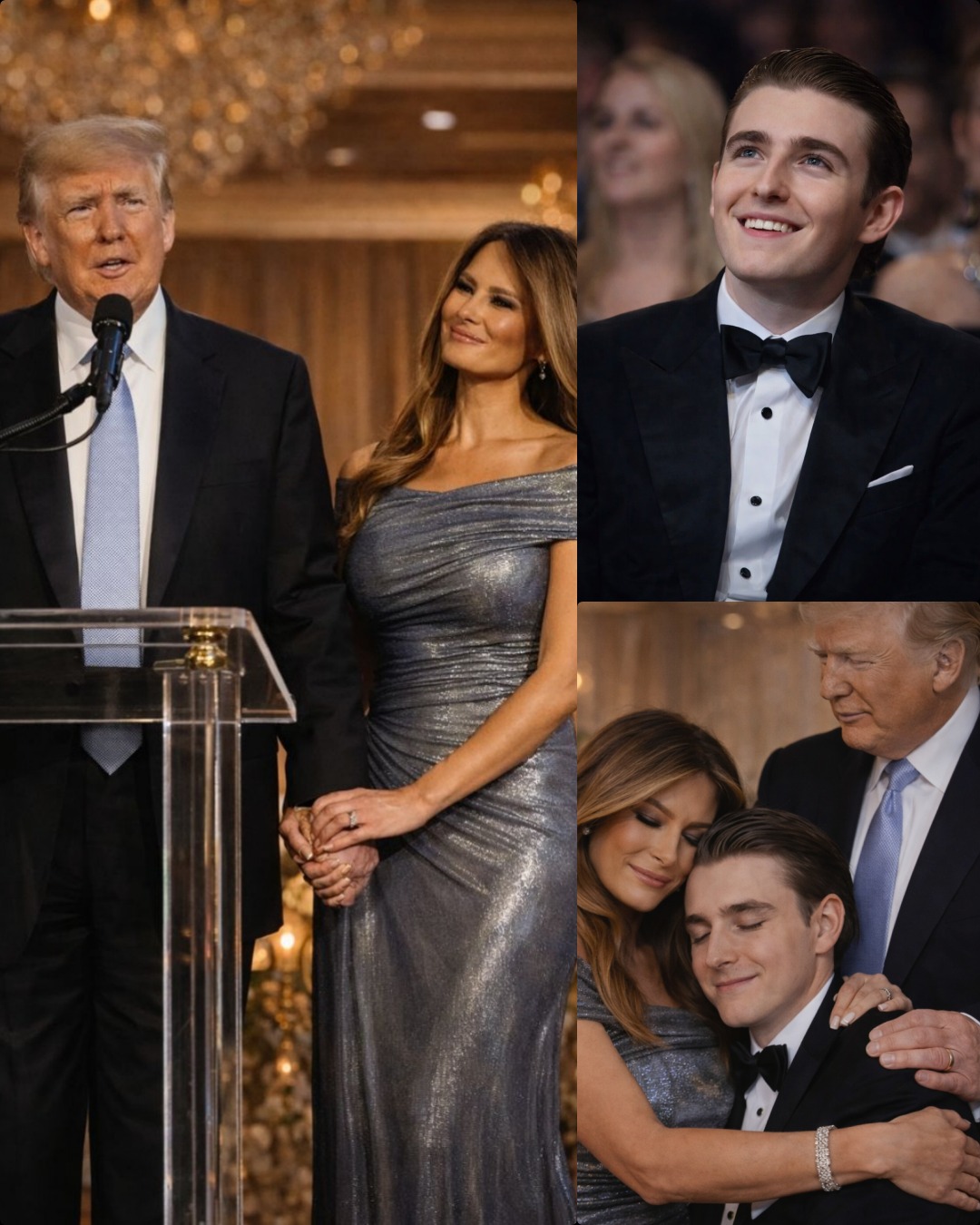
The night had begun as it usually would for any private birthday celebration: the soft murmur of voices, the clink of glasses, the polite hum of people making small talk. The grandeur of the occasion was muted by the intimacy of it all. The event was set to celebrate Barron Trump’s birthday, a quiet affair that seemed at odds with the public spectacle surrounding the Trump family. The media and paparazzi usually followed their every move, yet this evening was different—a moment designed to be shared among family, away from the relentless eye of the public.
Yet, in the midst of what was supposed to be a simple dinner, the atmosphere in the room shifted. Donald and Melania Trump, standing together, quietly poised, had not anticipated the emotional gravity of their words. They had not planned to share a rare moment of vulnerability with those gathered, but it came nevertheless. And when it did, the room fell silent, the energy of the evening turning from casual celebration to something much deeper, much more personal.
In that brief, fleeting moment, as they both rose to speak, the contrast between their public lives and the quiet intimacy they had built together over the years became stark. It wasn’t a performance for the cameras. It wasn’t about accolades or applause. It was something much more profound: it was family, memory, and a raw, unguarded connection between a mother, a father, and their son.
As Donald Trump spoke, his voice, though steady, betrayed a hint of emotion that few had ever heard in public from him. The years of public life—political battles, media scrutiny, and the spotlight that had always shone on him—seemed far removed in that moment. His words were not meant to address the room; they were meant for Barron. They spoke of the little moments that had passed too quickly, the private memories that had been tucked away behind the facades they had each built. The weight of those years—the missed milestones, the fast-moving tide of time—seemed to settle into Donald’s words. He had never been one for public displays of sentiment, yet as he spoke of his son, there was a softness in his voice that was impossible to ignore.
As Donald spoke, Barron’s expression didn’t change at first. The young man, always so composed, appeared to absorb his father’s words with the quiet poise of someone used to keeping their emotions guarded. Yet, as the words lingered in the room, something shifted within Barron. His eyes softened, his posture relaxed, and for a fleeting moment, it was as though the weight of the public world had been lifted. He was no longer the son of two of the most famous people in the world. He was simply a son, surrounded by those who loved him.

Barron had grown up under the harsh glare of the spotlight, often perceived as distant and removed from the chaos of the world around him. Yet, on that night, in the quiet glow of the chandeliers, the world faded away, and he was simply Barron—vulnerable, emotional, and deeply moved by the unexpected tenderness of the moment.
Melania, ever the poised figure, continued after Donald. Her voice, calm and controlled as always, held a tenderness that matched her husband’s. She spoke of the years they had spent raising their son in a world that had never fully understood them. She shared memories—small, seemingly insignificant moments that had shaped their family in ways that only they could fully understand. These were the memories that had been hidden from the public eye, tucked away in the quiet spaces of their lives. As she spoke, there was a slight falter in her voice, a rare crack in the stoic armor she had built over the years. But it was a crack that spoke volumes.
For a moment, Melania, too, was not the First Lady, not a public figure constantly on display. She was simply a mother, deeply connected to her son and to her husband, speaking words that transcended the constraints of their public lives. The vulnerability was unspoken, yet palpable. And it wasn’t just for Barron. It was for herself. It was for their family. It was a message that had been waiting to be shared in private, in the safety of their own home, and it was now laid bare for the few who were fortunate enough to witness it.
The room had fallen silent by this point. The polite chatter that had filled the air at the beginning of the evening was replaced by a heavy, almost sacred quiet. No one moved. No one spoke. Even the sound of breathing seemed muffled, as if the very air had grown thick with emotion.

Barron sat across from his parents, his face still and unreadable. His eyes, however, told a different story. They glistened with unshed tears, a silent testament to the emotions he was feeling but had yet to express. For the first time in what seemed like years, Barron Trump, the son of two of the most famous figures in the world, allowed himself to be fully present—not as a public figure, not as the son of political royalty, but as a young man, vulnerable and raw, in the company of his parents.
In that moment, time itself seemed to slow down. The years of scrutiny, the millions of eyes that had watched Barron grow up, disappeared. There were no cameras in that room, no microphones capturing every word. There was no one to judge, no one to comment, just a family, caught in a rare and intimate exchange that spoke volumes about love, legacy, and memory.
Donald and Melania, too, seemed to experience something transformative. Their public personas, so often at odds with their private selves, seemed to dissolve in the warmth of the moment. There were no speeches, no prepared statements, just the quiet and honest words of a family coming together in a shared moment of vulnerability.
The silence that followed felt like a benediction, a moment of grace that none of them had expected. It was as if the weight of the years had been lifted, if only for a moment, and they could simply be a family, not the public figures the world had known them as. The quiet was not awkward; it was profound. It was the kind of silence that comes only when something deeply personal and meaningful has been shared.
And then, just as quietly as it had begun, the moment passed. The dinner, still a celebration of Barron’s life, resumed, but it had shifted in its significance. What had begun as a simple birthday dinner had become something much more—a rare moment of connection and intimacy, a glimpse into the private world of a family that had been under public scrutiny for as long as anyone could remember.
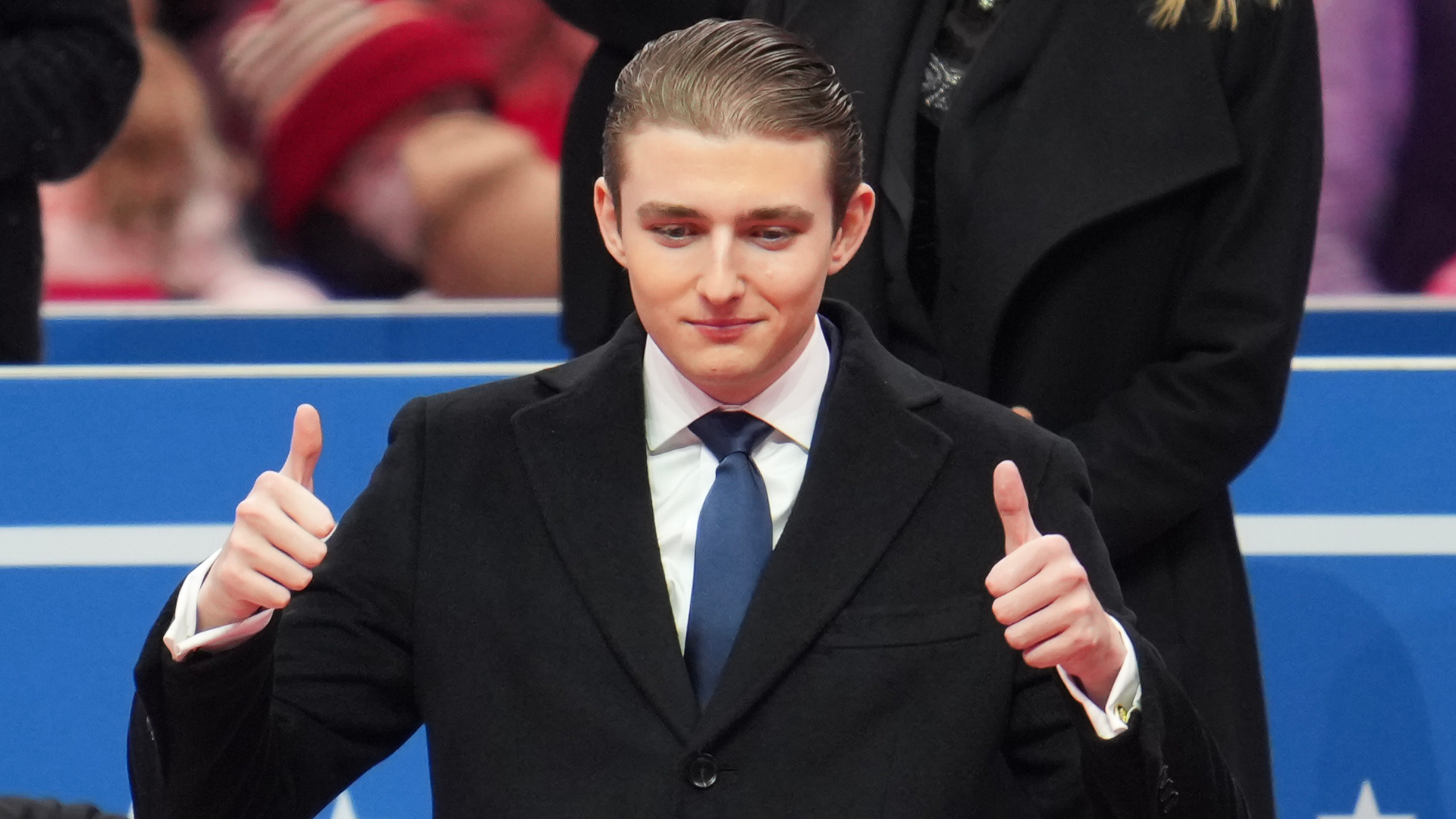
For Barron, the evening had been transformative. He had allowed himself to feel something deep and real in the presence of his parents. He had let down the walls he had so carefully built around himself, and in doing so, he had opened a window into the vulnerability he had long kept hidden.
In that room, under the soft glow of chandeliers, surrounded by the quiet hum of life and love, the boundary between public and private life had dissolved. There was no applause, no fanfare—just a family, forever changed by the raw honesty of their shared moment.
As the evening wound down, Barron sat in the quiet company of his parents, no longer a boy trying to live up to the expectations of the world but a son, a young man, loved unconditionally by the two people who mattered most. And as the night came to a close, the memory of that rare, transformative moment lingered—one that would not be captured in headlines, but one that would live on in the hearts of the family who shared it.
And so, the night ended not with a conclusion, but with a question left hanging in the air—how often do we truly allow ourselves to be seen, to be vulnerable, to be loved? Perhaps the most precious moments in life are those when we forget the world and embrace each other, just as we are.