King Charles’ First Standing Ovation: A Moment Years in the Making
Part 1: The Weight of the Moment
April 28, 2026, was a day that history would remember. As King Charles stood before a packed House chamber, he was not just a monarch speaking to a room full of legislators. He was a man who had waited his entire life to carry the weight of this moment, a man who had spent decades preparing to step into the role he was born to fill. As the first standing ovation rippled through the chamber—before he had even spoken a single word—it became clear that this was no ordinary moment. The applause wasn’t just for the King. It was for a lifetime of perseverance, patience, and quiet courage that had led him to this exact point in time.
For years, Charles had walked in his mother’s shadow, a prince waiting to become king, a man whose public life was often marked by the burden of waiting. From his early days accompanying his parents on state visits to his later years as an heir to the throne, Charles had endured moments of quiet frustration. The world often saw him as an eccentric, the man who talked to plants, who cared deeply about architecture and the environment, interests that sometimes seemed out of place in the modern world. He was often misunderstood, dismissed by critics who failed to see the deep reservoirs of patience, empathy, and wisdom he had cultivated over the years.
Now, as he stood at the podium in Washington, his face flickering with emotion, he was no longer the man who had waited for his moment—he was the King who had arrived. The applause he received wasn’t just for his royal title—it was for the years of dedication and service, the quiet courage to persist when the world doubted, and the deep commitment to the principles he had held onto for so long.
Part 2: A Royal Legacy and the Weight of History
Charles had been to Washington many times over the years. As a young prince, he had stood beside his parents, absorbing the power and prestige of the American capital. In his middle years, he had navigated the complicated dance of heir apparent, always one step away from the throne, always waiting for a role that seemed to elude him. But now, as King, he was no longer the figurehead waiting in the wings. He was the leader of a new era, an era where his decades of service, his commitment to long-term thinking, and his deep understanding of the world were finally being recognized.
When he looked up at the Statue of Freedom above the chamber, there was a momentary flicker in his eyes—a quiet acknowledgment that he was no longer the young prince trailing behind his parents, but a man who had inherited not only the title of King but the responsibility that came with it. In that brief moment, he couldn’t help but think of his late mother, Queen Elizabeth II, who had stood in that very spot in 1991 and delivered her own speech.
But there was something different about this moment. Charles was not only stepping into his mother’s shoes, but he was also becoming his own man, with his own vision for the future. His speech wasn’t just an address to the American people; it was a testament to everything he had stood for throughout his life. As he spoke of his mother’s legacy and his own vision for the future, the room responded in ways that few could have predicted.

Part 3: The Long-Awaited Speech and the Standing Ovations
The room erupted in applause as Charles began his speech, but it wasn’t the usual kind of applause. It wasn’t the applause of a politician giving a well-rehearsed speech or a public figure making promises for the future. No, this applause came from something deeper—a recognition of the man who had endured years of challenges, who had spent decades speaking about issues that no one seemed to care about until they were finally brought to the forefront. His words, though few, resonated with the world in a way that no one had anticipated.
As he spoke about the importance of unity, the challenges of the modern world, and the need for long-term thinking, the applause came in waves. At first, it was a steady clapping, but soon it became a crescendo, an overwhelming show of respect and admiration. In total, King Charles received twelve standing ovations during his twenty-minute address. It was a stark contrast to the three standing ovations his mother had received during her speech in 1991. The difference wasn’t lost on anyone—it was clear that this was a moment the world had been waiting for.
In those first few moments, King Charles had captured the attention of not just the American Congress, but the entire world. His speech was a reflection of the years he had spent fighting for issues that mattered, issues that had often been dismissed as irrelevant or out of touch with the times. But now, as the world listened, it became clear that Charles had turned patience into a form of courage. His quiet resilience, his unwavering commitment to causes that often went unnoticed, was now being acknowledged in ways he had long deserved.
Part 4: The Support of Camilla and the Silent Strength
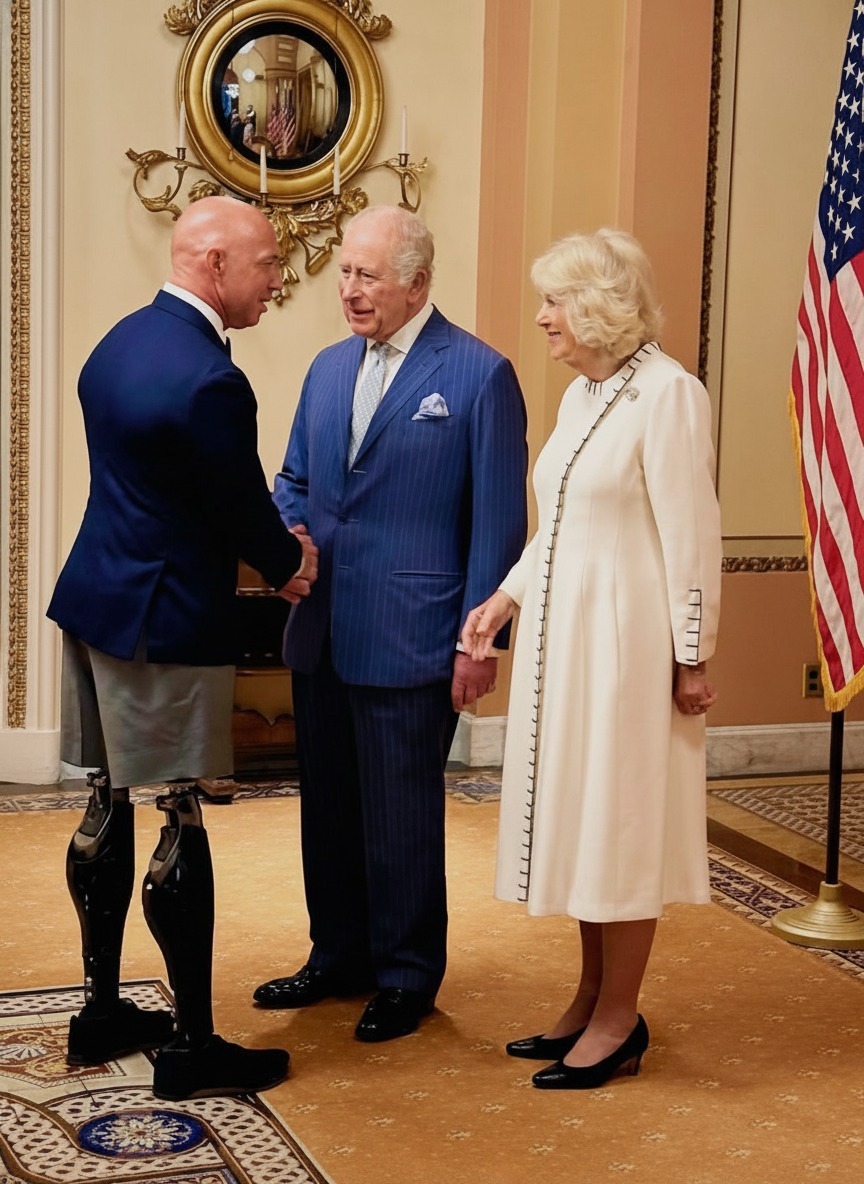
As Charles spoke, his wife Camilla sat in the gallery, watching him with a quiet pride. She had been by his side for so many years, a partner in both his personal and public life. She had seen the struggles, the moments of doubt, and the years of waiting, and now she was witnessing the culmination of all that patience. As the applause continued, Camilla’s hand gently rested on the arm of her chair. It was clear to all in the room that this was more than just a political address. This was a deeply human moment, a testament to the strength of a man who had waited a lifetime to be seen for who he truly was.
For those twenty minutes, the room felt less like a political chamber and more like a place where something profoundly human was being said. Charles wasn’t just the King of England; he was a man who had spent his life preparing for this moment, a man who had faced countless obstacles and emerged stronger for it. In that room, he was no longer just a royal figurehead; he was a symbol of endurance, of quiet strength, and of the power of patience in the face of adversity.

Part 5: The Royal Family and the Power of Patience
The standing ovations that Charles received were not just a tribute to his royal title—they were a recognition of everything he had endured over the years. For so long, he had been the subject of criticism, often mocked for his interests in architecture, the environment, and other issues that seemed out of step with the modern world. But in that moment, the world saw him for who he truly was: a man whose commitment to the long-term health of the planet, to his country, and to the legacy of his family was finally being acknowledged.
The standing ovations, the applause, and the recognition were a moment that transcended politics. They were a tribute to the man who had spent decades fighting for the causes he believed in, a man who had waited his entire life for this moment, and who now stood ready to lead. It was a moment that spoke not only to the significance of the monarchy but to the significance of patience, resilience, and the quiet courage to keep going even when the world wasn’t listening.
Part 6: A Moment for the Ages
As the speech ended and the applause continued, Charles took a moment to absorb everything that had just happened. The moment, the weight of it all, was almost too much to bear. For so long, he had waited for this recognition, for this moment when the world would finally see him not just as a royal figure, but as a man who had spent his life preparing to lead.
And in that moment, Charles realized something that no one else could see. He was ready for this. The years of preparation, the quiet moments of reflection, the work he had put into causes that often went unnoticed—this was all leading to something bigger than himself. He wasn’t just a king who had inherited a throne; he was a king who had earned the right to lead, and he was finally being recognized for it.
Part 7: The Beginning of a New Era
As King Charles left the chamber, the weight of the moment still hanging in the air, it was clear that the world had just witnessed the beginning of a new era. This was not just the end of one chapter; it was the beginning of another. A chapter where patience, perseverance, and long-term thinking would finally be valued. A chapter where the quiet courage of a man who had waited for his moment would finally be acknowledged.
And for Charles, it was a moment he would never forget—a moment when the world saw him for who he truly was, and when he realized that all the years of waiting had prepared him for this. It was a moment when the King became the man he was always meant to be.