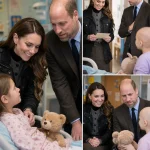
PRINCE WILLIAM AND PRINCESS CATHERINE SHARE QUIET ACT OF KINDNESS WITH GRIEVING TEENAGER DURING PUBLIC ENGAGEMENT
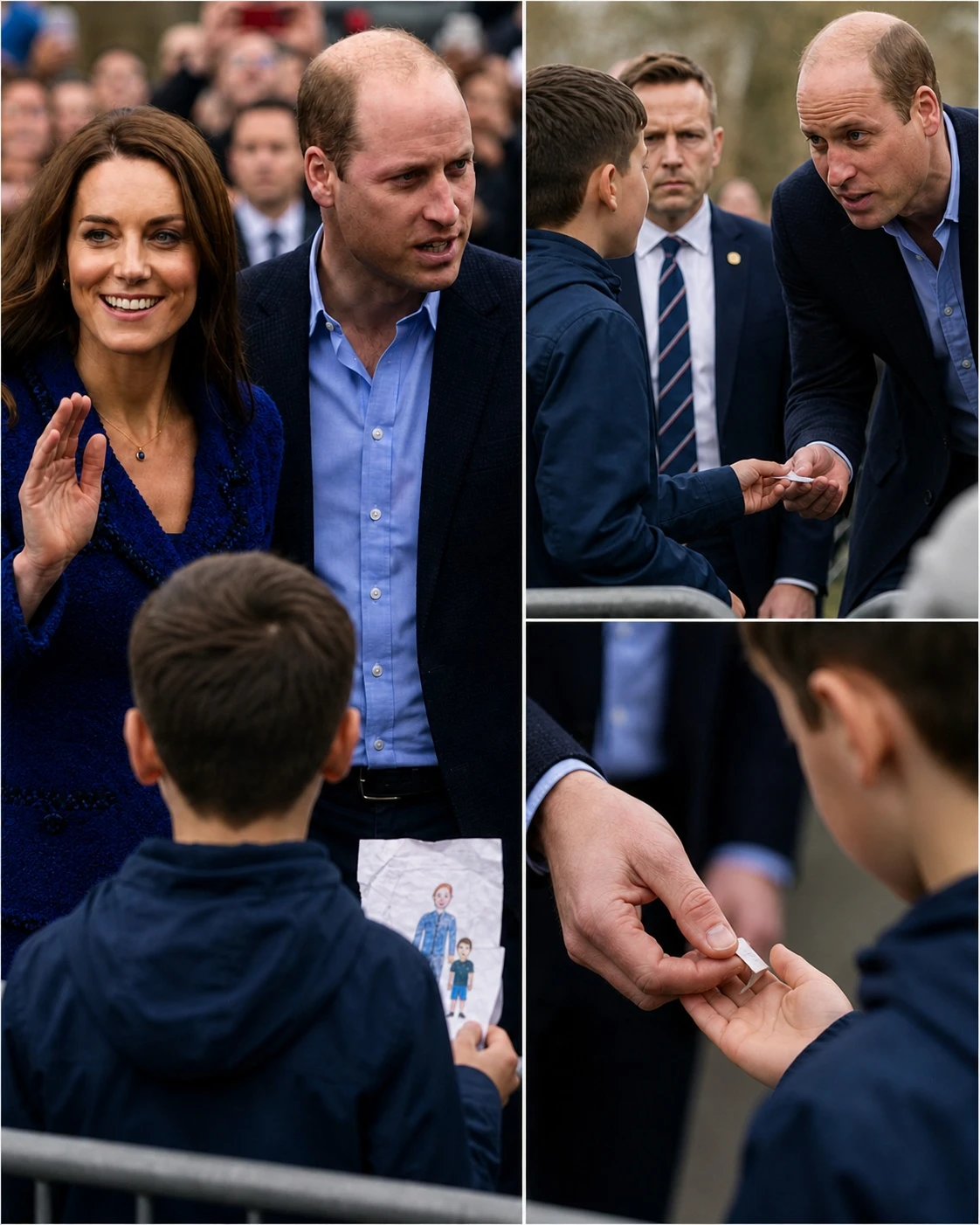
During a recent public engagement in the United Kingdom, Prince William and Catherine, Princess of Wales were involved in a deeply personal moment that left a lasting impression on those present.
The event took place outside a civic venue where members of the public had gathered behind barriers to greet the royal couple.
Among the crowd was a 13-year-old boy holding a folded, hand-drawn picture.
The drawing depicted Prince William standing beside a smaller figure labeled “Dad.”
At first glance, the moment appeared similar to many others during public walkabouts.
Security personnel maintained order while attendees tried to catch a brief interaction.
However, as Prince William moved along the line, he noticed the word “Dad” written on the drawing.
He paused and looked more closely, signaling a change in the flow of the engagement.
According to aides present at the scene, Prince William asked staff to allow the boy to remain rather than move him along.
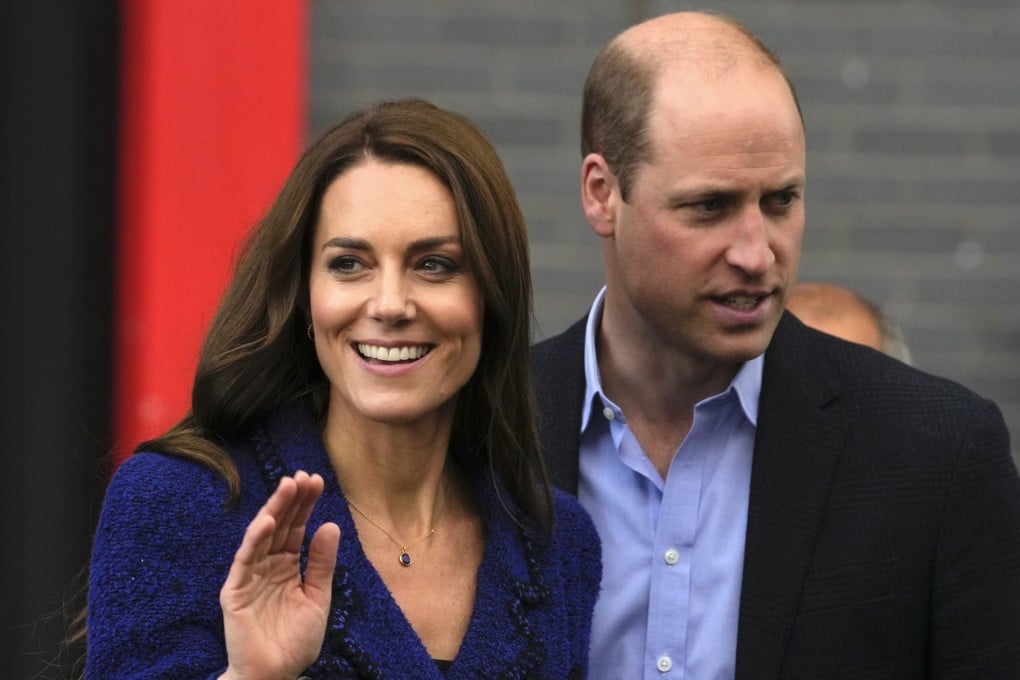
The brief pause drew quiet attention from those nearby.
The boy appeared nervous but remained in place, holding the drawing tightly.
After a short exchange, Prince William indicated that the boy should be brought backstage.
This decision was made without announcement and with minimal disruption to the ongoing event.
Once inside, the atmosphere shifted from public formality to a more private setting.
Catherine, Princess of Wales, was the first to greet the boy.
She spoke to him calmly, helping to ease his visible anxiety.
Witnesses later described her approach as gentle and reassuring.
The boy gradually became more comfortable as the conversation continued.
Prince William then joined them, maintaining a composed and attentive demeanor.
He asked the boy about the drawing and listened carefully to his response.
During this conversation, aides learned that the boy had lost his father the previous year.
They had shared a routine of watching royal events together.
Attending the event alone was a significant step for the boy.
He had chosen to wear his father’s oversized jacket as a way of feeling connected.
Prince William acknowledged this detail with understanding.
He spoke about the importance of remembering loved ones and honoring their memory.
The exchange remained private, with no cameras or media present.
At one point, Prince William paused briefly before reaching for a small personal item.
He handed it to the boy in a quiet gesture.
Those present did not publicly disclose the exact nature of the item.
However, it was clear that the gesture carried personal significance.
The boy accepted it with visible emotion.
The moment was not framed as a public display but as a direct interaction between individuals.
Before the boy returned to the main area, Prince William took the drawing.
He signed it with a short message.
The message read, “For your father. He’d be proud of you.”
This inscription added a lasting element to the interaction.
Afterward, the boy was guided back to the crowd.
The event continued without formal acknowledgment of what had occurred backstage.
However, those who witnessed parts of the interaction shared their observations later.
The story began to circulate through media coverage and public discussion.
Many people responded positively to the account.
They highlighted the empathy shown by both Prince William and Catherine.
Commentators noted that such moments often go unnoticed in larger public events.
They also emphasized the importance of personal connection in public service roles.
The incident aligned with Prince William’s ongoing focus on mental health awareness.
His work in this area has frequently addressed grief and emotional well-being.
Observers suggested that this experience reflected those broader commitments.
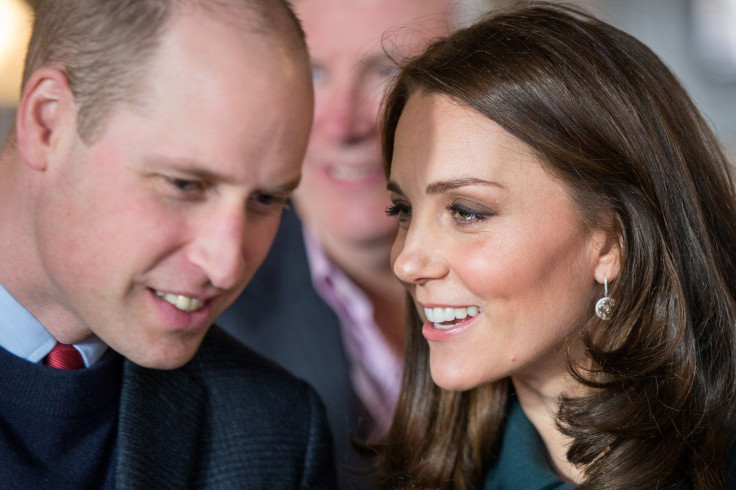
Catherine’s role in the interaction was also widely recognized.
Her ability to create a sense of calm contributed significantly to the outcome.
Together, their actions demonstrated a coordinated and thoughtful approach.
Royal analysts pointed out that such interactions are carefully managed but can still carry genuine meaning.
They noted that authenticity plays a key role in how these moments are perceived.
The boy’s experience became a focal point for discussions about the impact of small gestures.
Many emphasized that meaningful support does not always require public recognition.
In this case, the absence of publicity during the moment itself was seen as significant.
It reinforced the idea that the interaction was intended for the individual rather than the audience.
The broader public response reflected an appreciation for this approach.
Social media users shared similar personal stories of loss and remembrance.
The narrative resonated with those who have experienced grief.
It also highlighted the potential influence of public figures in personal contexts.
For Prince William, the moment added to an existing body of work focused on empathy and support.
For Catherine, it reinforced her role in fostering connection during engagements.
The event itself continued as scheduled, with no official statement addressing the interaction.
This decision maintained the privacy of the individuals involved.
At the same time, the story continued to gain attention through indirect accounts.
Media coverage remained focused on the human aspect of the encounter.
Analysts noted that such stories often shape public perception more than formal announcements.
They provide insight into how public roles are carried out in practice.
In this instance, the emphasis remained on understanding and compassion.
The boy left the event with both a personal item and a signed drawing.
These items served as reminders of the interaction.
More importantly, the experience itself appeared to have a meaningful impact.
Observers suggested that the moment could help the boy process his loss.
While the long-term effects are not measurable, the immediate response was clear.
The interaction demonstrated how brief encounters can carry lasting significance.
It also showed how public figures can influence individuals in unexpected ways.
As discussions about the event continue, the focus remains on the core elements of the story.
A young person facing loss.
A moment of recognition.
And a response grounded in empathy rather than attention.
In a setting often defined by formality and visibility, this quiet exchange stood out.
It served as a reminder that even within structured public roles, personal connection remains possible.
And in that connection, small actions can leave a meaningful and lasting impression.