A QUIET ACT OF COMPASSION: PRINCE WILLIAM AND CATHERINE FUND LIFE-SAVING CARE AND SPEND HOURS WITH CHILDREN AND FAMILIES IN A DAY THAT LEFT A LASTING IMPACT
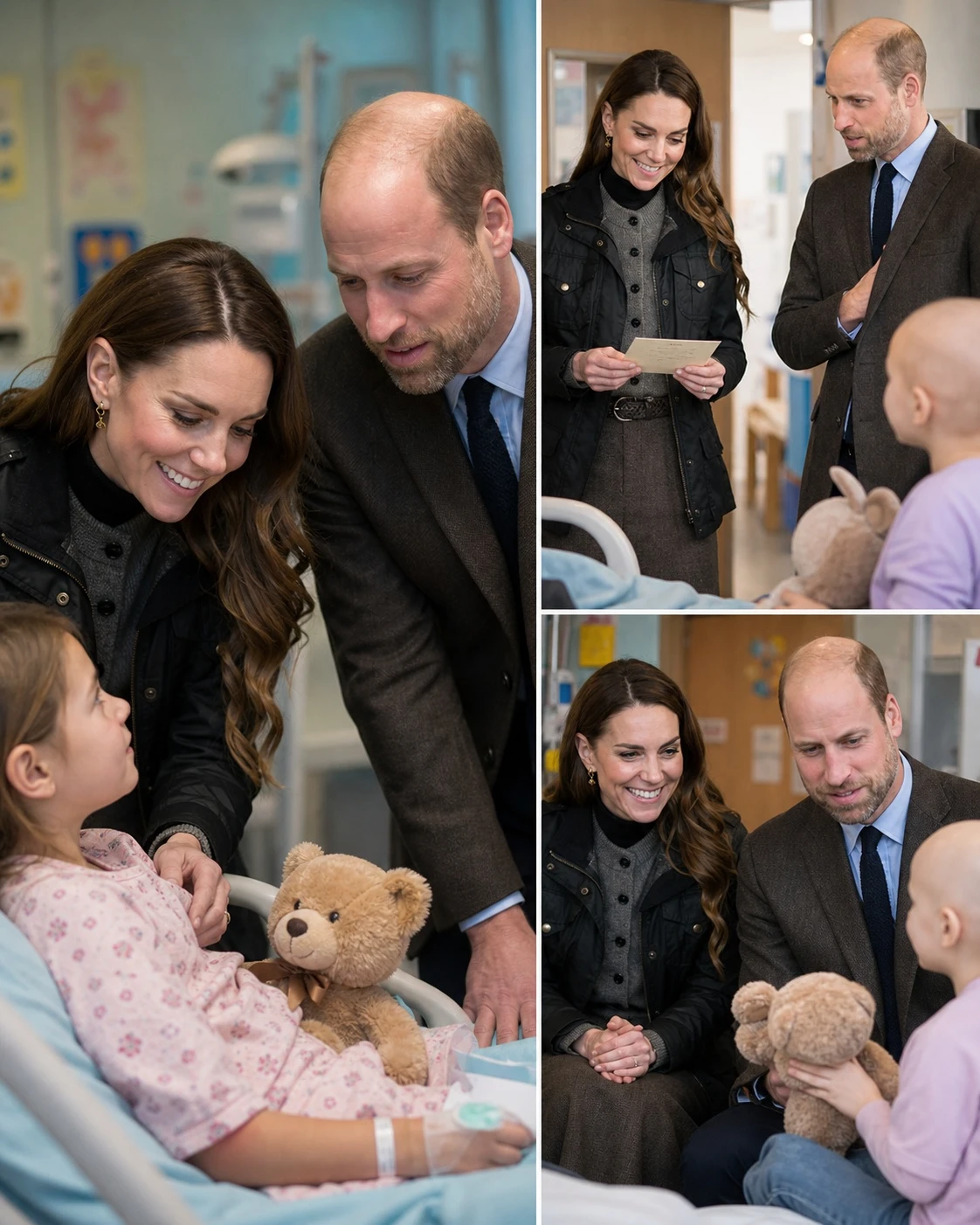
In a carefully coordinated but low-profile initiative, Prince William and Catherine, Princess of Wales visited multiple hospitals on a spring afternoon to support children undergoing critical medical treatment.
The visit had been arranged weeks in advance with hospital administrators, medical teams, and charitable partners who specialize in pediatric care.
The primary objective was to provide financial support that would help cover the cost of complex procedures and post-operative care for children facing serious illnesses.
Families had been informed that additional funding would be made available, but most were unaware of who would be behind the support.
As a result, the atmosphere inside the hospitals was focused on medical preparation rather than public attention.
Doctors, nurses, and specialists moved through their routines, ensuring that each procedure was ready to proceed safely.
Parents waited in designated areas, balancing anxiety with cautious hope.
Children were prepared for surgery with the assistance of pediatric staff trained to ease fear and provide comfort.
During this time, William and Catherine arrived quietly, entering through a side access point to avoid disrupting operations.
They were accompanied by a small team, including representatives from charitable organizations and hospital coordinators.
Their presence was not announced over public systems, and no media crews were invited inside.
Instead, the visit was structured to remain focused on the patients and their families.
Throughout the afternoon, multiple procedures took place as scheduled.
Medical teams worked with precision, supported by the knowledge that additional resources were now available to ensure the best possible outcomes.
As surgeries concluded, patients were transferred to recovery areas where they would be monitored closely.
It was at this stage that William and Catherine began moving through the hospital wards.
They entered each recovery room individually, accompanied only by a small number of staff members.
In each room, they introduced themselves to families and spoke directly with parents and children.
Their conversations were not rushed.
They asked about treatment experiences, recovery expectations, and the support families needed moving forward.
For many parents, the opportunity to speak openly in such a moment provided reassurance beyond the medical care itself.
William often focused on discussing practical support systems, including access to ongoing care and community resources.
Catherine, drawing on her experience with early childhood and family-focused initiatives, engaged directly with the children in a calm and reassuring manner.
She spoke at their level, using simple language to explain what they had gone through and what would happen next.
In addition to conversation, the couple brought handwritten notes and small gifts tailored to each child.
These items had been prepared in advance, based on information provided by hospital staff about the children’s interests and preferences.
Some gifts included books, toys, or personalized messages designed to encourage recovery.
The gesture, though modest in scale, carried emotional significance for families who had been navigating prolonged periods of uncertainty.
At one point during the visit, William and Catherine paused together in a central recovery ward.
They briefly addressed a small group of parents and medical staff who had gathered nearby.
Their message was direct and focused.
They expressed gratitude to the medical teams for their work and dedication.
They acknowledged the strength shown by families facing difficult circumstances.
They emphasized the importance of continued support, both financial and emotional, for those undergoing long-term treatment.
The tone of their remarks was calm and measured, consistent with the overall approach of the visit.
There was no attempt to create a dramatic moment or draw attention to themselves.
Instead, the focus remained on the individuals receiving care.
Reactions among those present were notable.
Some parents became visibly emotional, expressing relief that additional support had been secured.
Others described a sense of validation, recognizing that their experiences had been acknowledged at a high level.
Children, though still recovering, responded positively to the interaction, with some smiling or engaging in brief conversation.
Medical staff also reflected on the visit, noting that it provided a morale boost during a demanding period of work.
Doctors and nurses described the importance of having external support that reinforces the value of their efforts.
They also highlighted the practical impact of the funding, which would allow for expanded access to treatments and resources.
As the visit continued, William and Catherine maintained the same pace and level of engagement in each room.
They did not shorten interactions or prioritize certain cases over others.
Every family received equal attention.
After several hours, the couple concluded their visit, leaving the hospital as quietly as they had arrived.
There was no formal closing statement or press briefing.
Instead, information about the visit emerged later through hospital representatives and charitable partners.
Reports confirmed that the financial support provided would cover a significant portion of treatment costs for the children involved.
It would also contribute to long-term care programs and support services for families.
Media coverage that followed focused on both the scale of the support and the manner in which it was delivered.
Commentators noted that the absence of publicity during the visit itself contributed to its impact.
Observers described the approach as consistent with a broader emphasis on service-oriented initiatives.
For those directly involved, the significance of the day was measured not in public attention but in tangible outcomes.
Children received necessary care.
Families gained access to resources that might otherwise have been out of reach.
Medical teams were supported in continuing their work.
The event demonstrated how targeted intervention, combined with direct engagement, can produce meaningful results.
It also highlighted the importance of maintaining focus on those most affected, rather than the visibility of the individuals providing support.
In the end, the lasting impression of the visit was not defined by a single moment.
It was defined by a series of consistent actions carried out over several hours.
Each interaction contributed to a broader impact that extended beyond the hospital walls.
And for the families who experienced it firsthand, the memory of that day remained closely tied to the support they received when it was needed most.