The Power of a Single Image: The Two Boys of Leicester
The Power of a Single Image: The Two Boys of Leicester
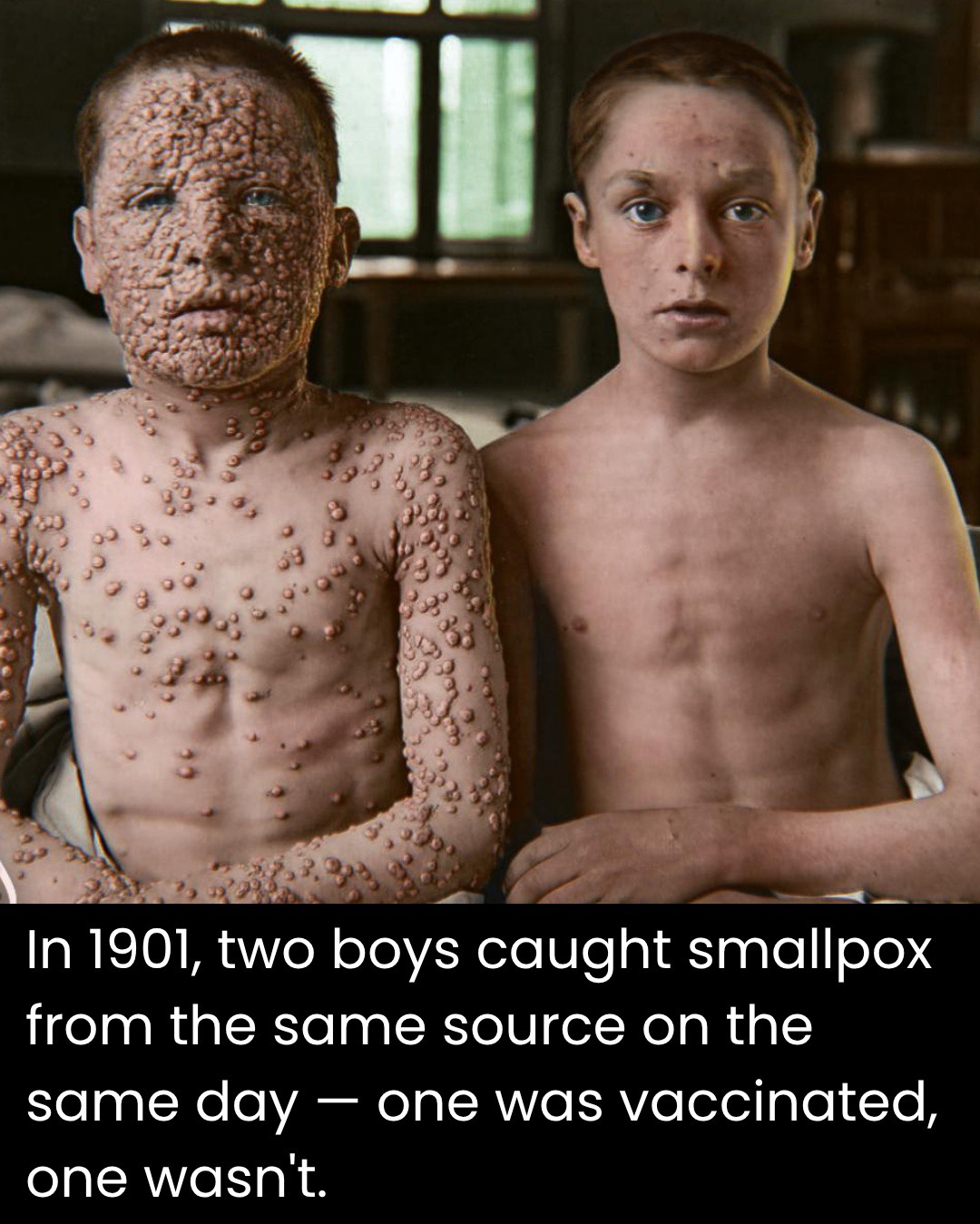
History often speaks in numbers and statistics, but every so often, it provides a single image that communicates more than a thousand pages of data ever could. In 1901, Dr. Allan Warner captured such a moment. The photograph of two thirteen-year-old boys standing side-by-side in a Leicester classroom is not just a medical artifact; it is a profound lesson in the weight of parental decisions and the tangible reality of scientific progress.
The context of the photo is as striking as the image itself. At the time, Leicester was the epicenter of a fierce anti-vaccination movement in England. Many parents, driven by fear and a distrust of the relatively new medical practice, opted out of the smallpox vaccine. The two boys in the photo shared everything: the same school, the same environment, and ultimately, the same exposure to a single source of smallpox.
The visual contrast was a revelation:
-
The Unvaccinated Boy: His body was a map of the disease’s fury—covered in the agonizing, pus-filled pustules that characterized “the speckled monster.” For him, the path forward would be one of immense pain, with a high risk of blindness or permanent disfigurement if he survived at all.
-
The Vaccinated Boy: Having received a single dose as an infant, his immune system recognized the threat. He displayed only two small spots, already beginning to heal. He was, for all intents and purposes, safe.
Dr. Warner didn’t publish this image to be sensational. He published it as evidence. He understood that while people might argue over pamphlets or town hall speeches, the physical reality of these two children was an argument that couldn’t be ignored. It was a “quiet, devastating” look at how a decision made a decade prior—long before the boys could speak for themselves—dictated their physical reality in a moment of crisis.
Smallpox was a relentless shadow over humanity for centuries, claiming the lives of roughly 30% of those it touched. It wasn’t until 1980 that the world was finally declared free of the virus—a victory made possible by the very tool that protected the boy on the left of Warner’s photograph.
Today, this image serves as a timeless reminder. It tells us that while the “noise” of public debate can be loud and confusing, the truth of medicine often reveals itself in the quietest, most personal moments. It reminds us that our choices carry echoes that can last a lifetime, and that the greatest triumphs of science are the tragedies that never had the chance to happen.