The Sight of the Silent Scream: Recontextualizing February 2007
The Sight of the Silent Scream: Recontextualizing February 2007
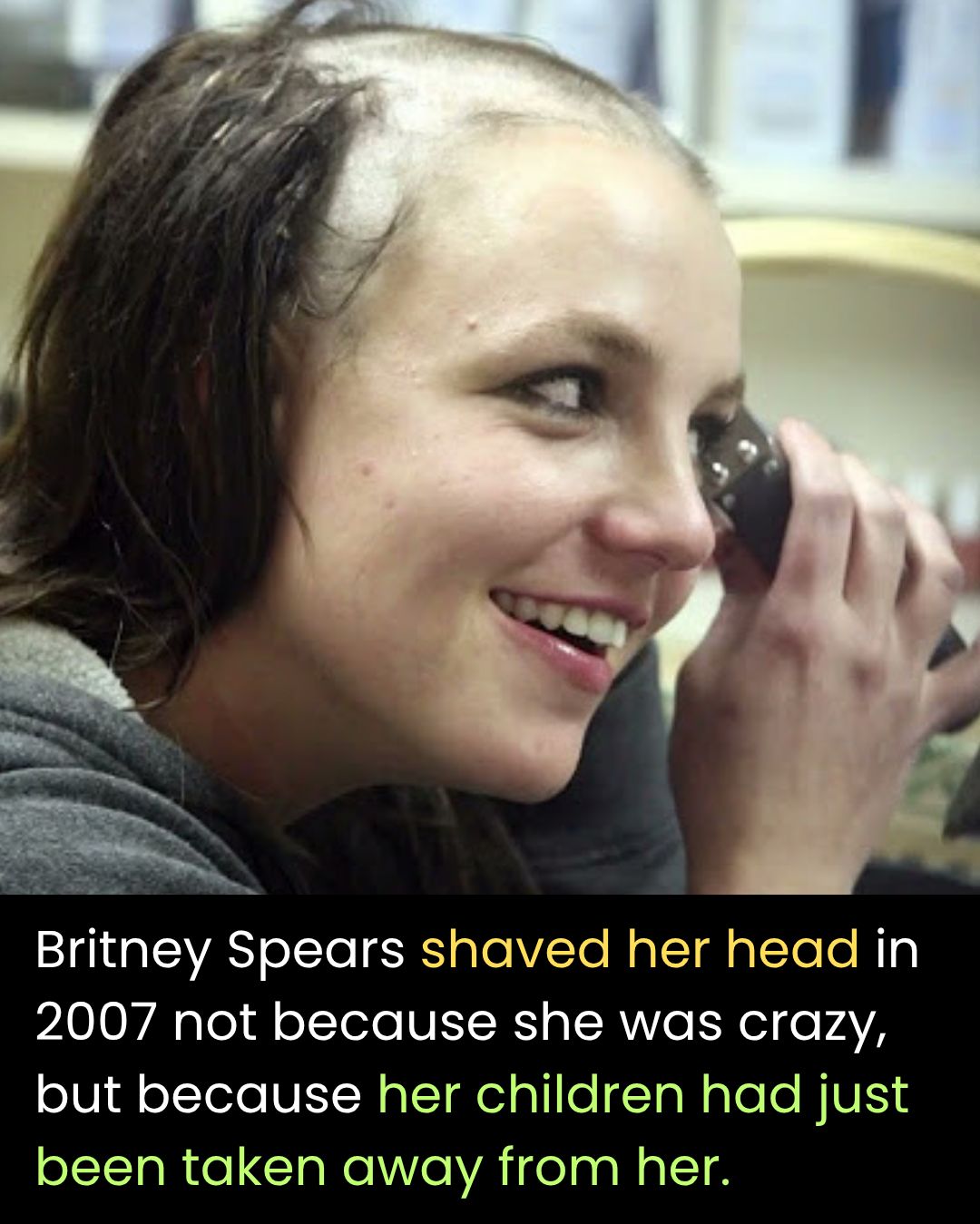
History has a way of sharpening our perspective, often revealing that what we once called a “spectacle” was actually a crisis. For nearly two decades, the image of Britney Spears with a pair of clippers in her hand was used as a punchline—a shorthand for a celebrity “meltdown.” But as we look back through a lens of greater empathy and mental health awareness, that night in February 2007 has transformed into one of the most haunting examples of a human being pushed to the absolute brink.
The details that didn’t make the tabloid covers at the time are the ones that matter most. Britney wasn’t just struggling with fame; she was a young mother in the throes of a devastating custody battle, reportedly reeling from being denied access to her two toddlers. She was a woman whose every physical attribute—from her smile to her midriff—had been commodified, critiqued, and controlled by the public eye since she was sixteen years old.
When she walked into that salon and uttered the words, “I don’t want anyone touching me,” she wasn’t just talking about her hair. She was talking about a life where her boundaries had been systematically dismantled. Shaving her head was a radical act of reclamation. In a world where everyone else owned her image, she chose to destroy the very thing the world valued most about her, simply because it was the only choice she had left.
The paparazzi who stood outside the windows that night weren’t documentarians; they were participants in a tragedy, capturing her most vulnerable moment to sell for a profit. For years, the public consumed those images without considering the person behind the buzzcut—the woman who, in her own words, felt like she was “drowning in grief.”
Today, the “Free Britney” movement and her own memoir, The Woman in Me, have finally allowed her to tell her side. We now understand that the events of 2007 weren’t a loss of sanity, but a desperate cry for agency. It reminds us that when someone’s behavior seems “crazy” to the outside world, it is often a perfectly logical response to an insane amount of pressure and pain.
Britney’s story serves as a mirror for all of us. it asks us to look closer the next time we see someone struggling in the spotlight. It challenges us to choose compassion over mockery and to recognize that behind every “spectacle” is a human heart trying to find its way back to the surface.