TRAGEDY ON THE WASHINGTON SHORE — 61-FOOT FIN WHALE STRANDS AND DIES, RAISING ALARM FOR OCEAN HEALTH
TRAGEDY ON THE WASHINGTON SHORE — 61-FOOT FIN WHALE STRANDS AND DIES, RAISING ALARM FOR OCEAN HEALTH
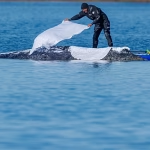
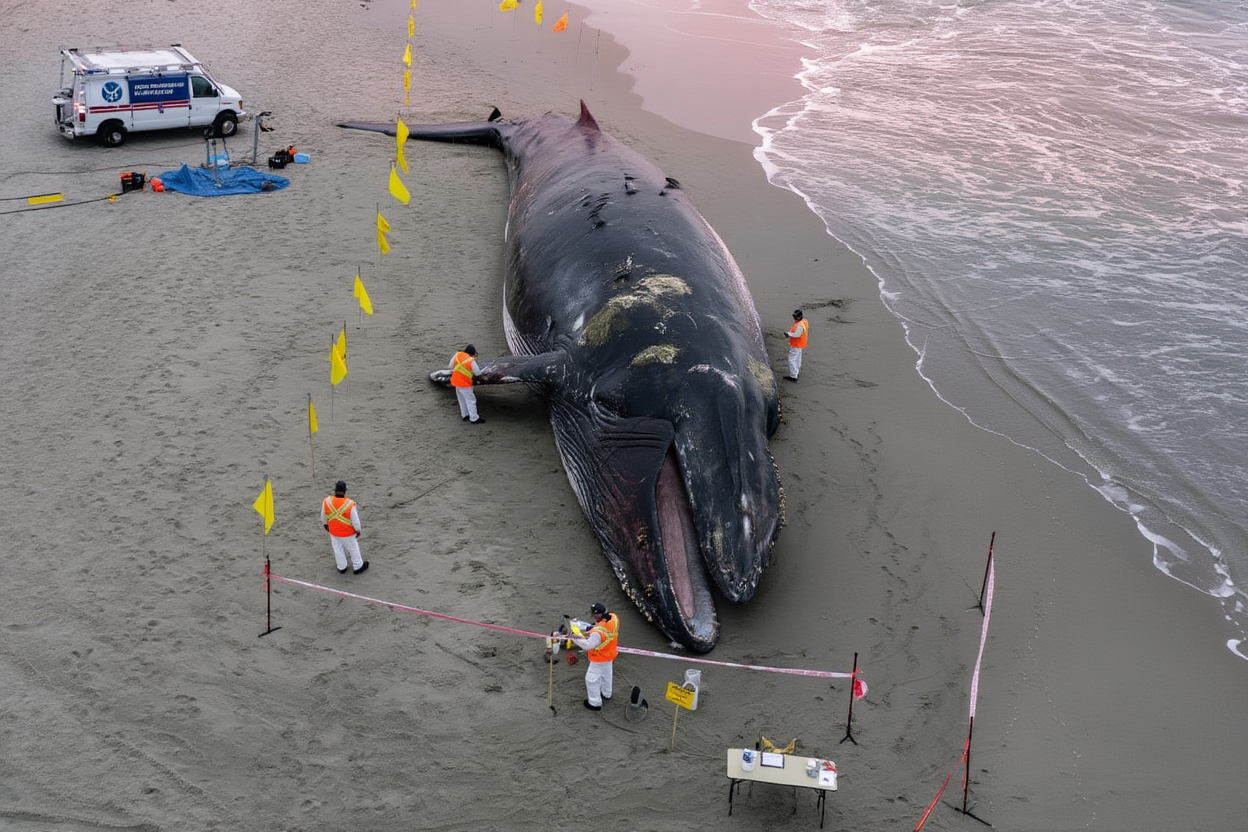
A scene of profound sadness unfolded earlier this week on Samish Island, Washington, when a massive 61-foot fin whale was found stranded in the shallow coastal waters. Witnesses reported seeing the enormous marine giant struggling desperately as the tide receded on Monday evening, leaving the whale trapped in the mud.
Despite rapid response from the Central Puget Sound Marine Mammal Stranding Network, rescuers faced overwhelming challenges. The sheer size and weight of the fin whale — the second largest animal on Earth, capable of reaching up to 80 feet — made any attempt at a live rescue nearly impossible. By Tuesday morning, exhausted and undernourished, the whale had tragically passed away. 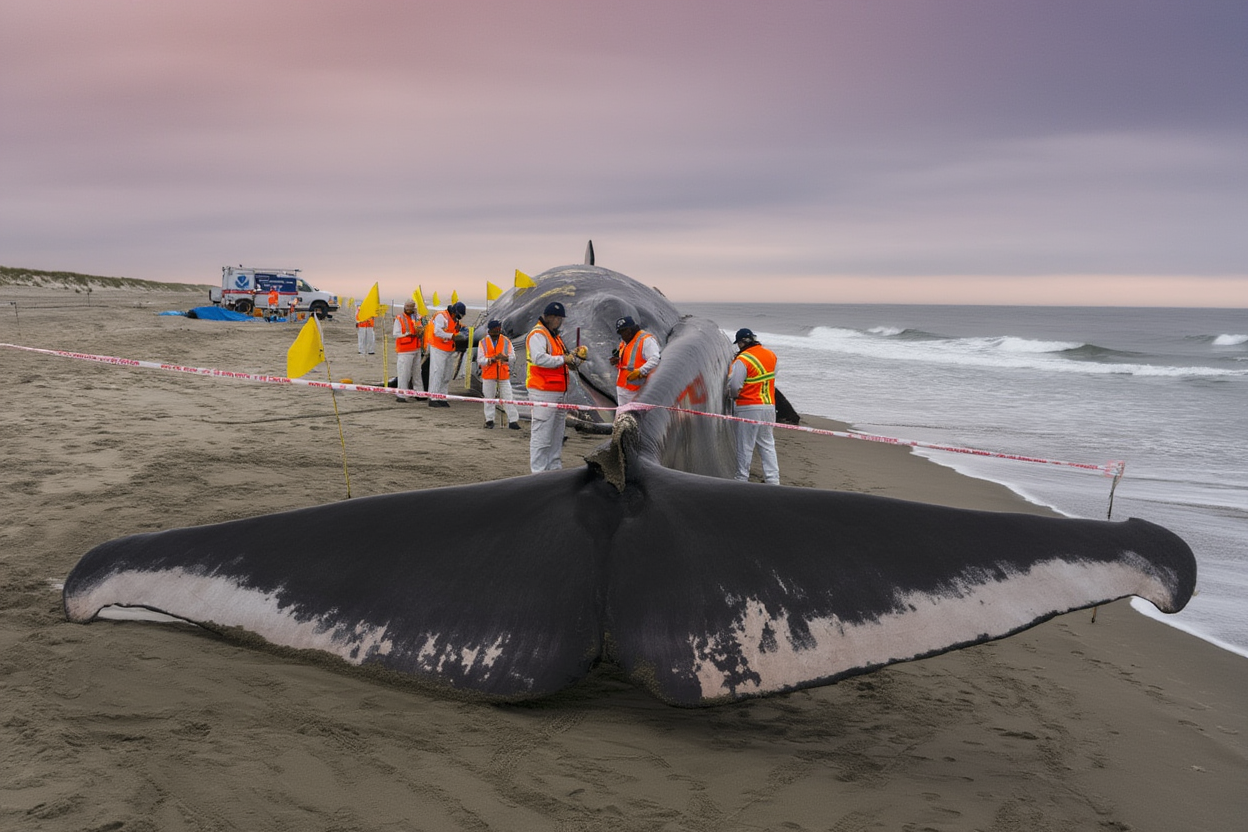
Experts explain that when such massive creatures are stranded outside the deep ocean, their own body weight presses down on vital organs, causing irreversible damage within hours. Fin whales are rarely seen in Puget Sound, making this incident a rare and stark reminder of the vulnerability of even the ocean’s largest inhabitants.
Signs of an ocean in distress
Initial assessments suggest the whale was severely undernourished, raising questions about the state of marine ecosystems. Scientists point to several potential factors behind this tragedy: rising ocean temperatures, shifts in prey populations, and environmental stressors like pollution and noise. “When food becomes scarce or scattered due to warming waters, these majestic creatures may venture closer to shore in search of sustenance, putting them at great risk,” says Dr. Emily Hart, a marine biologist with the University of Washington.
A community united in grief and respect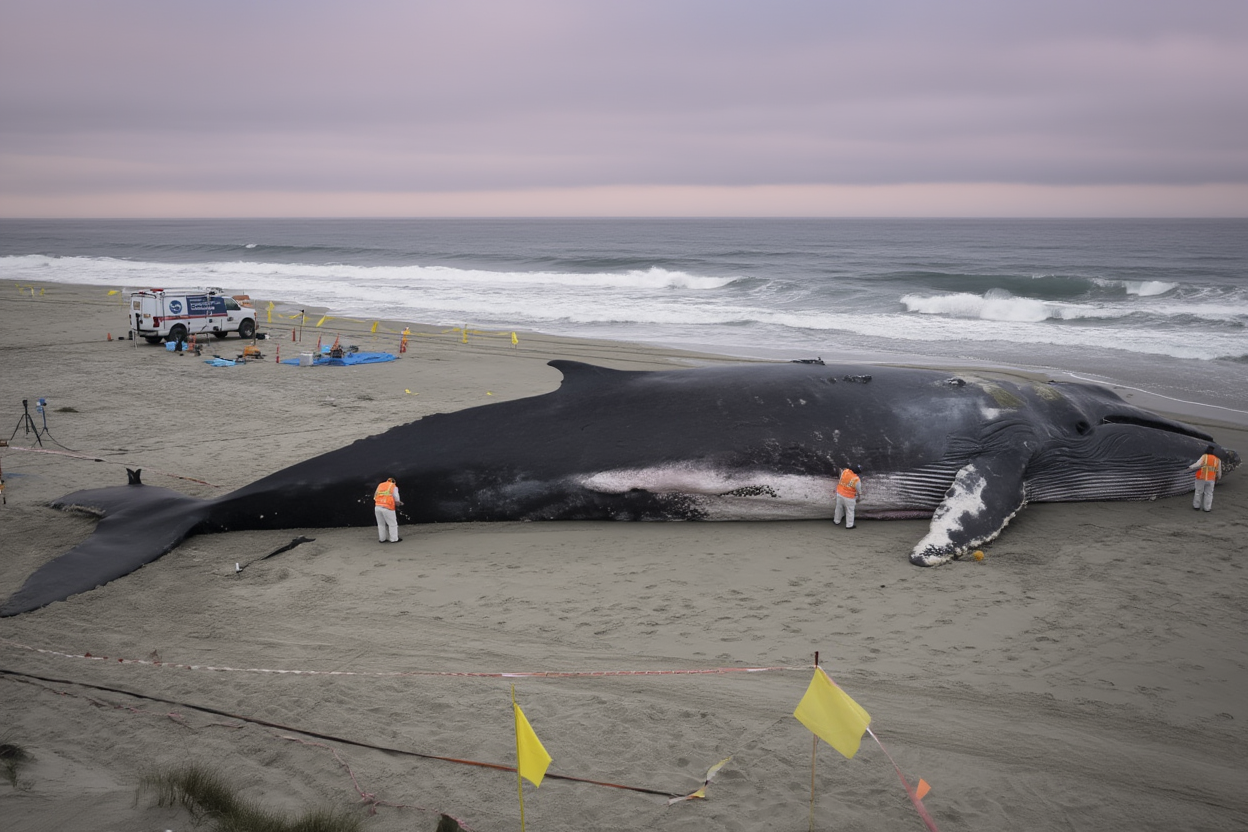
Local authorities, tribes, and environmental organizations are working together to manage the site. Cultural protocols are being observed as the whale is allowed to decompose naturally, a process that also provides critical nutrients for coastal ecosystems. A necropsy is underway to determine the whale’s health, diet, and possible causes of death, offering valuable data to help prevent similar tragedies in the future.
The human connection
For many, witnessing such a massive animal’s struggle evokes a mixture of awe and heartbreak. Residents along the Puget Sound describe feeling both helpless and humbled, reflecting on humanity’s responsibility toward the oceans. Social media has been flooded with tributes and calls for stronger marine conservation efforts, with hashtags like #FinWhale, #SaveTheWhales, and #MarineConservation trending among local communities and wildlife enthusiasts.
A wake-up call for the ocean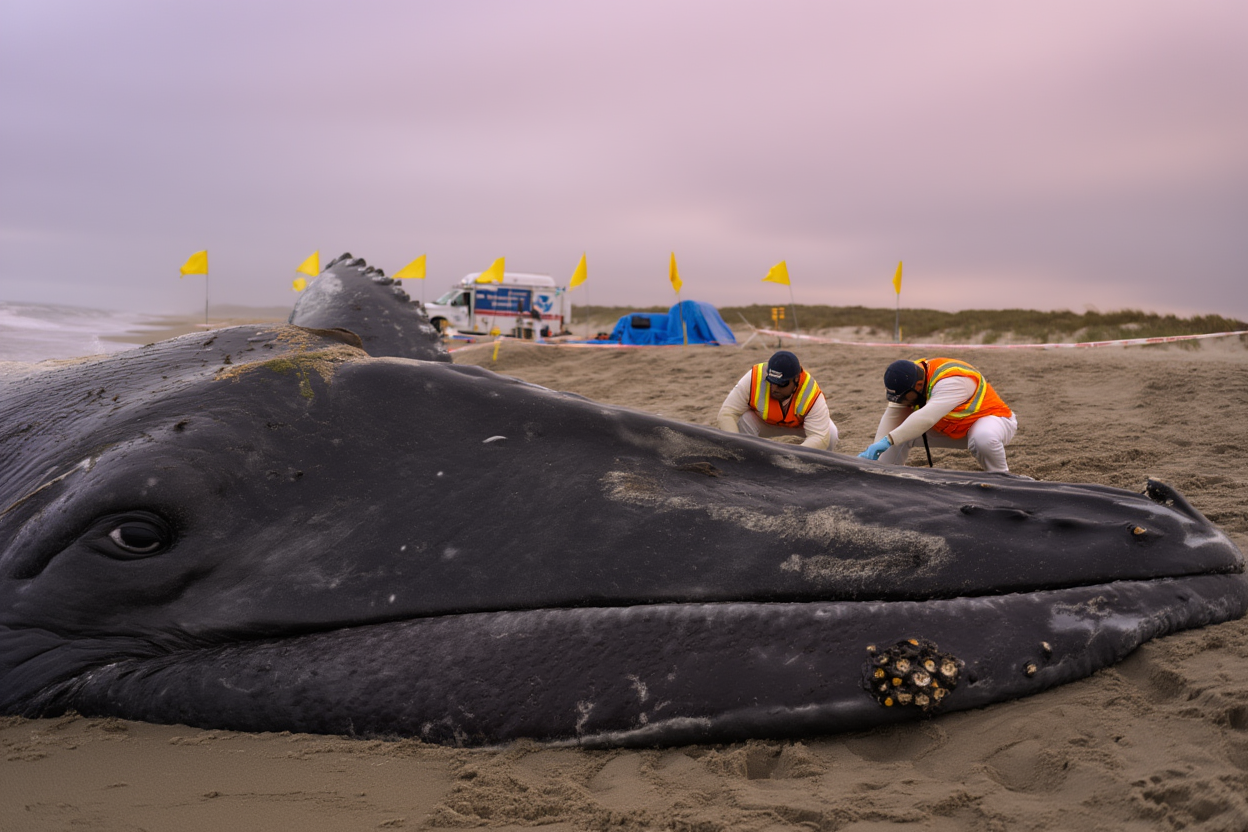
This heartbreaking event is more than a local tragedy—it is a warning sign. The death of this fin whale underscores the fragility of ocean ecosystems and the urgent need for global attention to climate change, overfishing, and pollution. As Dr. Hart notes, “Every large whale lost is not just a loss of a magnificent creature—it’s a signal that the ocean is struggling, and we all feel the consequences.”
While the Samish Island whale is gone, the story it leaves behind is a reminder of the delicate balance of life beneath the waves, urging humanity to act before more ocean giants are lost.