A Sudden Silence in Vatican City — An Emotional Announcement Leaves the World Holding Its Breath
The bells did not ring.
Instead, an unusual stillness settled over St. Peter’s Square—an absence of sound that felt heavier than any tolling chime. Just minutes earlier, inside the ancient walls of Vatican City, a message had emerged that no one had expected, and yet everyone instantly feared.
It came not from an official broadcast, nor from a prepared statement read behind a podium, but from a trembling voice.
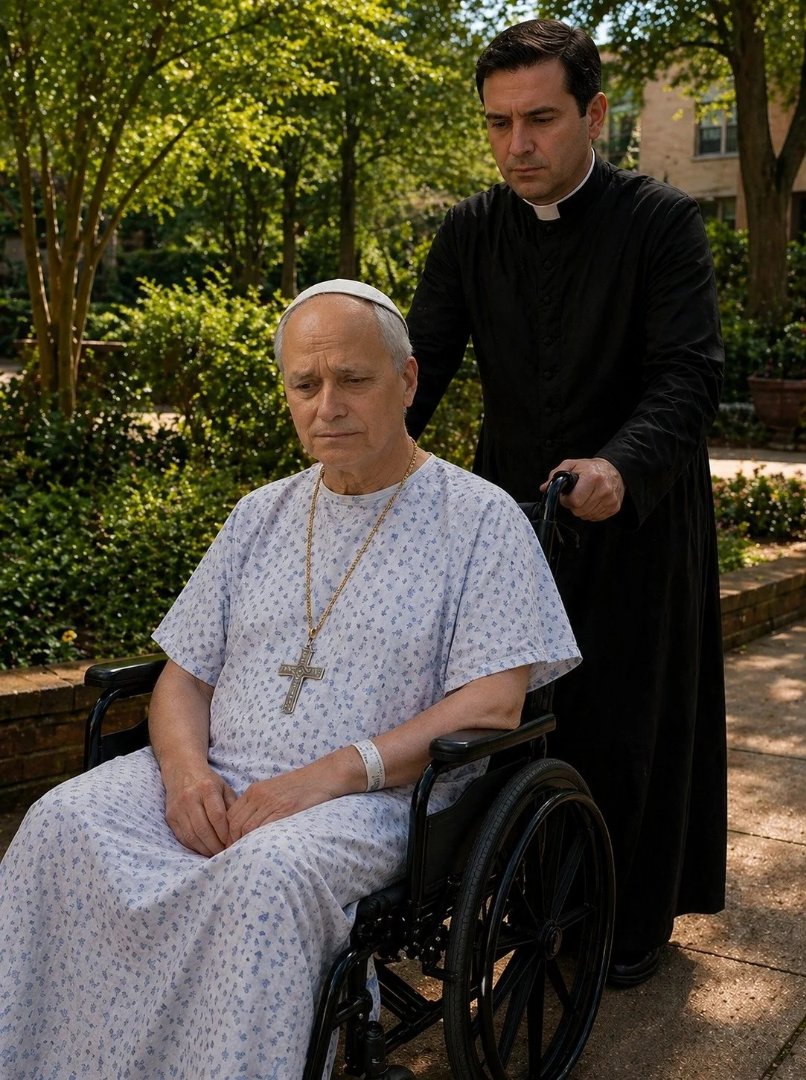
A young assistant priest, visibly shaken, stepped forward before a small group of clergy and quietly delivered words that would ripple across the globe within moments.
“Please… keep His Holiness in your prayers,” he said, his voice faltering. “This is a difficult moment.”
That was all.
No details. No timeline. No confirmation of what had happened—or what might come next.
But it was enough.
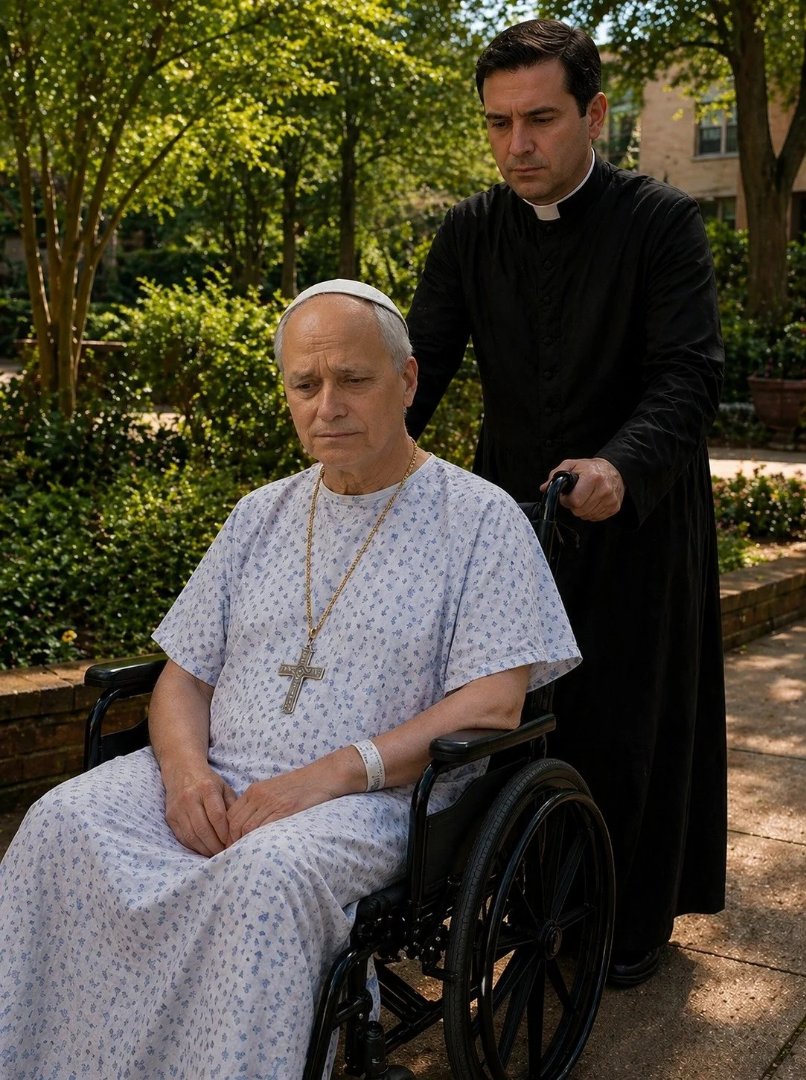
Within minutes, the atmosphere in Vatican City shifted. Tourists lowered their cameras. Pilgrims clutched rosaries tighter. A quiet murmur spread through the square as word passed from person to person, faster than any official channel could carry it.
Something was wrong.
Inside the Apostolic Palace, sources described an unusual level of activity. Doors opening and closing. Soft footsteps echoing down marble corridors. Conversations held in hushed, urgent tones.
“It didn’t feel routine,” said one Vatican staff member, speaking on condition of anonymity. “There was a sense of… gravity. Like everyone understood the weight of the moment, even if we didn’t have all the information.”
Pope Leo XIV, a figure who had come to embody quiet strength and spiritual steadiness, had not been seen publicly in recent hours. For a leader known for his unwavering presence—appearing regularly before crowds, offering blessings, speaking with calm authority—the sudden absence was impossible to ignore.
And now, this.
The assistant priest’s brief message, though lacking specifics, carried unmistakable emotion. Witnesses noted his hands trembling slightly as he spoke, his eyes lowered, as if struggling to maintain composure.
“He looked heartbroken,” said a nun who stood nearby. “Not just concerned—heartbroken.”
As speculation began to spread, Vatican officials remained notably restrained. No formal statement was immediately released. No press conference was scheduled. The silence, for many, was more unsettling than any confirmation could have been.
In the square, people began to gather.
Not in panic. Not in chaos.
But in quiet solidarity.
Candles appeared. Prayers were whispered in dozens of languages. Some knelt. Others simply stood, staring toward the windows above, as if hoping for a sign—any sign—that everything would be alright.
“It’s strange,” said a visitor from Spain. “We don’t know what’s happening, but we feel it. Everyone feels it.
That shared sense of unease spread far beyond the Vatican’s walls. Within minutes, messages of concern flooded social media. Faith leaders, public figures, and ordinary believers alike began calling for prayers, their words echoing the same uncertainty.
“Stay strong, Holy Father,” one message read.
“Praying for peace and healing,” said another.
For many, Pope Leo XIV has represented more than leadership. He has been a symbol—of continuity, of resilience, of faith anchored in turbulent times. His measured voice, his deliberate actions, his quiet moments of connection with the faithful have defined a papacy marked not by spectacle, but by depth.
Which is why the absence of clarity now feels so profound.
“He has always been present,” said Father Matteo Ricci, a theologian based in Rome. “Even in moments of crisis, he has stood before the people. So when that presence is suddenly interrupted, it resonates deeply.”
As the hours unfold, questions continue to grow.
What prompted the assistant priest’s emotional message?
Why the sudden silence from official channels?
And most pressing of all—how is the Pope?
For now, there are no answers.
Only a waiting world.
Back in St. Peter’s Square, the light has begun to fade, casting long shadows across the ancient stone. Yet the crowd remains. Quiet. Patient. United not by information, but by something far more powerful: hope.
A young boy, holding his mother’s hand, looked up toward the towering basilica and asked softly, “Will he be okay?”
She paused before answering, her voice gentle but uncertain.
“We pray that he will be.”
And so, across continents and cultures, that prayer is being repeated—again and again.
Because sometimes, in the absence of words, in the face of uncertainty, there is only one thing left to do.