Conjoined Twins Now Like ‘Typical Sisters’ As They Thrive Since Being Separated
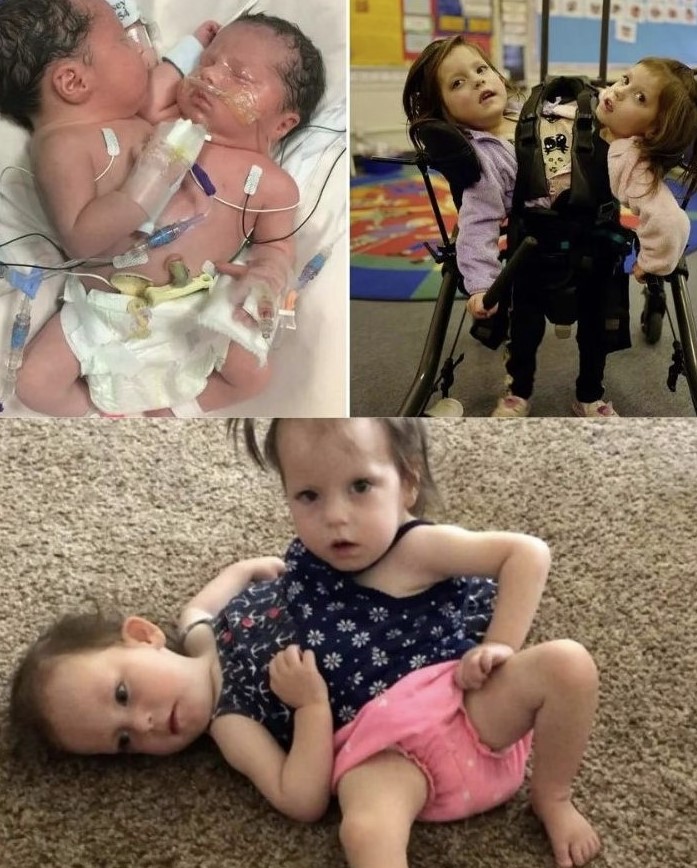
Against All Odds: The Miraculous Survival of Conjoined Twins Callie and Carter
The arrival of a child is typically marked by celebration, but for the parents of Callie and Carter Torres, the moment was shrouded in a complex mixture of awe and absolute terror. Conjoined twins represent one of the rarest phenomena in human biology, occurring once in every 200,000 live births. The statistics are notoriously grim: approximately 50% are stillborn, and an additional 35% survive only a single day. For Callie and Carter, the medical prognosis was even more dire. Born sharing vital organs and fused at the lower half of their bodies, they were handed a staggering five percent chance of survival.
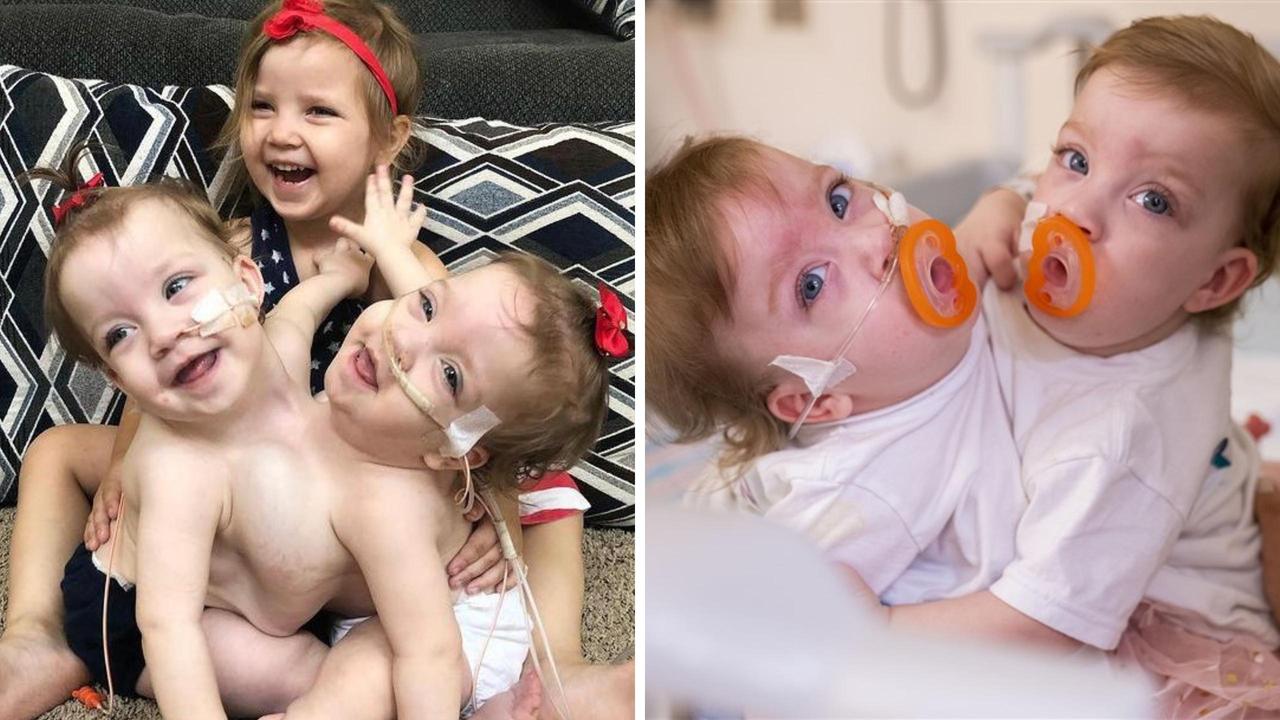
In the eyes of the medical establishment, the girls were a clinical impossibility. Doctors prepared the family for the worst, suggesting that their time together would be measured in minutes rather than years. Yet, as the hours turned into days and the days into months, the twins began to rewrite their own narrative. Every heartbeat was a defiance of logic; every breath they took was a quiet miracle that stunned the specialists assigned to their care. They were not merely surviving; they were thriving in a way that challenged everything science thought it knew about anatomical boundaries.
Living as conjoined twins means navigating a world built for individuals while sharing a singular physical existence. For Callie and Carter, every movement requires a level of coordination and harmony that most people cannot fathom. Their journey has been defined by a grueling schedule of hospital visits, intensive monitoring, and the constant, looming question of separation—a procedure fraught with life-threatening risks. Despite the physical limitations and the shadow of their diagnosis, their spirits remain unbroken. They have become symbols of a rare kind of resilience, proving that life does not always follow the rules of a textbook.
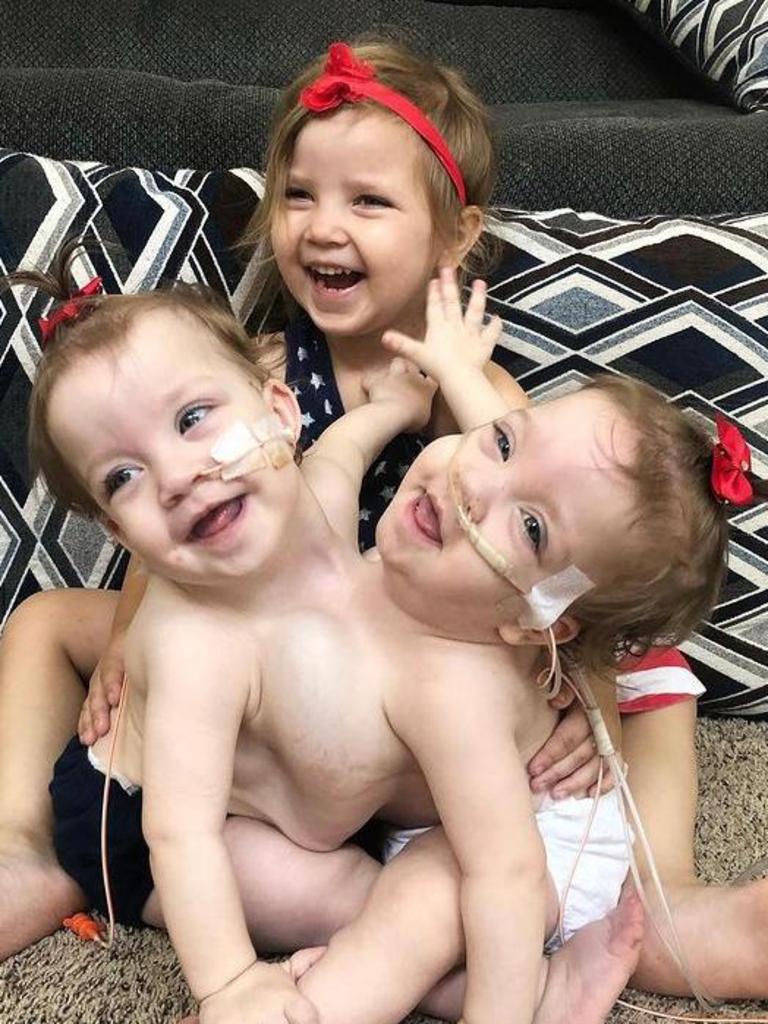
Today, Callie and Carter are much more than a medical anomaly; they are a testament to the power of the human spirit to overcome the impossible. They refused to be reduced to a statistic or a tragic headline. Their story is a powerful reminder that “chance” is not the same as “destiny.” By beating the five percent odds, these two sisters have shown the world that as long as there is life, there is a reason to fight. Their journey continues to inspire millions, serving as a beacon of hope for any family facing an uphill battle against the odds.