The Unseen Bond Behind A Force of One: Why This 1979 Image Breaks Hearts Today
The Unseen Bond Behind A Force of One: Why This 1979 Image Breaks Hearts Today
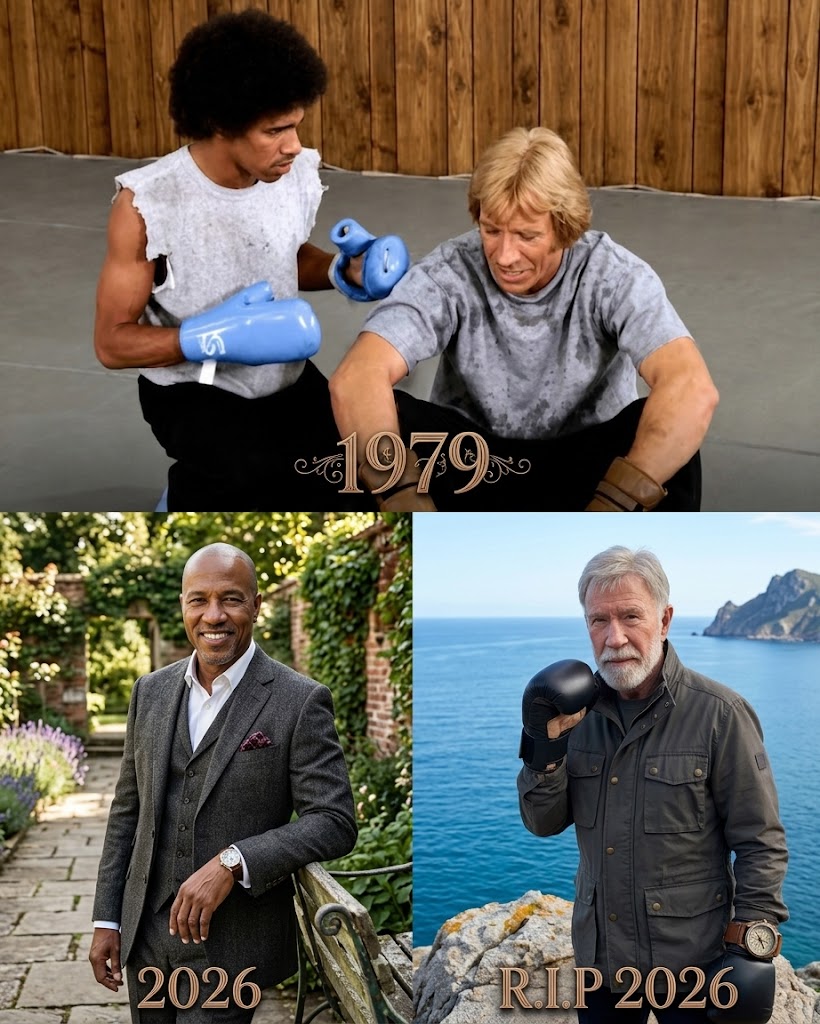
Amidst the sweat and lights of a training floor in 1979, Chuck Norris knelt beside the young man he called his son on screen. No one in the theater suspected that behind those choreographed punches and blue boxing gloves lay the most moving narrative of his entire career. Decades later, with the passage of time rewriting the legacy of those cinematic giants, viewers have come to realize that what made the classic action film A Force of One immortal was never the martial arts. It was the silent, fierce love of a man who was always ready to fight for the child he chose to protect.
Some bonds are not written by blood. They are written by trust, by time, and by the quiet, unyielding decision to stand beside another person and mean it. Cinema occasionally captures those relationships entirely by accident—revealed in a fleeting glance, a natural gesture, or the easy closeness between two actors who understand that the real story is happening underneath the surface-level explosions. A archival photograph from the set of A Force of One captures exactly that feeling. It shows two men kneeling together on a gym mat in 1979, sweat hanging in the air and blue gloves raised between them. One is young, lean, and sharp-eyed, carrying the restless energy of youth. The other is broader and calmer, carrying himself with the protective patience of a father teaching a son how to survive a harsh world. It looks like sparring at first glance, but it is actually love disguised as discipline.
On one side of that frame stands Chuck Norris as karate champion Matt Logan. Beside him is Eric Laneuville as Charlie Logan—his adopted son, his dedicated student, and his chosen family. In many ways, that relationship became the true heart of the entire film. A Force of One could easily have been remembered as just another hard-edged, late-1970s action picture about undercover narcotics agents and police corruption. The structure was undeniably familiar, built on crime, revenge, and justice. But audiences walked away remembering something else entirely: they remembered the profound connection between the father and the son.
The scenes between Norris and Laneuville carried a genuine warmth that action films of that era rarely paused long enough to explore. Their chemistry never felt forced or sentimental; it felt lived-in and effortless. Norris did not merely play a protector on screen; he portrayed a man genuinely proud of the young person standing beside him. Laneuville brought an unmistakable openness and sincerity to Charlie—the look of a son still learning who he wants to become from the man he admires most. That emotional truth elevated the film far beyond its basic genre mechanics.
Eric Laneuville was still very young then, but the camera already trusted his stillness. Over the decades that followed, he would evolve into one of television’s most respected directors, quietly shaping American drama from behind the lens with the same calm authority he showed as a young actor. By 2026, silver-templed and distinguished, he remains a creative force, proving that some performers grow richer with time rather than fading from it.
And then there was Chuck Norris. People often remember him only as the myth—the unstoppable lone wolf walking calmly through impossible odds. But films like A Force of One revealed a vulnerable, unexpectedly tender side of his screen presence. This was only his third starring role, and what emerged most powerfully was not aggression, but protectiveness. Norris understood that the strongest men are not defined by the fights they win, but by the people they refuse to abandon.
Now, that classic image exists in two timelines at once. Eric Laneuville stands today in 2026, older now but carrying the exact same warmth in his smile, a respected artist and mentor. Beside him, however, the caption of history changes everything as we look back at the legacy of his co-star. Chuck Norris left behind far more than action films or martial-arts mythology; he left behind a particular idea of integrity—the belief that strength without loyalty means nothing at all.
In the movie, the villain strikes at the son, and the father becomes unstoppable. In life, time eventually takes the father instead, and the son carries the memory forward. Somewhere in our collective memory, that 1979 gym still exists, the gloves are still blue, and an older man is still leaning in close to teach a young man how to stand by the people he loves. That is the part audiences never forgot. It was never about the kicks or the victories; it was about the love that chose to show up.