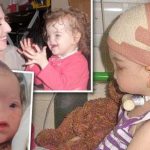
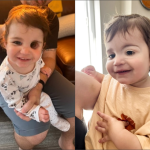
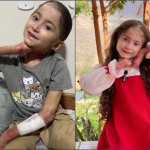
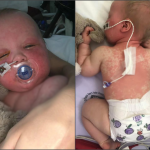
CONJOINED AT THE HEAD WITH FUSED BRAINS, THESE TODDLER TWINS DEFIED THE ODDS AFTER AN 11-HOUR SEPARATION SURGERY
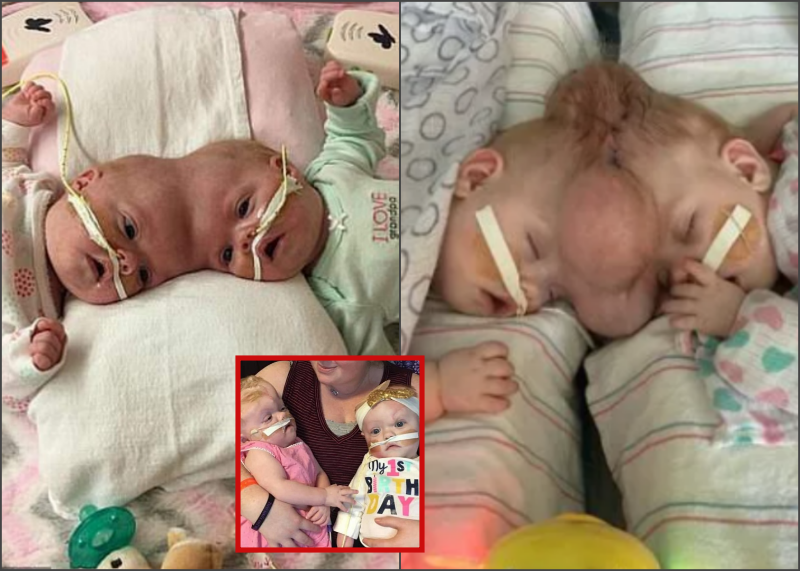
Two two-year-old conjoined twins, born with fused brains, are thriving after their separation surgery.
Erin and Abbey Delaney underwent a lengthy and risky 11-hour operation.
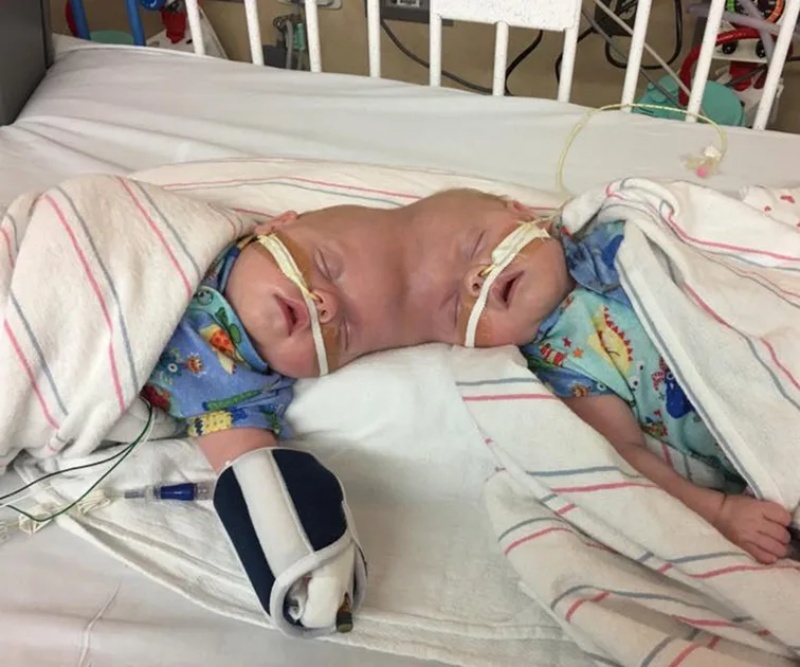
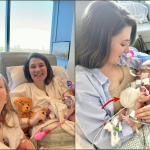
The two girls have now returned to their parents in Mooresville, North Carolina, where they are undergoing developmental therapy to improve their motor and speech skills and eventually learn to eat independently.
Heath and her husband, Riley, were thrilled to learn they were expecting a baby. However, things quickly took a turn for the worse when they went for their first ultrasound. The doctor said they weren’t having one child, but two, joined at the head.
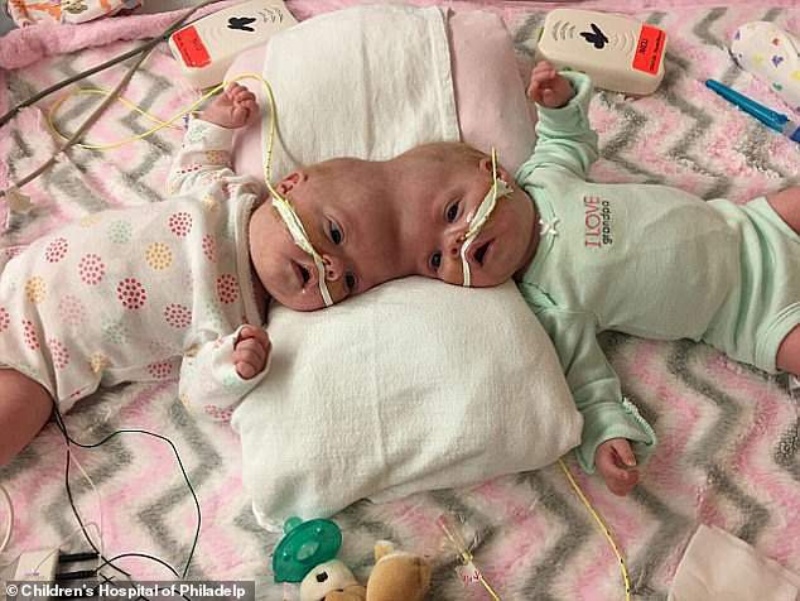
Heath felt devastated; she knew what she was facing, but she didn’t allow herself to decide whether her children would live or die.
Two baby girls were born on July 24th at Children’s Hospital of Philadelphia, 10 weeks premature. The twins were conjoined at the top of their skulls, a rare form of conjoined twins called craniopagus, occurring in 10 to 20 cases per million births in the U.S. About 33% of such twins die after birth, usually due to organ failure or abnormalities. However, 25% can survive and may even be separated, depending on where the skulls are joined.
“It was the scariest moment of my life. I just hoped they would get through it,” said Heather.
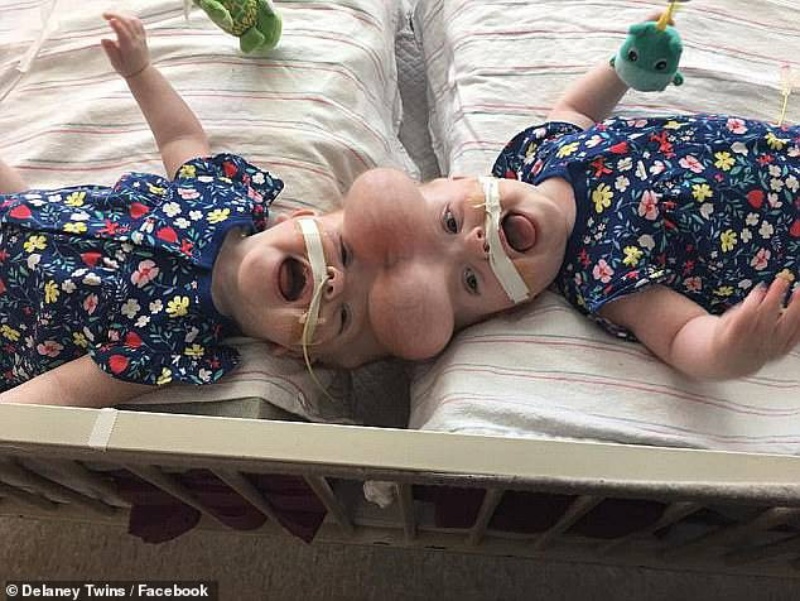
Doctors warned Heather and Riley that surgery to separate them could kill one or both children.
Neurosurgeon Gregory Heuer and his team inserted a balloon into the twins’ skulls to help expand the skin before the separation surgery.
After months of planning, a team of 30 surgeons, nurses, and staff separated the twins on June 7th, when they were 11 months old. This was one of the earliest separations of conjoined twins of the Craniopagus type.
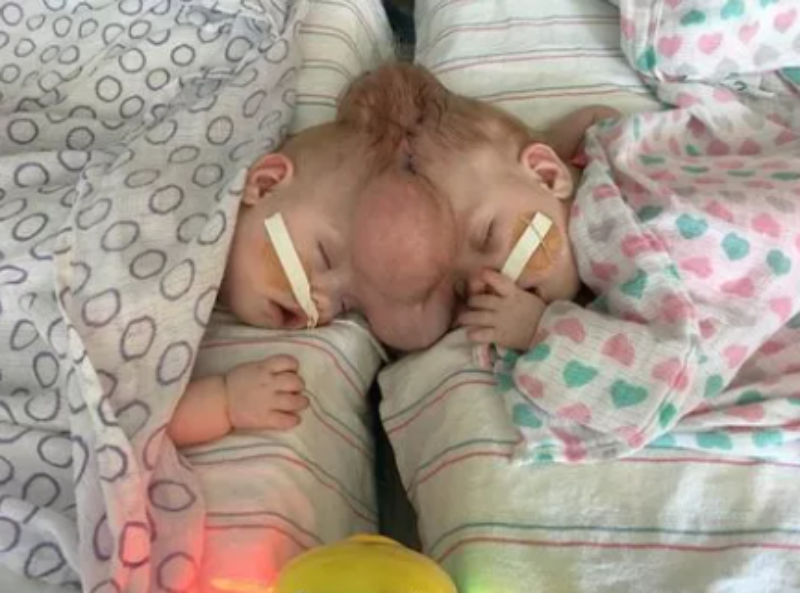
Dr. Heuer said the two babies shared a superior sagittal sinus, a blood vessel that allows blood to flow out of the brain. Many times, one of twins connected in this way dies during surgery. However, in this case, the older sister – Erin – received the sagittal sinus, but both survived.
Both were placed in a medically induced coma for a week after the procedure to allow the brains to recover from the separation. Erin recovered faster, and Abby was also brought out of the coma that same day, just hours after her sister.
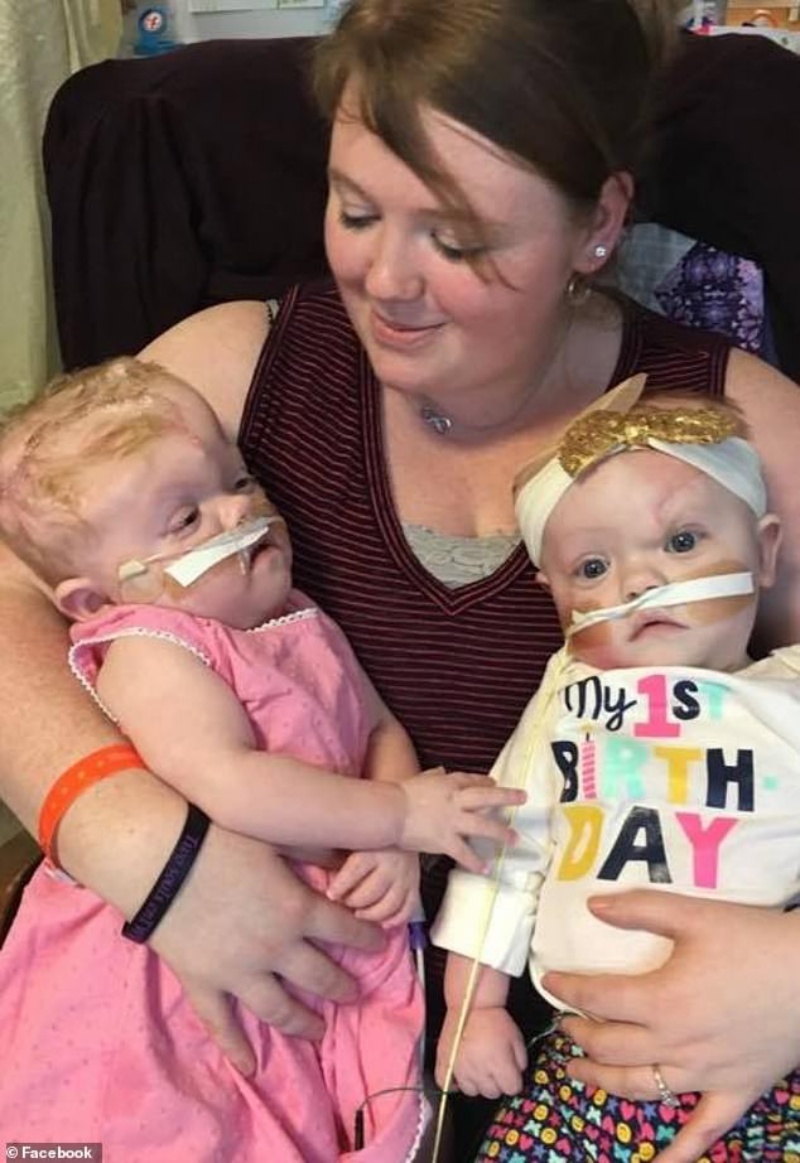
The biggest concern after the surgery was that the twins could develop an infection in the brain around the surgical area. To prevent this from happening, hospital staff washed Erin’s brain once and Abby’s twice to keep the area as clean as possible. As a result, Abby had a more difficult recovery than her sister. She suffered a brain hemorrhage, three respiratory viral infections, sepsis, and other complications that kept her hospitalized longer.
Just before Thanksgiving, the two girls were sent home.
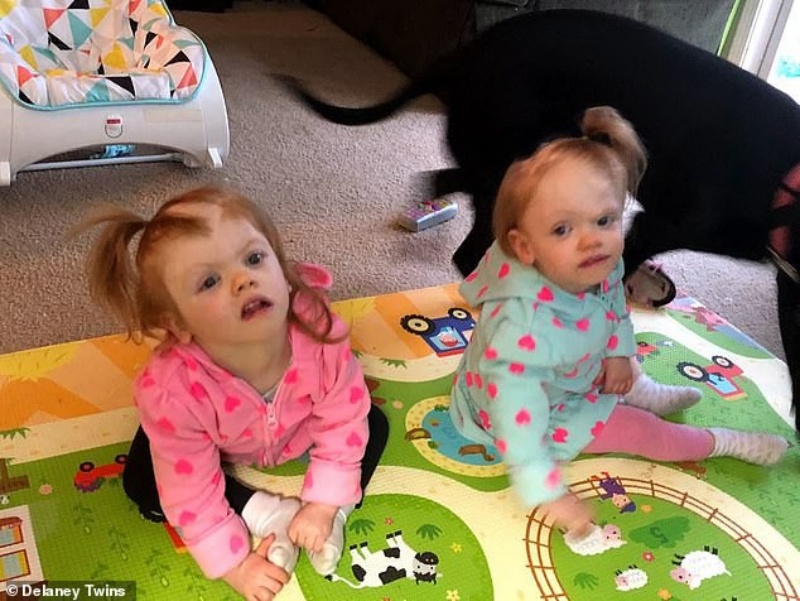
Currently, they participate in developmental therapy three times a week and see their therapist once a week. Erin started crawling in July, but Abby still hasn’t learned to crawl.
Erin and Abby’s parents say the girls are being fed through a feeding tube, but the therapist is teaching them how to feed themselves. Another recent milestone is Erin learning to say “Dada.”