CONJOINED TWINS LINKED AT THE CHEST, ABDOMEN AND PELVIS, THEY ARE FINALLY GIVEN A CHANCE AT SEPARATE LIVES AFTER A 15-HOUR SURGERY
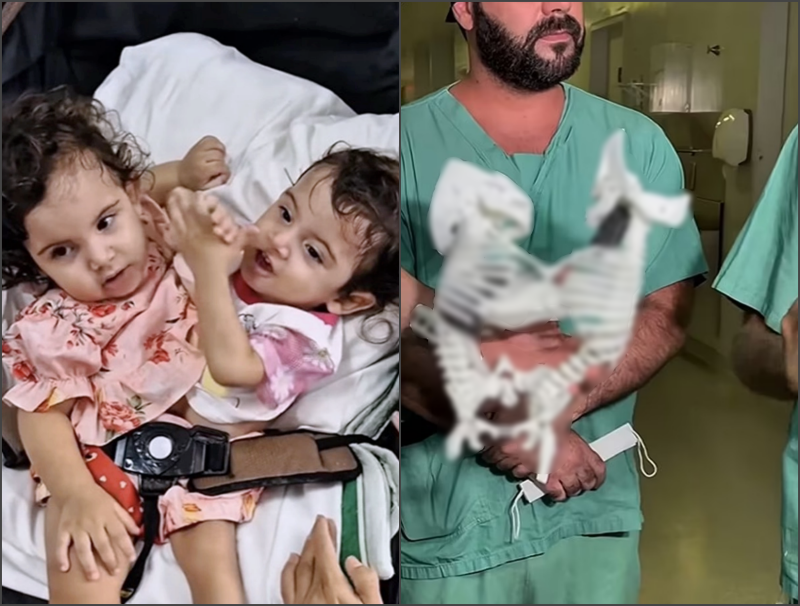
Twin sisters who were born sharing a chest, stomach and pelvis have now been separated in a remarkable 15-hour operation involving nearly 60 medical staff.
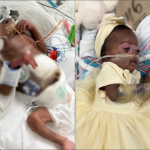
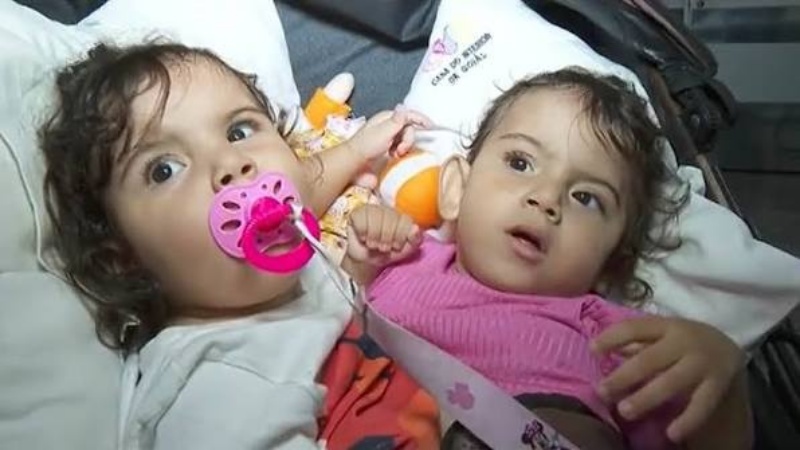
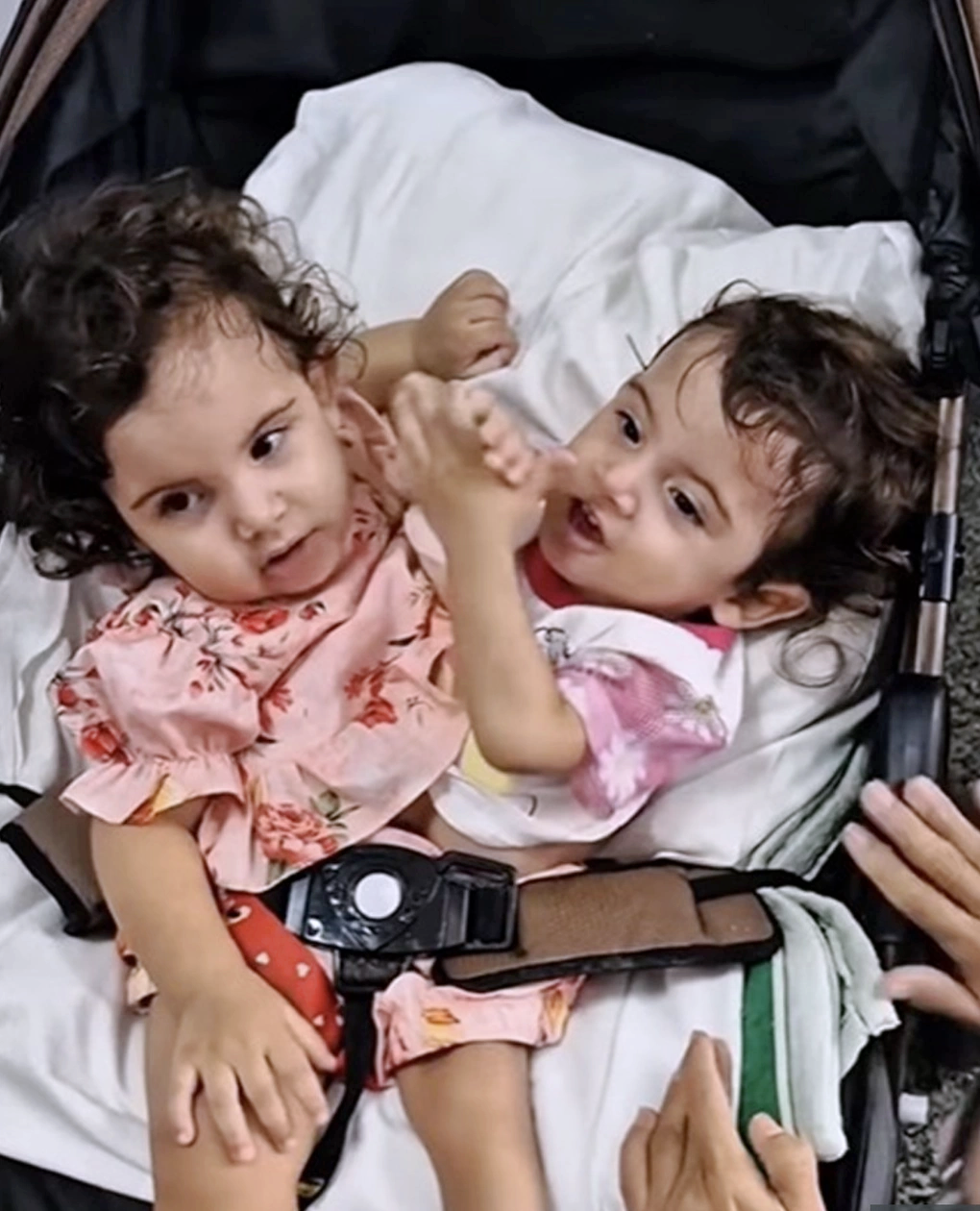
Kiraz and Aruna, from Brazil, were born conjoined and shared several vital organs, making their surgical separation an extremely complex procedure.
The one year-old sisters underwent surgery on May 10th in what one of the surgeons described as one of the most challenging ever performed in the state of Goiás where they live.
The girls are what is medically known as tripus ischiopagus conjoined twins. This means the pair were joined at the pelvis and have three legs between them.
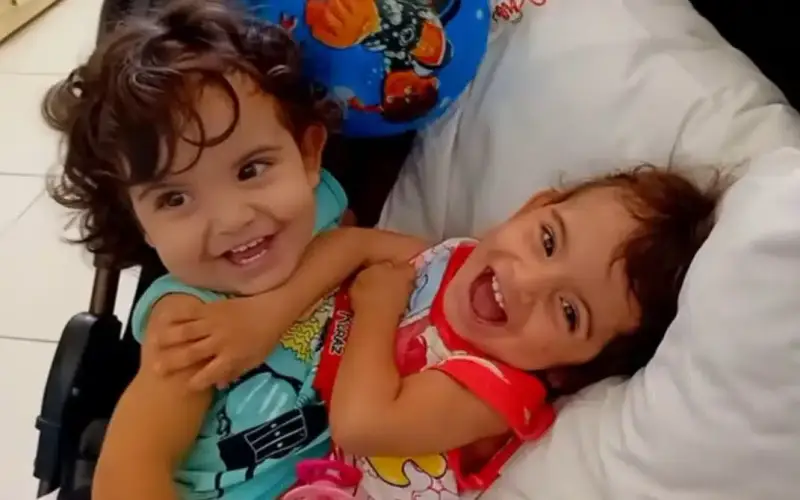
Tripus ischiopagus is rare even among conjoined twins, accounting for only about six per cent of all cases.
The sisters are still recovering in the intensive care unit of a children’s hospital but are reported to be in stable condition.
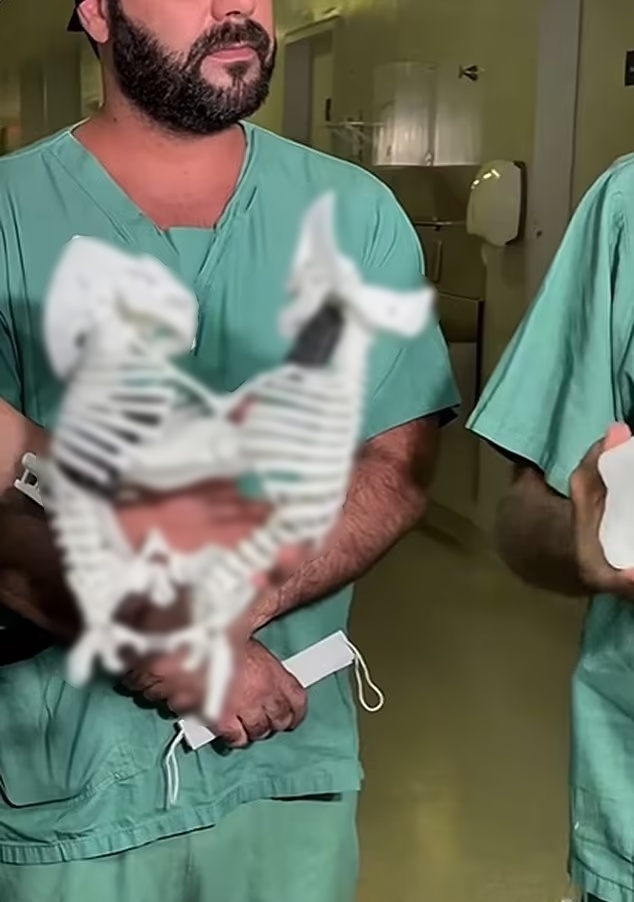
Hospital officials said a team of 16 surgeons worked in four-hour shifts to complete the major operation as efficiently as possible to reduce the risk of serious complications.
Lead surgeon Dr Zacharias Calil explained: ‘There are around 16 surgeons involved, including four anaesthetists, residents, three urologists, paediatricians and orthopaedists.’
He also told local media: ‘This will be one of the most complex procedures we have ever performed.’
However, the twins still face a series of follow-up procedures needed to reconstruct the tissue and organs affected by the separation.
The £310,000 operation itself represented months of preparation.
Six months before surgery, Kiraz and Aruna had skin expanders, special inflatable implants, inserted into their bodies.
These implants cause skin surrounding the area to stretch and grow and will help surgeons reconstruct tissue for the twins in subsequent operations.
Cases of conjoined twins are extremely rare, occurring in as few as one in every 200,000 births, according to some estimates.
Despite recent medical advances, surgery to separate conjoined twins is still considered a delicate and high-risk procedure requiring extreme precision and care.
Survival rates for twins who undergo surgical separation vary greatly depending on the exact nature of their connection and which organs they share.
Since the 1950s, at least one twin has survived the surgery about 75 per cent of the time.
Therefore, the decision to separate twins is a very serious one.
Normally, twins are born after a single fertilised egg splits and develops into two individual embryos.
The split usually occurs eight to 12 days after conception, with the embryos going on to develop their own tissues and organs separately.
However, in the case of conjoined twins, it is believed this split happens too late and the embryos do not fully separate.
Approximately 40 to 60 per cent of conjoined twins are stillborn, while around 35 per cent survive only one day.
About one set of conjoined twins is born in the UK per 500,000 births, which translates to about one per year on average.