William Parker didn’t respond at first.
- LongVo
- June 29, 2026
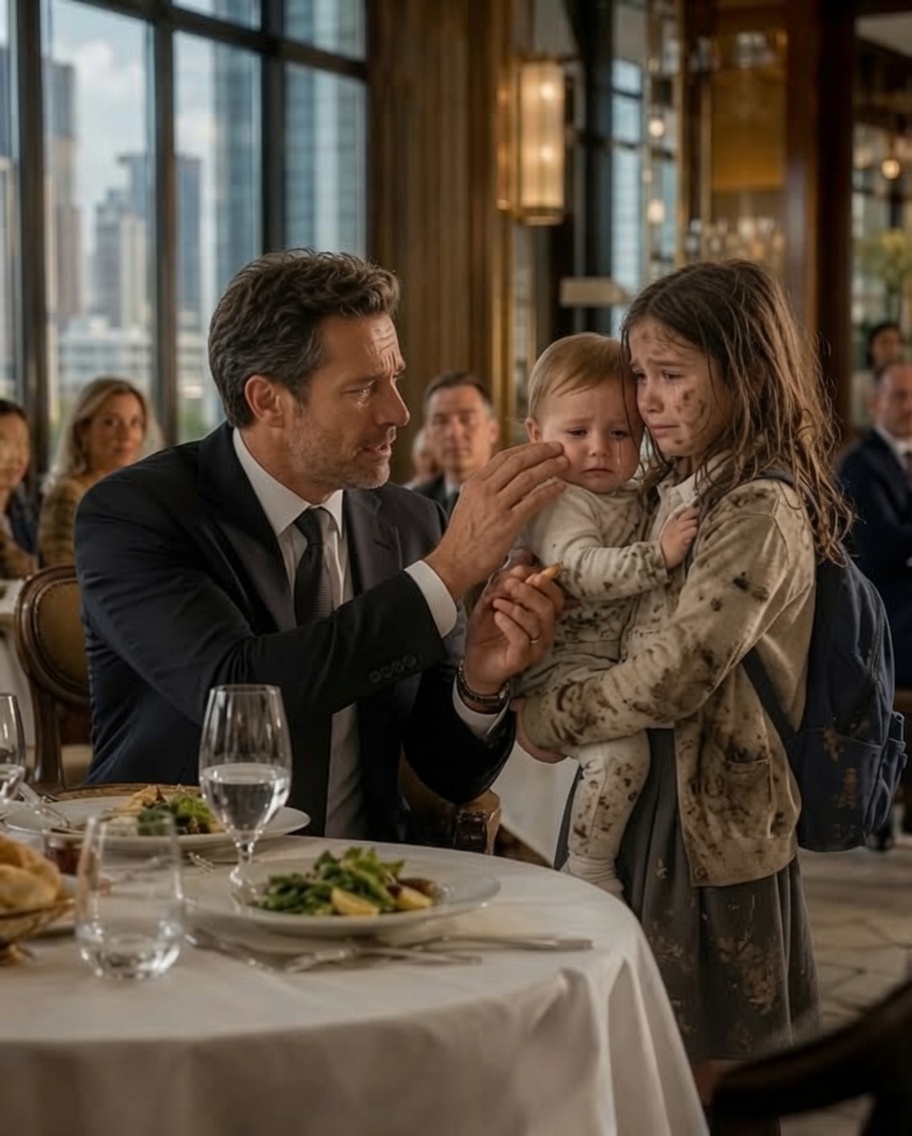
William Parker didn’t respond at first.
Not because he hadn’t heard her.
But because his brain refused, for half a second, to accept what he had just been asked.
Around him, the restaurant stayed frozen in that strange, fragile silence that only happens when luxury collides with something it doesn’t know how to categorize.
The hostess looked like she wanted to disappear.
A waiter held a tray mid-air.
Even the couple at the next table stopped chewing.
Emma stood very still.
One hand holding the strap across Noah’s chest.
The other hanging by her side, clenched too tightly for an eleven-year-old.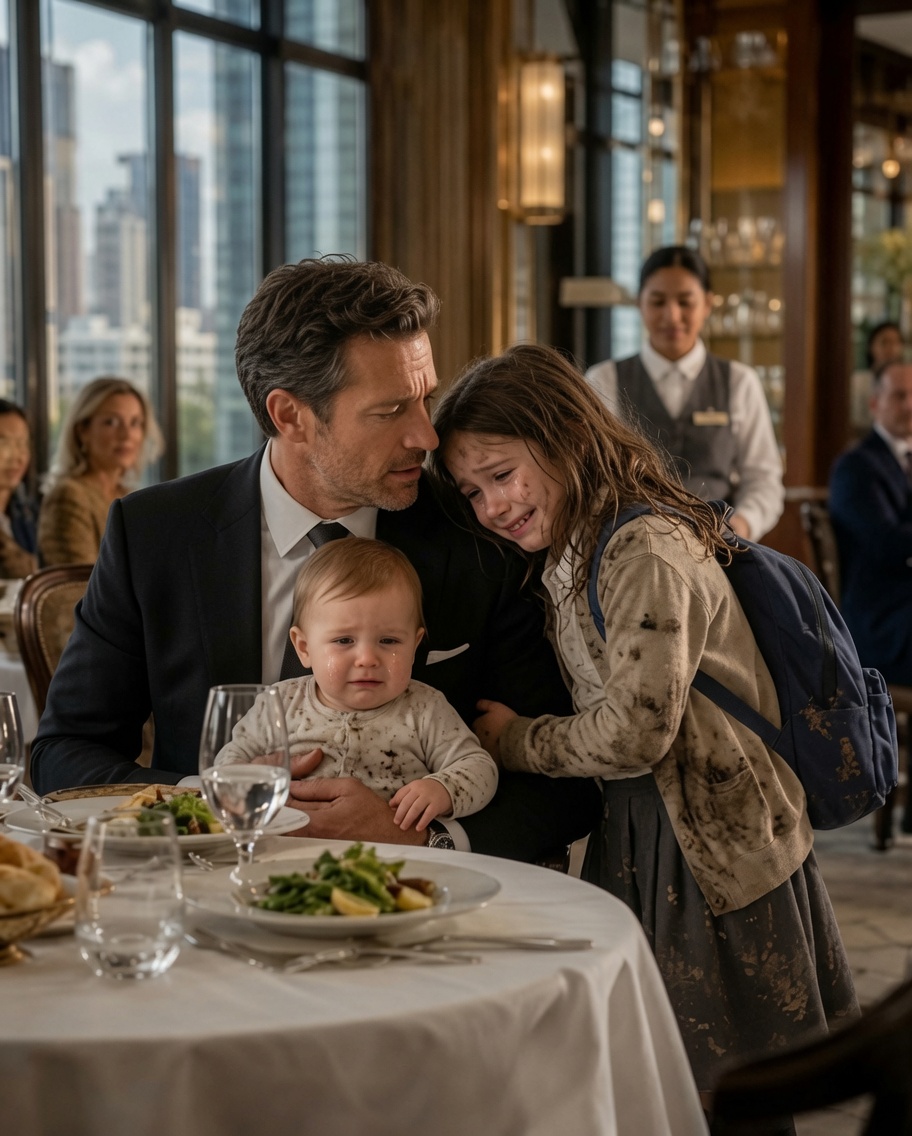
William finally set his fork down.
Slowly.
“Say that again,” he said.
Emma didn’t flinch.
“Sir… when you’re finished,” she repeated carefully, “can we have what’s left on your plate?”
A pause.
Then, softer:
“I’m not asking for money. Just… food that you don’t need.”
Noah made a small sound against her chest. Not crying. Just a weak, tired movement.
That sound changed the atmosphere more than anything else.
William’s expression shifted.
Not pity.
Recognition.
The kind of recognition that comes when something you’ve successfully avoided thinking about suddenly sits down in front of you.
He looked at the baby.
Then at the girl.
Then at the untouched bread basket on his table.
“You came here alone?” he asked.
Emma hesitated.
Then nodded.
“I had to.”
The words were simple.
But nothing about them was simple.
William leaned back slightly, studying her the way he would study an unexpected risk on a financial report.
“You know where you are?”
Emma looked around quickly.
“Somewhere expensive,” she said. “But… there’s food.”
That answer hit harder than it should have.
Because she wasn’t wrong.
A waiter finally stepped forward.
“Sir, should I have security—”
“No,” William said immediately.
The waiter stopped.
William didn’t take his eyes off Emma.
“What’s your name?” he asked.
“Emma.”
“And him?”
“Noah.”
“Your brother?”
Emma shook her head.
“No. I’m taking care of him.”
That sentence landed in the room like something too heavy for its size.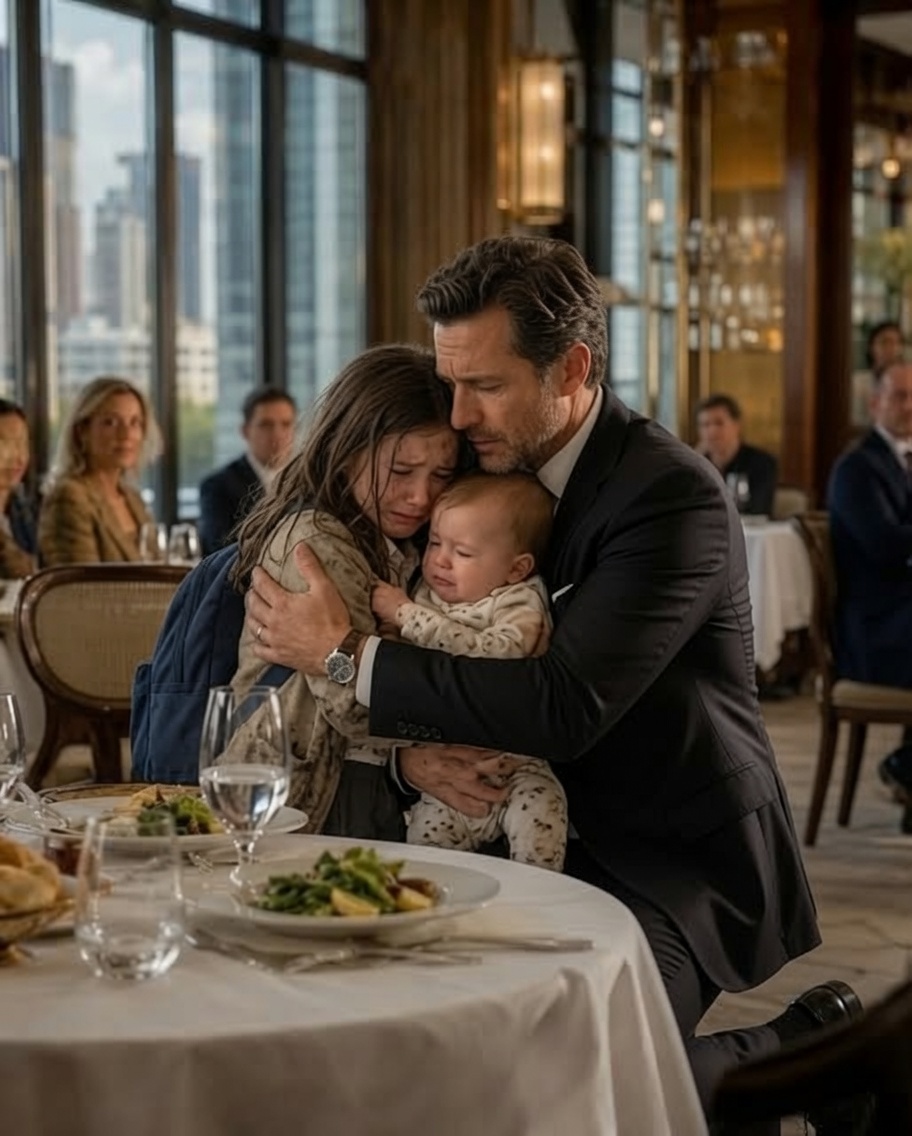
William glanced at the baby again.
Then at the half-eaten steak on his plate.
Then at the untouched bread.
Slowly, he pushed his chair back.
The scraping sound made Emma flinch slightly.
But he didn’t stand up aggressively.
He stood up carefully.
Like someone trying not to scare something already used to running.
He reached into his jacket.
Emma tensed instantly.
“I’m not taking you anywhere,” he said quickly, noticing.
He placed a black card on the table.
Then another.
“Bring fresh food,” he told the waiter. “Not leftovers. Full meals. Warm. Fast.”
The waiter blinked. “Sir—”
“Now.”
Something in his voice ended the argument.
Emma frowned slightly.
“We don’t have money for that,” she said quickly. “We only need what people don’t want.”
William looked at her for a long moment.
Then said something quieter.
“That’s not how this works.”
She didn’t understand.
So he explained in the simplest way possible:
“No one here should be eating alone while you’re asking for scraps.”
A silence.
Then Emma looked down at Noah again.
“I didn’t want to bother anyone,” she whispered.
William’s jaw tightened.
“You didn’t bother anyone,” he said.
A beat.
“The adults in this room did that already.”
Something shifted again.
Not loudly.
But permanently.
He gestured to the table.
“Sit down.”
Emma hesitated.
“We can’t—”
“Sit,” he repeated, not unkindly.
She slowly sat on the edge of the chair, still holding Noah tightly.
William sat back down across from her.
For the first time since she entered, the table didn’t look like it belonged to him.
It looked shared.
The waiter returned quickly, now with urgency instead of confusion.
“Food is being prepared, sir.”
William nodded once.
Then looked at Emma.
“How long have you been taking care of him?” he asked.
Emma lowered her eyes.
“Four months.”
“And your parents?”
A pause.
Then quietly:
“Gone.”
William didn’t ask for details.
He had learned, long ago, that some answers were not information.
They were wounds.
Instead, he looked at the half-empty restaurant around them.
People were watching now.
Some uncomfortable.
Some ashamed.
Some pretending not to see anything at all.
Emma shifted in her seat.
“Are we in trouble?” she asked.
William shook his head.
“No,” he said.
Then, after a pause:
“But someone should be.”
And for the first time that morning, Emma didn’t feel invisible.
Not because the world had changed.
But because someone at the table had finally decided not to look away.