Behind the Nervous Smile: How Don Knotts Turned Childhood Fear Into America’s Favorite Laughter
- PhamThuy
- July 29, 2026
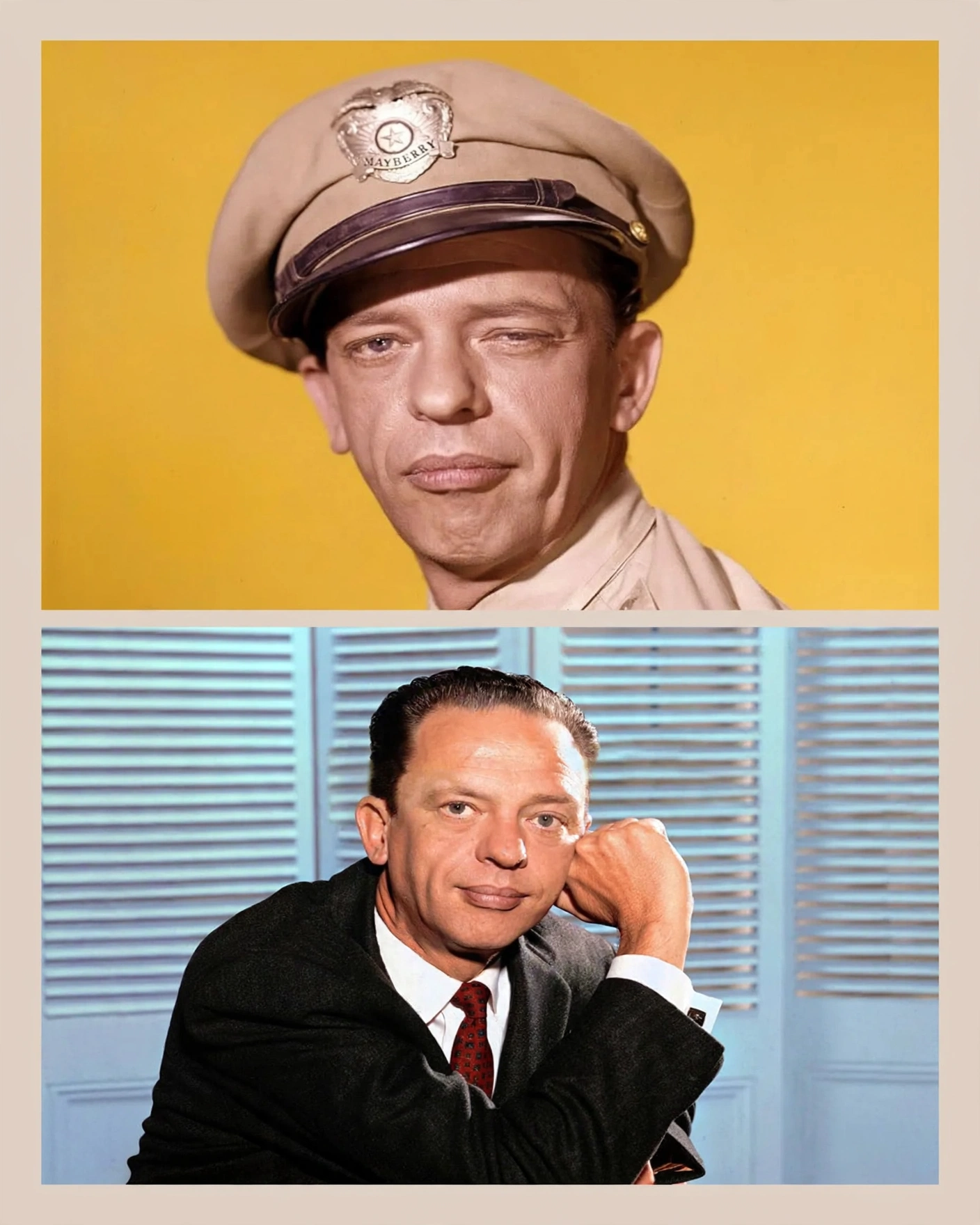
He made millions laugh with a single glance.
The trembling voice. The anxious smile. The wide-eyed panic that always seemed just one step away from complete collapse. On screen, Don Knotts became one of the most beloved comedic figures in American television history.
But the fear audiences laughed at was never entirely an act.
It had been with him long before the cameras.
Don Knotts was born into a world shaped by hardship and uncertainty. His childhood, spent in West Virginia, was marked by instability inside the home—an environment where fear was not something imagined, but something lived.
His father, struggling with severe mental illness, often behaved unpredictably. The atmosphere in the house could shift without warning, leaving young Don constantly on edge. For a child, there was no safe way to process it, no clear understanding of what was happening—only the feeling that something could go wrong at any moment.
That feeling stayed with him.
It followed him through his early years, shaping his personality in quiet but powerful ways. He became reserved, cautious, and deeply aware of the emotional currents around him. Fear was no longer a reaction—it was a constant presence.
But somewhere within that tension, something unexpected began to form.
A sense of timing.
A way of observing people.
And eventually, a talent.
As he grew older, Knotts discovered that humor could change the atmosphere around him. A well-timed expression, a sudden shift in tone—these small moments could break tension, soften discomfort, and even bring relief.
Comedy became more than entertainment.
It became a kind of protection.
After serving in the military during World War II, Knotts returned home and began pursuing a career in performance. The path was not immediate or easy. Like many actors of his time, he faced uncertainty, rejection, and the challenge of finding his place in a competitive industry.
But he had something unique.
His nervous energy, the very thing that might have held others back, became his defining strength. Instead of hiding it, he leaned into it, shaping it into a style that audiences had never quite seen before.
When he stepped into the role of Barney Fife on The Andy Griffith Show, everything changed.
Barney was anxious, overconfident, and constantly on the verge of panic—a small-town deputy who took himself far too seriously while rarely maintaining control. The character was unpredictable, exaggerated, and deeply human all at once.
Audiences loved him.
But what made Barney unforgettable was not just the humor—it was the authenticity beneath it. The nervousness felt real because it came from somewhere real.
Knotts wasn’t simply performing fear.
He understood it.
That understanding gave his comedy a rare depth. Each stammer, each overreaction, each frantic moment carried a truth that viewers could feel, even if they couldn’t quite name it.
The role earned him widespread acclaim, including multiple Emmy Awards, and cemented his place in television history.
But success did not erase the past.
Even as his career flourished, the emotional patterns formed in childhood remained part of who he was. The anxiety never fully disappeared—it simply found a new expression through his work.
In many ways, his career became a transformation.
What had once been a source of pain became a source of connection. The fear that once isolated him became something that brought people together in laughter.
It was not a simple change.
It was a lifelong process.
Beyond The Andy Griffith Show, Knotts continued to build a career that spanned decades. He appeared in films, television series, and stage productions, always bringing that same distinct presence—an ability to balance vulnerability and humor in a way that felt effortless.
Yet behind the scenes, those who knew him often described a man who was quieter, more reflective than his on-screen persona suggested. The energy that audiences saw was carefully channeled, shaped into performance rather than allowed to overwhelm him.
It was a kind of control.
A way of taking something unpredictable and turning it into something meaningful.
As the years passed, his legacy grew.
New generations discovered his work, finding the same joy and laughter that earlier audiences had experienced. The character of Barney Fife remained iconic, a reminder of a time when comedy relied not on spectacle, but on timing, expression, and truth.
And at the center of it all was a man who had once been a frightened child, trying to make sense of a world that felt uncertain.
His story is not just about success.
It is about transformation.
About the ability to take something difficult—something painful—and reshape it into something that connects with others.
Don Knotts did not become great by escaping his fear.
He became great by understanding it.
By embracing it.
And by sharing it in a way that made millions of people laugh.
In the end, the nervous smile that defined his career was more than a comedic tool.
It was a reflection of a life lived with courage—quiet, steady, and deeply human.
Because sometimes, the people who bring the most laughter into the world are the ones who have known fear the longest.
And choose, every day, to turn it into something else.