Brandon Lee Never Lived to See The Crow—But His Final Performance Made Him Unforgettable
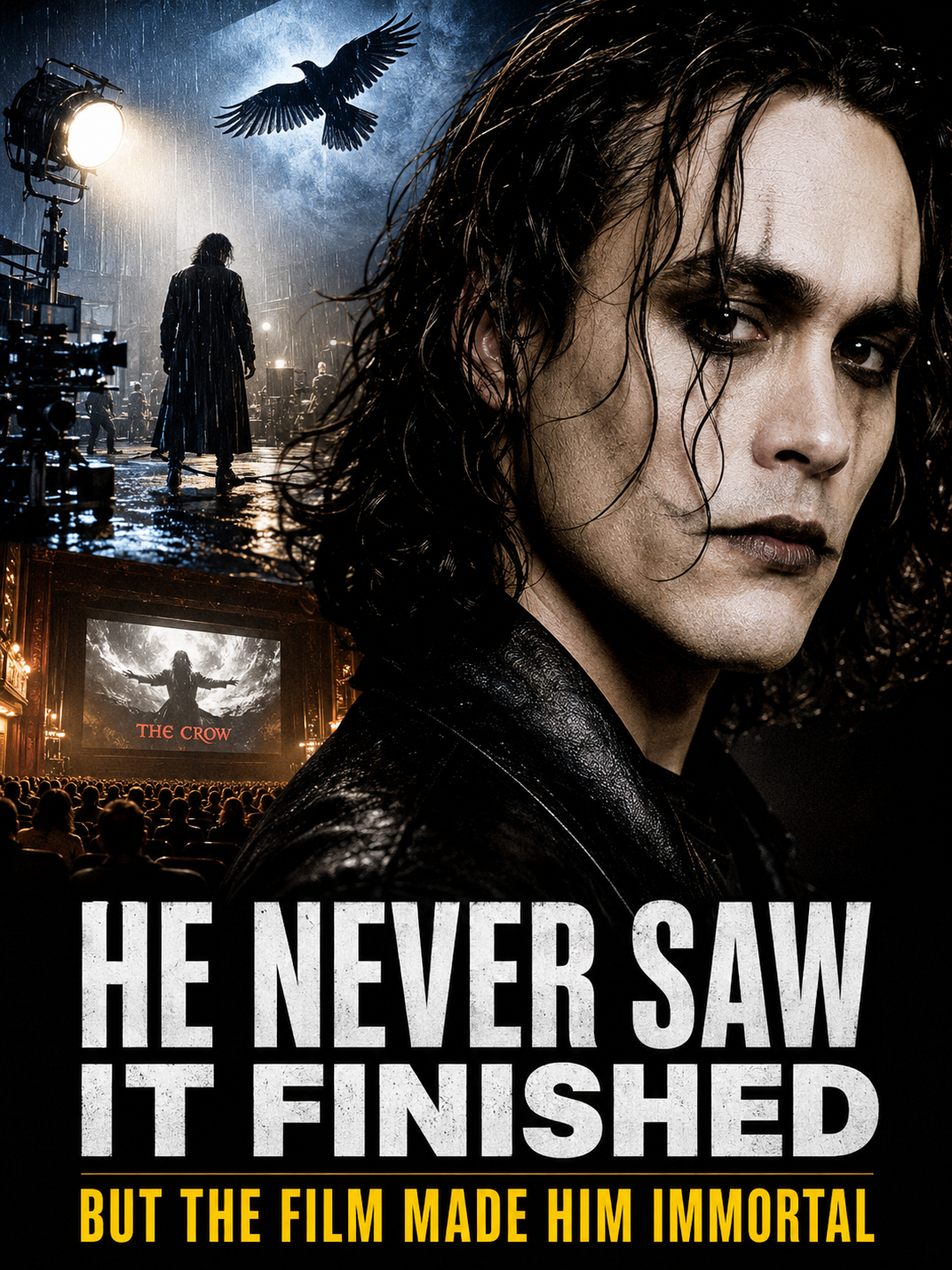
When Brandon Lee stepped onto the set of The Crow, he believed he was making the film that would finally separate him from his famous father’s shadow.
He was 28 years old, recently engaged, and approaching the breakthrough he had spent years trying to earn. The role of Eric Draven offered more than martial-arts action. It required romance, grief, humor, rage, and a supernatural transformation unlike anything Lee had previously played.
Then, with most of the film completed, a weapon intended to be safe fired a projectile into his body during a scene.
Lee died on March 31, 1993.
He never saw the finished movie, never attended its premiere, and never witnessed audiences turn Eric Draven into a defining figure of 1990s gothic culture.
Yet when The Crow opened the following year, Lee’s performance revealed the leading man Hollywood had only begun to recognize. The film became both his breakthrough and his memorial—a story about a dead man returning for the woman he loved, completed after its star was gone.
Growing Up With an Immortal Name
Brandon Bruce Lee was born in Oakland, California, on February 1, 1965.
His father, Bruce Lee, was already developing the martial-arts philosophy and screen presence that would transform him into an international icon. Brandon spent part of his childhood in Hong Kong before the family returned to the United States.
Bruce Lee died suddenly in 1973 at the age of 32. Brandon was eight.
The loss shaped the rest of his life. He inherited not only grief, but a surname associated with extraordinary expectations. To many people, he was not simply a young actor. He was Bruce Lee’s son, expected to reproduce his father’s charisma and fighting ability.
Brandon trained in martial arts, but he wanted to be recognized as an actor rather than treated as a replacement for a man who could never be replaced.
He studied theater at Emerson College and later trained at the Lee Strasberg Theatre and Film Institute. His early work included the television project Kung Fu: The Movie and the Hong Kong action film Legacy of Rage.
Hollywood opportunities followed, but they often placed him inside familiar boundaries.
In Showdown in Little Tokyo, Lee played a police detective alongside Dolph Lundgren. In Rapid Fire, he portrayed a student drawn into a dangerous conflict involving organized crime.
The films demonstrated his physical ability and screen presence. They also showed his frustration with being viewed primarily as a martial artist.
He wanted a role that allowed him to use everything he had learned.
Eric Draven became that role.
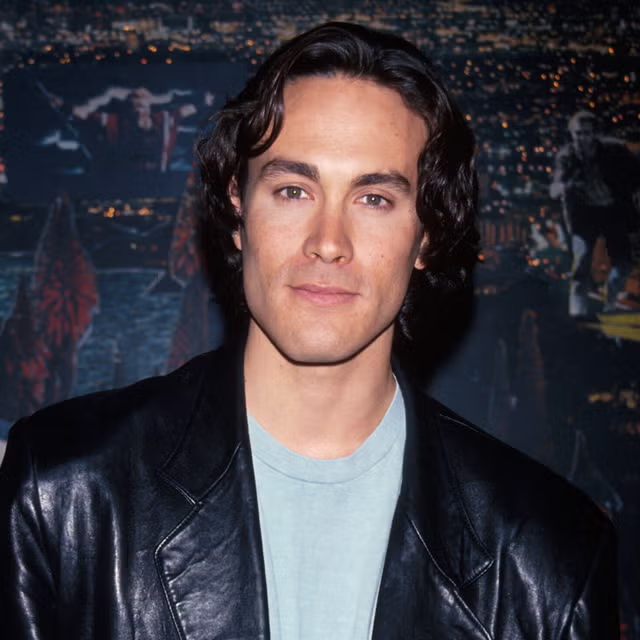
A Love Story Disguised as Revenge
The Crow was based on the comic created by James O’Barr, who had written the original story while processing the death of his fiancée.
The plot followed Eric Draven, a musician murdered alongside his fiancée, Shelly Webster, on the night before their wedding. One year later, a crow guides Eric back from the grave so he can punish the people responsible.
Director Alex Proyas envisioned the film as a dark urban fairy tale.
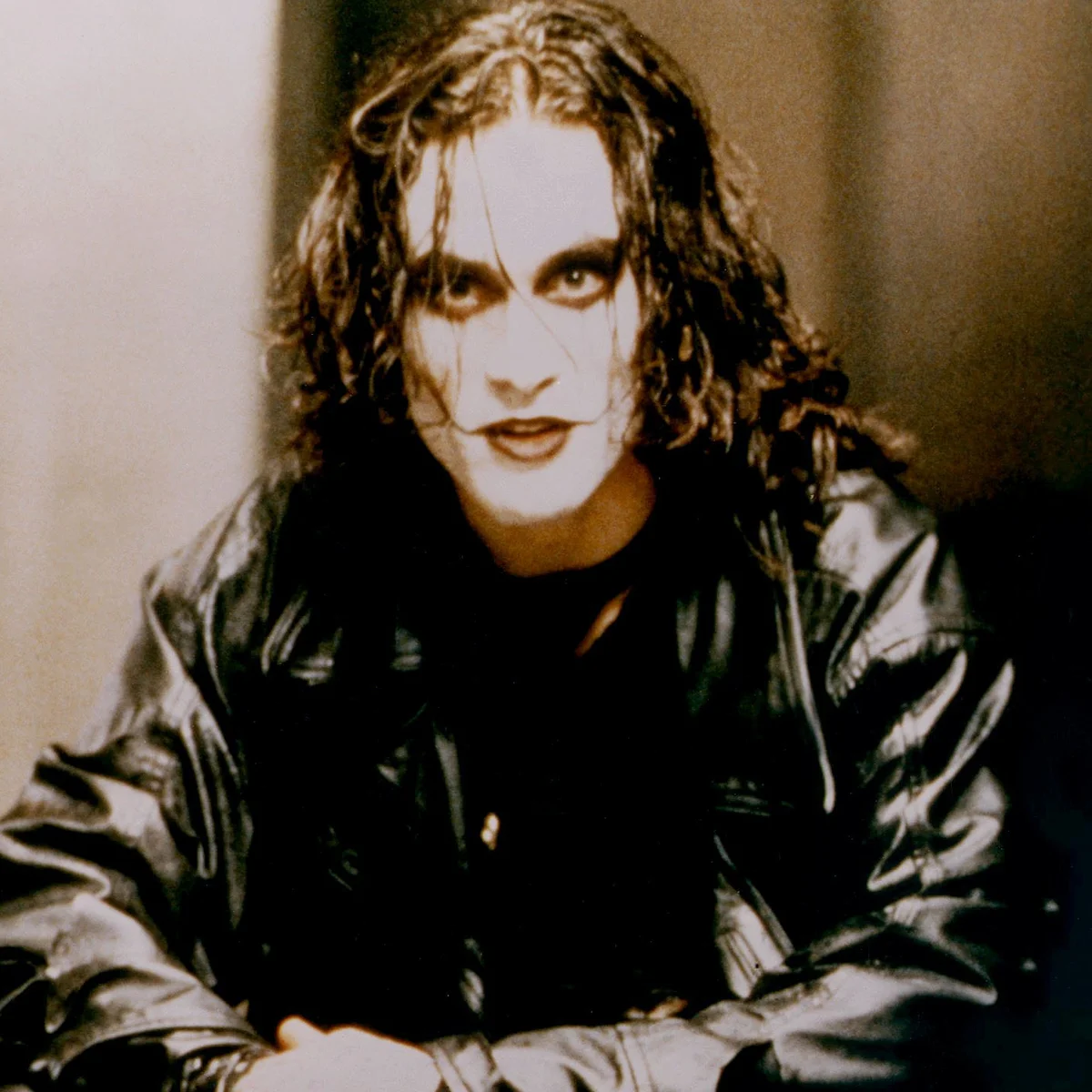
Its unnamed city was covered in rain, fire, ruined buildings, and industrial shadows. Eric’s black clothing, pale face, and smeared makeup gave him the appearance of a wounded rock musician who had crossed out of the afterlife.
But the character could not function through appearance alone.
Eric had to be dangerous without losing the tenderness that made his return meaningful. His vengeance existed because of love. If audiences did not believe in that love, the violence would become empty.
Lee understood the balance.
He could move with the speed and control expected from an action performer, but he also gave Eric a playful, vulnerable quality. The character jokes with a young girl named Sarah, remembers Shelly with aching warmth, and becomes almost frighteningly calm when confronting her killers.
Producer Jeff Most later recalled Lee’s attention to the rhythm and economy of Eric’s dialogue. He wanted the character’s words to feel deliberate rather than overloaded.
The role suggested that Lee’s future might extend far beyond conventional action movies.
He would not live to discover how far.
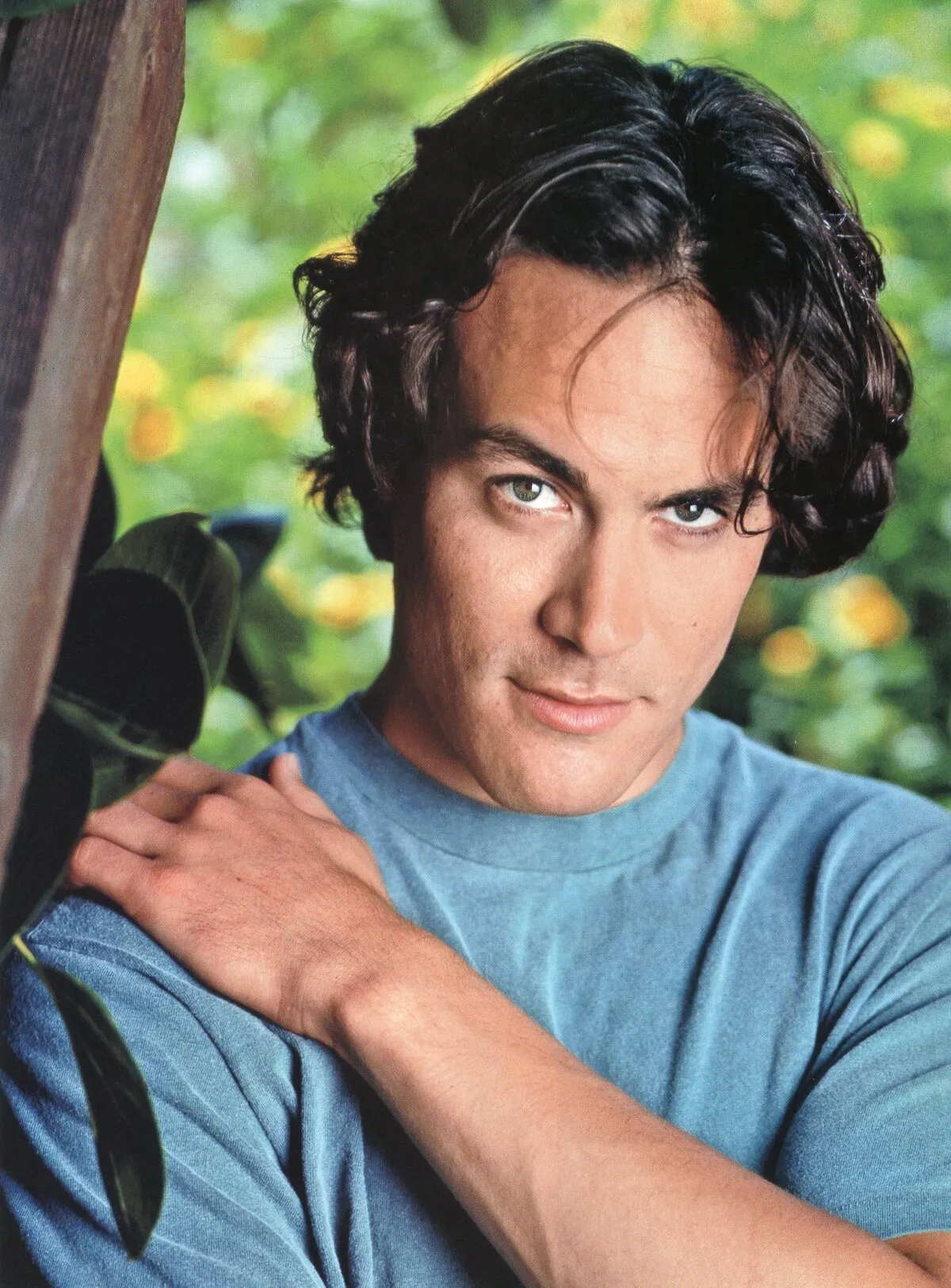
The Scene That Became a Real Tragedy
On March 31, 1993, the production was filming in Wilmington, North Carolina.
The scene involved Eric entering his apartment and discovering the attack that would lead to his death. Actor Michael Massee, playing the criminal Funboy, was required to fire a .44-caliber revolver toward Lee.
The gun was supposed to contain a blank.
Instead, an earlier mistake had left an obstruction inside the barrel. During a previous setup, improperly prepared dummy ammunition had been used for a close-up. A primer reportedly pushed a bullet from its casing and lodged it in the gun.
When the weapon was later loaded with a blank, the explosive force propelled the trapped projectile from the barrel like a live round.
Lee collapsed after the gun was fired.
At first, some crew members believed he was continuing the performance. When he did not rise, they realized something was terribly wrong.
He was rushed to a hospital and underwent emergency surgery, but doctors could not save him. Lee died from his injuries at 28. An autopsy found a projectile lodged near his spine.
The shooting was ruled accidental. Prosecutors ultimately brought no criminal charges, saying the evidence did not satisfy the legal standard required for prosecution, although the investigation exposed serious failures in the handling and preparation of the weapon.
The tragedy revived painful comparisons with Bruce Lee, who had also died young before fully experiencing the global impact of his work.
But Brandon’s death was not a mysterious family curse.
It was a preventable filmmaking accident.
Whether the Movie Should Survive
After Lee’s death, the future of The Crow became uncertain.
Continuing could appear exploitative. Abandoning the project, however, would erase the performance Lee had worked so hard to create.
Most of his scenes had already been filmed. Reports indicated that only a small amount of principal work remained, though important connecting material was still incomplete.
The decision was made with the support of Lee’s mother, Linda Lee Cadwell, and his fiancée, Eliza Hutton, to finish the movie as a tribute to him.
The filmmakers rewrote and rearranged scenes to work around the missing footage.
Stunt performers Chad Stahelski and Jeff Cadiente served as doubles. Lighting, camera angles, editing, and early digital compositing techniques allowed the production to complete moments that Lee had not filmed.
In one sequence, Eric enters his apartment after returning from the dead. A double was photographed and Lee’s face was digitally incorporated into the image. Other scenes were created through silhouettes, existing footage, and carefully chosen angles.
The goal was not to manufacture an entirely new performance.
It was to preserve the one Lee had already given.
Proyas later described the completed film as a testament to Lee’s talent and loss.
A Movie Shadowed by Reality
The Crow was released in the United States on May 13, 1994.
The film could never be separated from the circumstances of its production. Every scene involving Eric’s death, resurrection, or longing for Shelly carried a meaning the filmmakers could not have anticipated.
Yet audiences responded to more than tragedy.
They responded to Lee.
His Eric Draven was graceful, wounded, funny, and ferocious. He could leap across rooftops and defeat armed criminals, but the performance was most powerful when Eric appeared alone with his memories.
Lee’s physical movement gave the action a fluid, dance-like quality. His quieter scenes suggested an actor prepared to move beyond the roles previously offered to him.
The movie opened with approximately $11.8 million and ultimately earned more than $50 million at the domestic box office.
It also developed a powerful cultural afterlife.
Its visual design influenced gothic fashion, music videos, comic-book adaptations, and later supernatural action films. The soundtrack became closely associated with the alternative-rock culture of the period.
Black coats, pale makeup, wet city streets, and the image of a crow against the night became part of a style audiences could instantly identify.
Multiple sequels and television adaptations followed, though none carried the emotional weight of the original.
A Performance Frozen at the Moment of Arrival
Lee’s death inevitably affected how people interpreted The Crow.
The film includes lines about mortality, memory, and love surviving beyond death. Heard after the accident, those ideas seemed almost unbearably personal.
But reducing the movie to a tragic coincidence risks overlooking Lee’s achievement.
He did not become memorable simply because he died during production. His death brought attention to the film, but attention alone could not have sustained its reputation for more than three decades.
The performance endured because Lee gave Eric a soul.
His character is not immortal because he cannot be hurt. Eric returns only long enough to complete a final act of love and justice. His power exists alongside grief, and his victory does not restore the life he lost.
That combination allowed audiences to see Lee differently.
He was no longer only Bruce Lee’s son or another promising martial-arts performer.
He was an actor capable of carrying a stylized, emotionally demanding film.
The Legacy Beyond the Screen
The accident became one of the film industry’s most widely remembered warnings about firearms on sets.
It demonstrated that a weapon loaded with blanks could still become lethal when basic safety procedures failed. Nearly three decades later, the fatal shooting of cinematographer Halyna Hutchins during production of Rust renewed public attention to Lee’s death and to continuing debates over whether functional guns should be used in filmmaking at all.
For Lee’s family and loved ones, however, his legacy was larger than the circumstances of his death.
He had been preparing to marry Hutton. He was building a career on his own terms. Those closest to him lost a son, brother, partner, and friend—not merely a movie star whose story ended dramatically.
That distinction matters.
The Crow preserved one part of Brandon Lee, but it could not preserve the future he should have had.
He never saw audiences embrace the film. He never learned that his image as Eric Draven would remain on posters, shirts, album covers, and bedroom walls for generations.
He never received the next role that almost certainly would have followed.
But the film revealed what that future might have contained.
Brandon Lee entered The Crow trying to escape another man’s legend.
He left behind one of his own.