The Little Girl, the Doll, and the Hidden Truth: How One Victorian Photograph Kept Its Secret for More Than a Century
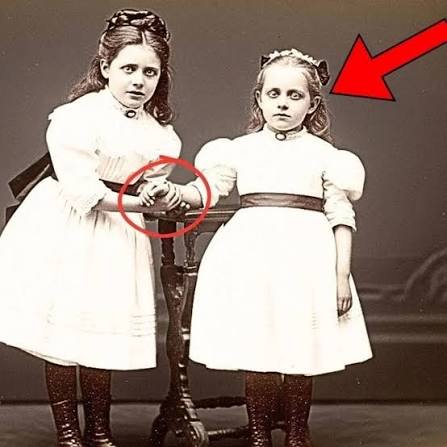
At first glance, the old photograph appears almost ordinary. A young Victorian girl sits quietly with a doll in her lap, dressed neatly for what seems to be a formal portrait. Her expression is calm, the composition carefully arranged, and nothing immediately suggests that the image holds an extraordinary story.
Yet for more than 100 years, people looked at that picture without realizing they were missing the most important detail.
Only when modern technology allowed experts to study the image more closely did the hidden clue finally emerge—revealing that what generations believed was an innocent childhood portrait carried a far more emotional meaning.
The discovery transformed not only the photograph itself but also the way many people understand one of the most touching traditions of the Victorian era.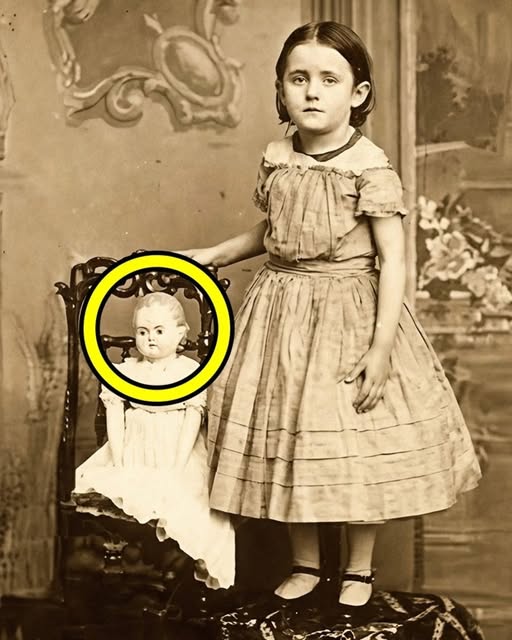
During the nineteenth century, photography was still a remarkable luxury. Unlike today, when countless pictures can be taken in seconds, having a professional portrait made required both time and money. Many families simply could not afford regular photographs.
As a result, some people reached the end of their lives without ever standing in front of a camera.
When tragedy struck, grieving parents, husbands, wives, or siblings often realized they had no visual memory of the loved one they had lost. For many families, arranging a final portrait became their only chance to preserve a lasting image.
What seems unusual today was, at the time, viewed as an act of remembrance and affection.
Photographers approached these sessions with great care. The deceased would be dressed in their finest clothing, hair carefully arranged, and every effort made to present a peaceful appearance. Flowers were sometimes included, and family members occasionally appeared beside them.
The goal was never to create something frightening.
Instead, the portrait was intended to offer comfort—a final keepsake before saying goodbye.
Creating those images, however, presented challenges.
Early cameras required subjects to remain perfectly still during relatively long exposure times. While living people could naturally maintain their posture, the deceased could not. Even small movements or changes in position could affect the finished photograph.
To overcome these practical problems, photographers developed discreet methods to support the body.
Hidden stands could be placed behind clothing. Small supports might be concealed beneath fabric. In some cases, the hands were gently secured with extremely thin ribbons or cords that were tucked beneath sleeves or lace so they would not be visible in the final image.
These tiny details were never intended to attract attention.
They were simply practical solutions that helped create a peaceful and dignified portrait.
For decades—and sometimes for generations—those nearly invisible supports escaped notice.
That is exactly what happened in one remarkable family photograph.
The portrait showed a teenage girl seated with remarkable composure. Nothing about her appearance suggested anything unusual. Her face looked relaxed, and the image resembled countless Victorian studio portraits.
Relatives believed the photograph had been taken during her lifetime.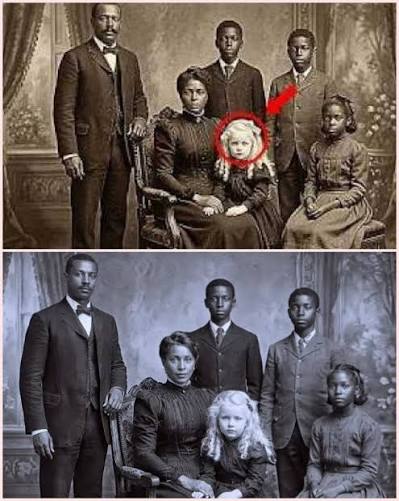
No one questioned it.
The image became part of the family’s history, quietly passed from one generation to the next.
Everything changed when the photograph was digitally enlarged during restoration work.
As technicians examined the image in far greater detail than had ever been possible before, they noticed something almost impossible to see with the naked eye.
Near the girl’s wrists was an incredibly thin cord.
It was so small that previous viewers had overlooked it completely.
That tiny thread prompted researchers to revisit family records.
The documents revealed the heartbreaking truth.
The young girl had died from tuberculosis only hours before the photograph was taken.
For more than a century, her descendants had looked at the image believing it captured an ordinary moment from her life.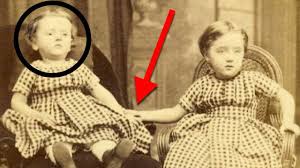
Instead, it had been her family’s final farewell.
The discovery was startling not because the photograph appeared disturbing—it did not—but because such an important detail had remained hidden in plain sight for generations.
Stories like this help explain why Victorian post-mortem photography continues to fascinate historians today.
Popular culture has often portrayed these photographs as strange or even macabre, sometimes suggesting elaborate methods for posing the deceased.
In reality, many of those ideas have been exaggerated.
Most portraits were surprisingly restrained.
The subjects were usually seated or lying naturally, and photographers aimed to create peaceful, respectful images rather than dramatic displays.
Every element carried meaning.
Hands folded together symbolized rest and serenity.
Carefully arranged clothing reflected dignity.
Flowers could express remembrance or love.
Even the smallest hidden ribbon served a practical purpose while helping preserve the quiet appearance families hoped to remember.
Modern technology has allowed researchers to revisit thousands of historic photographs with fresh eyes.
High-resolution scans, digital restoration, and image enlargement now reveal details that photographers of the nineteenth century assumed would remain invisible forever.
Tiny knots.
Hidden cords.
Subtle supports concealed beneath fabric.
Each discovery offers another glimpse into how Victorian photographers worked and how grieving families tried to preserve precious memories.
Rather than making these images seem colder or stranger, those discoveries often make them feel deeply personal.
Behind every photograph is a family coping with unimaginable loss.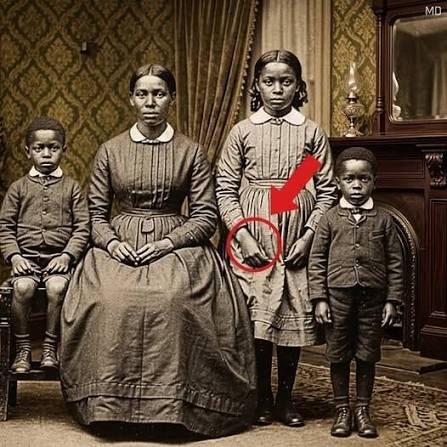
Parents mourning a child.
Children saying goodbye to a mother or father.
Brothers and sisters holding on to the last opportunity to remember a familiar face.
Although customs surrounding death have changed dramatically over the past century, the emotions behind them remain recognizable.
People still search for ways to preserve memories of those they love.
Photographs continue to serve as powerful reminders of lives that mattered.
The Victorian family who commissioned that portrait of the young girl and her doll could never have imagined that someone, more than 100 years later, would uncover the nearly invisible clue they hoped no one would notice.
Yet that delicate thread now tells a story every bit as meaningful as the girl’s expression.
It reminds us that history often hides its greatest secrets in the smallest details.
Sometimes a faded photograph is more than a picture frozen in time.
Sometimes it is a silent farewell, waiting patiently for future generations to finally understand what it has been trying to say all along.