After Losing His Grandparents, a Teen Turned a Backyard Shed Into the Home He Couldn’t Let Go
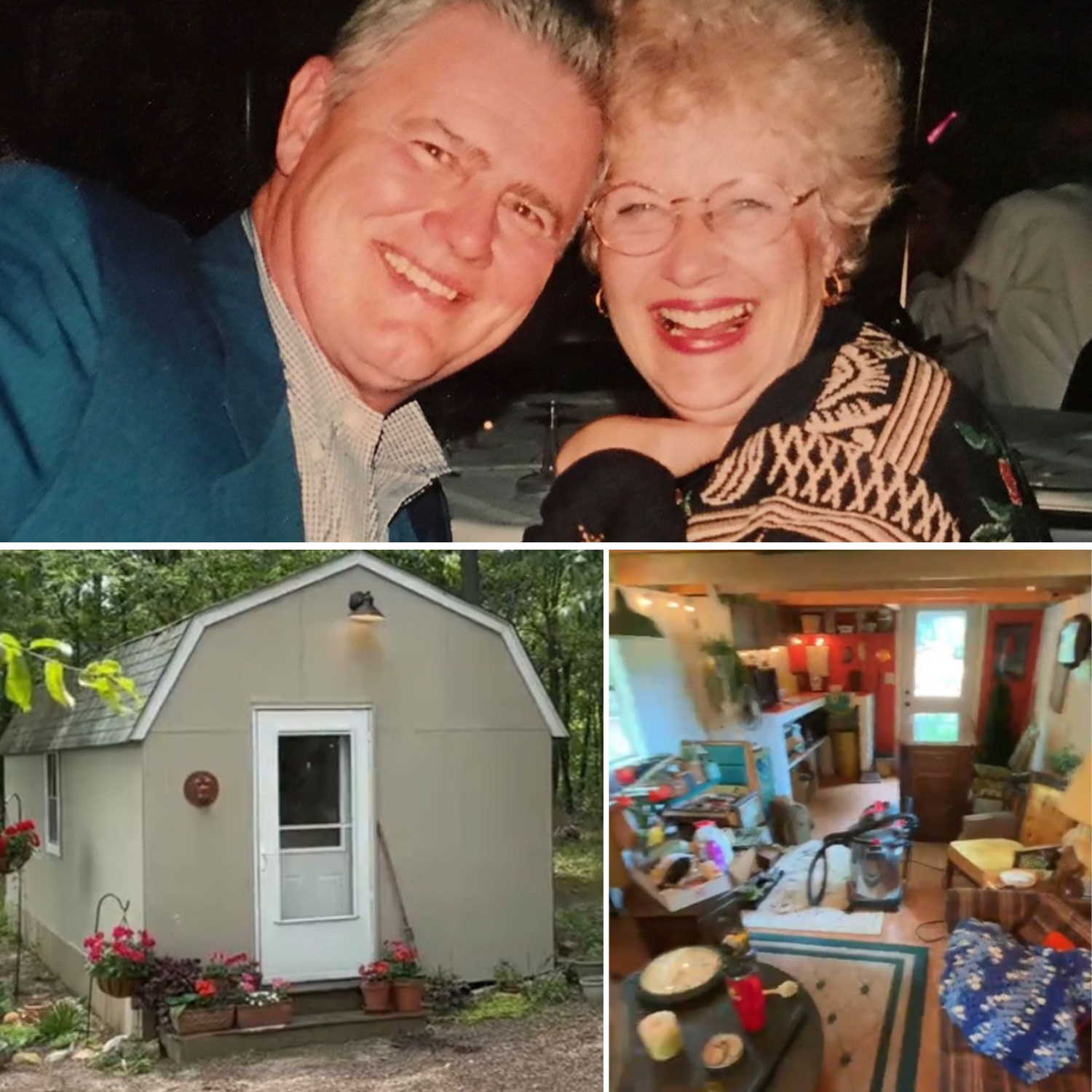
When Hudson Waters steps inside the small building behind his family’s home, he is surrounded by objects that once belonged to another place and another chapter of his life.
There is the coffee table his grandparents used in their first home. Nearby sits the familiar bird clock that announces each passing hour. Vintage decorations fill the room, and his grandmother’s Christmas tree waits to be brought out again.
To someone else, they might look like old household items.
To Hudson, they are pieces of home.
The 17-year-old high school student from central Illinois transformed a backyard shed into a tribute to his late grandparents, Janet and Roger Motsinger. Rather than allowing their belongings to be sold, stored away or separated, he used them to recreate the comforting atmosphere of the house where he spent much of his childhood.
He calls the finished space the “Nana Cave.”
It is not an exact architectural copy of his grandparents’ house. Instead, it preserves the details that made their home feel unmistakably theirs—and especially his grandmother’s.
Childhood Memories Just Down the Street
Hudson grew up in the same neighborhood as Janet and Roger, which meant visiting them never required a long trip.
Their home became a familiar part of his childhood. Many of his strongest memories were formed around their dinner table and among the furniture, decorations and everyday objects that filled the rooms.
Janet brought her personality into nearly everything she did. She enjoyed baking and gardening and was an enthusiastic Queen fan. Hudson admired the care she put into her interests and the way she made her surroundings feel personal and welcoming.
Her home was not memorable because its contents were expensive. It mattered because every room reflected the person who lived there.
Roger died in 2018 at age 77. Janet died five years later, in 2023, also at 77.
After Janet’s death, Hudson’s mother inherited the couple’s belongings. The family was left with furniture and decorations that had accumulated across decades—and with the difficult question that often follows a loss: What should happen to the ordinary objects that have become inseparable from someone’s memory?
For Hudson, the thought of watching those belongings disappear was painful.
He did not want them sold at an auction, where they would be divided among strangers. He also did not want them packed into a basement, preserved but rarely seen.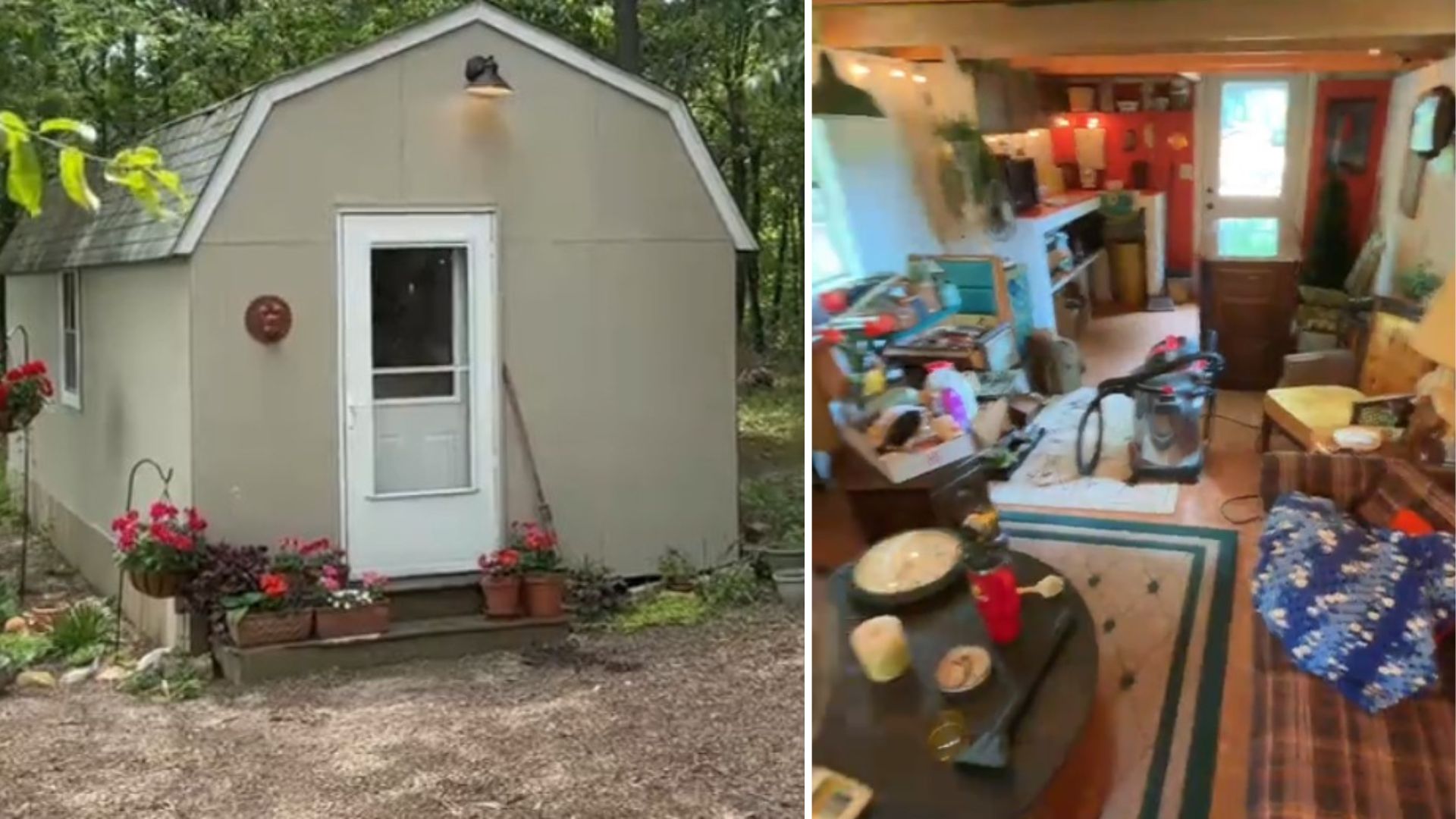
So he imagined another possibility.
A Shed Becomes a Second Home
Hudson’s father had purchased a shed from a friend who no longer needed it. The structure was placed in a wooded area behind the family’s house, giving Hudson a space where he could create something entirely his own.
He began turning it into a version of the home he remembered.
The exterior was painted to match the color of his grandmother’s house. Flowers were planted outside, echoing Janet’s love of gardening. Inside, Hudson arranged the furniture and decorations that had surrounded him during childhood.
The details were chosen for their emotional value.
Among his favorite pieces are the original coffee table and end tables from his grandparents’ first house. The bird clock, whose hourly sounds once marked time in their home, now does the same inside the shed.
He also saved the vintage decorations he had known while growing up, including Janet’s Christmas tree.
Together, the items create more than a display. They reproduce a feeling.
Hudson wanted to enter the shed and experience the familiarity of visiting his grandmother again. By surrounding himself with objects that still carried those associations, he found that the idea worked.
The building began to feel less like a shed filled with inherited possessions and more like a doorway into his family’s past.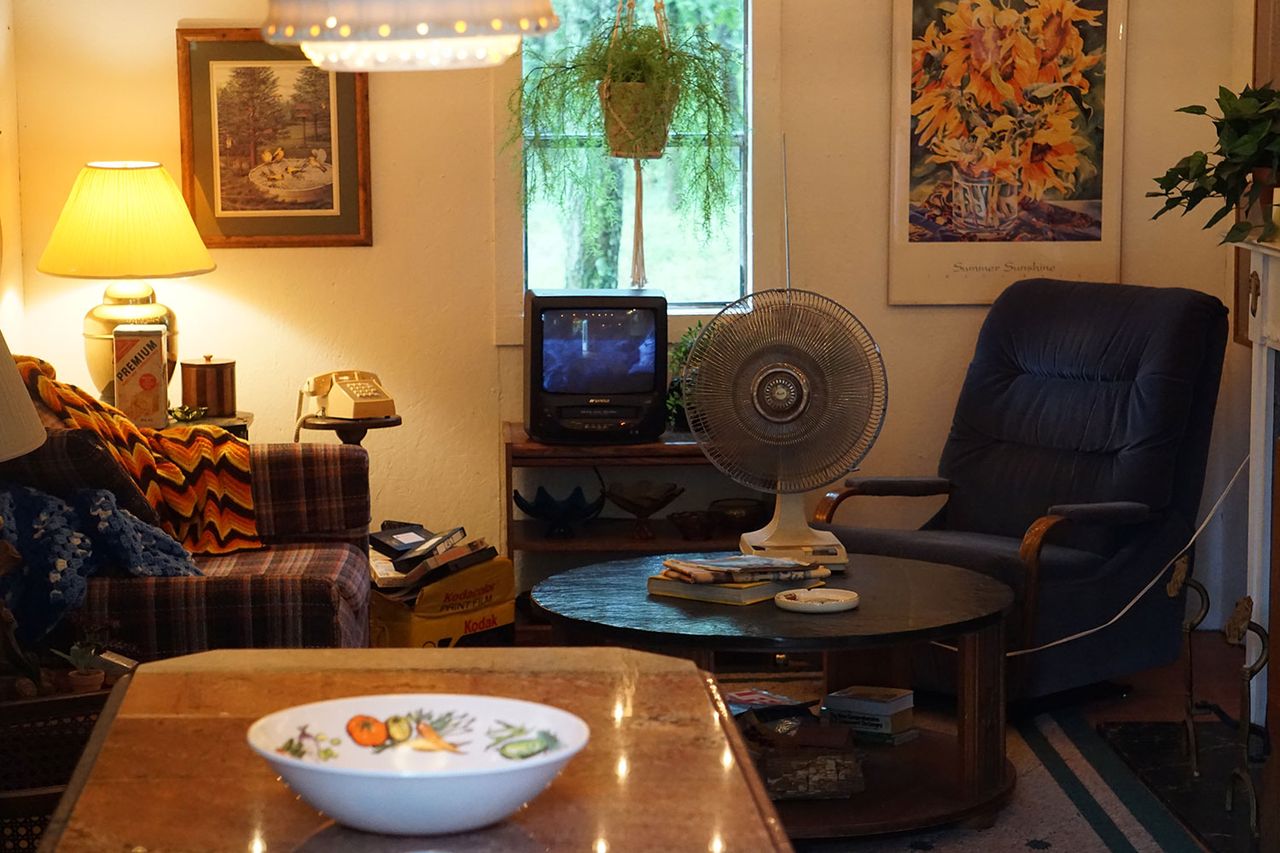
Preserving the Past Without Freezing It
Although the Nana Cave protects his grandparents’ belongings, Hudson does not treat the room like a museum.
The furniture is not roped off. The television and stereo are not merely decorative. The space is meant to be used.
Hudson spends time there with his friends, listening to music and watching VHS tapes. His family members have also visited, recognizing the familiar items and the memories attached to them.
That decision gives the project another layer of meaning.
Instead of allowing his grandparents’ belongings to become artifacts from a life that ended, Hudson has made them part of his present. The same tables, decorations and electronics that witnessed earlier family moments now provide the setting for new ones.
Friends who never knew Janet or Roger can still experience the atmosphere Hudson remembers. His grandparents’ possessions continue to serve a purpose, even as the people and conversations around them change.
The Nana Cave holds the past, but it is not trapped there.
Millions Connect With One Teen’s Tribute
After completing much of the transformation, Hudson shared the project on TikTok.
His intention was simple. He hoped the shed might encourage other people to think creatively about preserving belongings left behind by loved ones.
He did not expect the response that followed.
The video attracted more than 2.5 million views and approximately 65,000 comments. Viewers described the space as beautiful and expressed envy, affection and nostalgia. Some said Hudson had recreated the kind of place—and the period of life—that many people still long to revisit.
Others reflected on possessions from their own families.
Some thought about items they wished they had saved. Others imagined what it would mean for their children or grandchildren to preserve a room filled with the objects they currently use every day.
The widespread reaction revealed why Hudson’s project connected so deeply. Many families face the same experience after a death: rooms must be cleared, belongings sorted and decisions made before grief has fully settled.
A chair can appear replaceable until it is the chair where a grandparent always sat. A clock can seem outdated until its sound brings back an entire room. A Christmas tree may be one of millions, yet still hold memories that cannot be duplicated.
Hudson’s shed gave physical form to those invisible connections.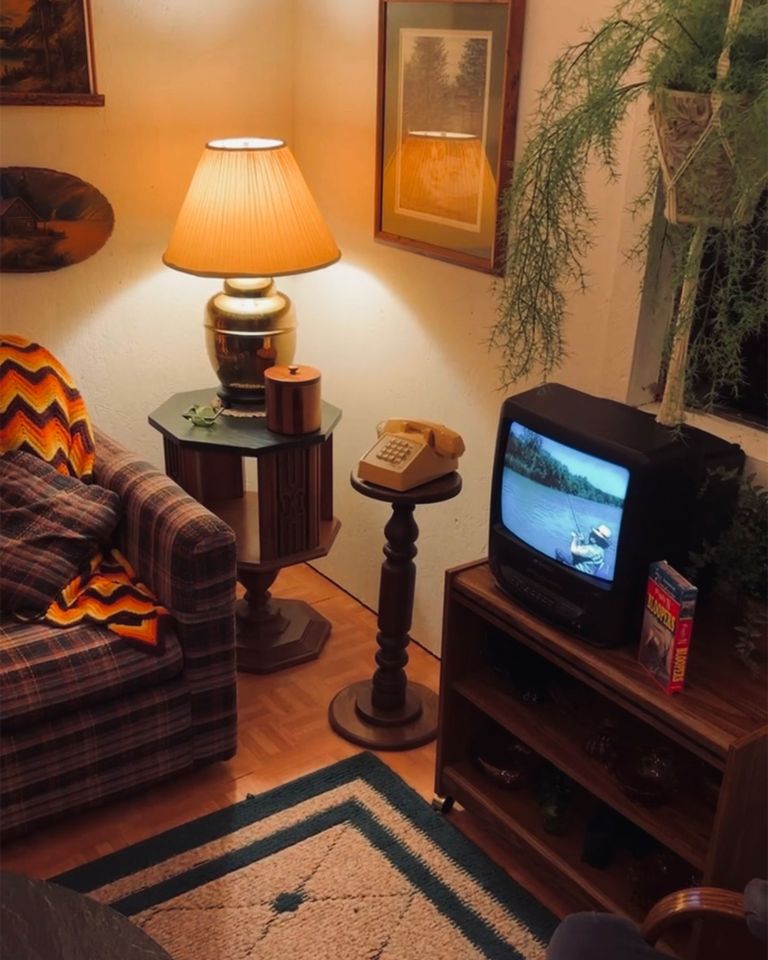
Imagining What His Grandmother Would Think
The attention has also made Hudson wonder how Janet might have reacted to the Nana Cave.
He believes she would have felt loved knowing that the possessions she once used to make her home special were still being valued. He also thinks she would have been surprised that a space built from her memories had reached millions of people.
The project has allowed her influence to extend far beyond central Illinois.
People who never met Janet now know that she baked, gardened, listened to Queen and filled her home with personality. They have seen the decorations she selected and the furniture her family gathered around.
Her belongings are telling parts of her story.
Hudson plans to continue caring for the shed and adding details. One of his next goals is to build a front porch, bringing the structure even closer to the home that inspired it.
There may always be something else to arrange, preserve or recreate. But the Nana Cave has already achieved its most important purpose.
It has given Hudson a place where remembering his grandparents does not have to feel distant.
His project also carries a message for others: Spend time with the people you love while they are still here, and do not underestimate the stories held by the things they leave behind.
Objects may be ordinary in isolation. Their meaning comes from the hands that used them, the rooms where they stood and the moments they silently witnessed.
In a wooded corner behind his family’s home, Hudson has kept those stories from being scattered.
And each time the bird clock sounds another hour, the little shed reminds him that memory can still make a house feel occupied.