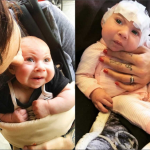
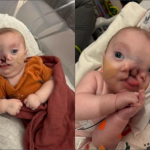
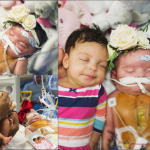
“IT WAS A 𝚂𝙷𝙾𝙲𝙺”: BABY DAISY NEEDS PART OF HER 𝖲𝖪𝖴𝖫𝖫 𝖱𝖤𝖬𝖮𝖵𝖤𝖣 SO HER BRAIN CAN GROW
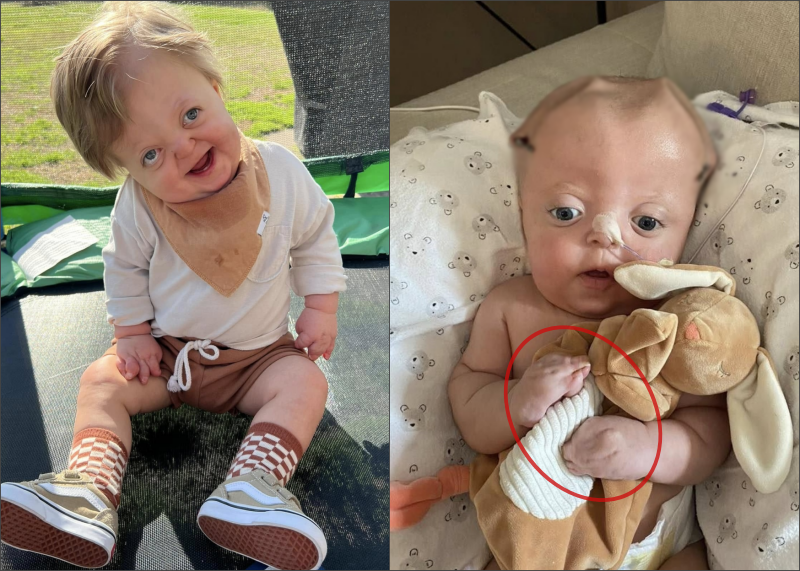
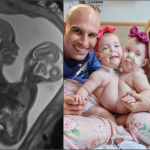
When Debb Stevens was told that her baby had a rare genetic condition called Apert Syndrome after her 25-week ultrasound, she went into “𝗌𝗁𝗈𝖼𝗄.”
The Queensland mum and her husband, Caine, had no idea of the journey that lay ahead; that their little girl Daisy would need facial and skull reconstruction and undergo more than 20 surgeries before the age of five.
“It was very confronting and overwhelming,” Debb told. “We had never heard of it. We gave ourselves a week to process the news and look at the photos online, then we decided to take a break from the internet.”
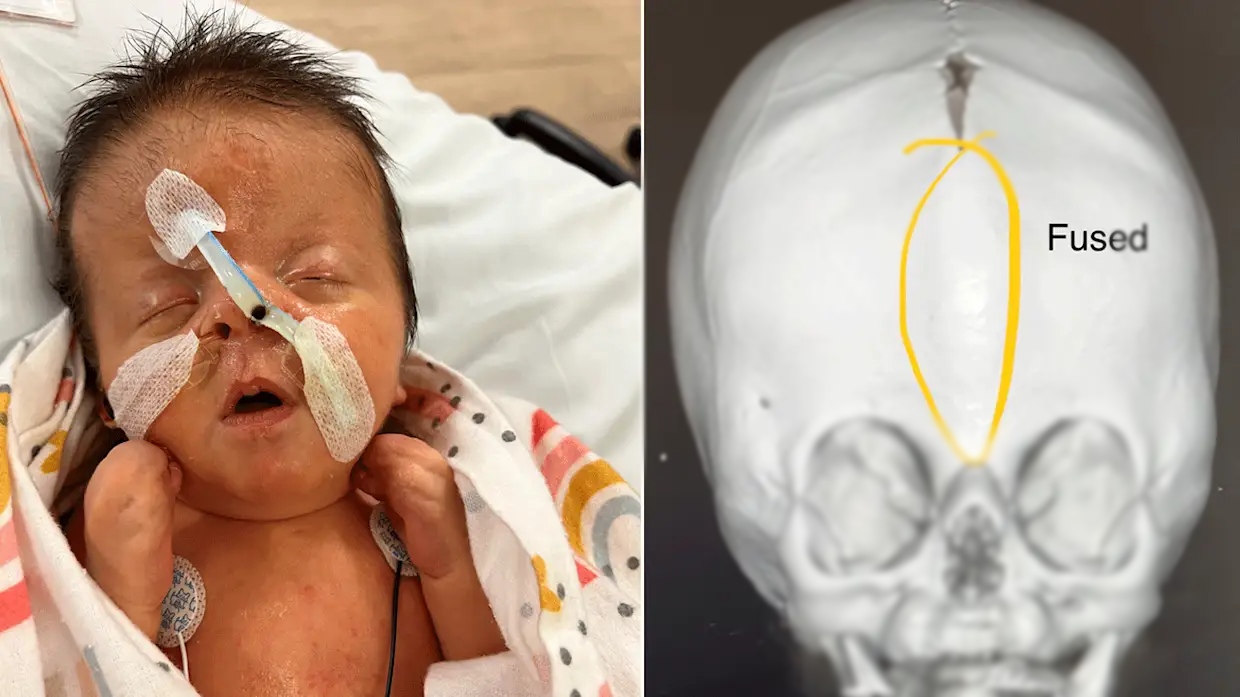
Apert syndrome is a spontaneous genetic mutation that affects around 1 in 65,000 babies and is characterized by skeletal differences.
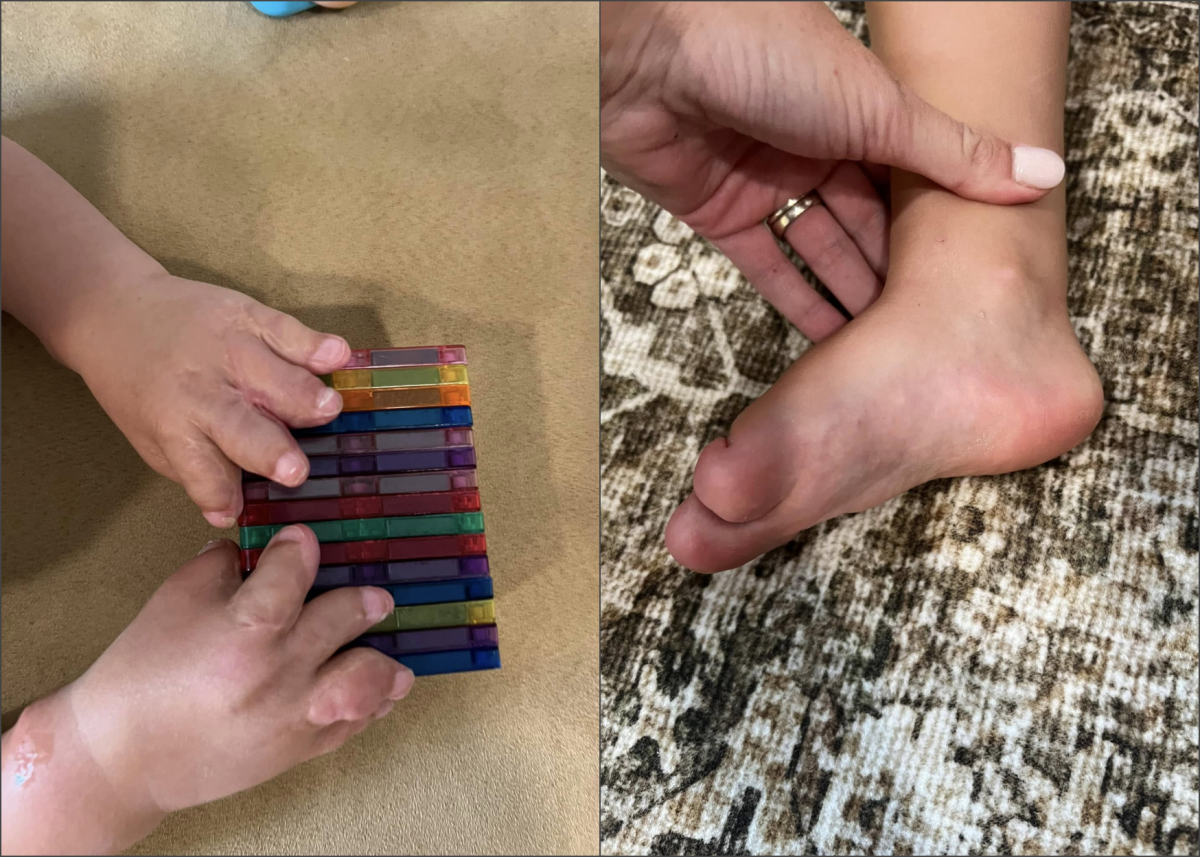
The condition causes seven-month-old Daisy’s skull, hands and bones in her feet to fuse, limiting space for her growing brain and leading to physical challenges.
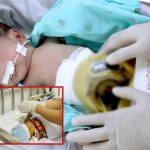
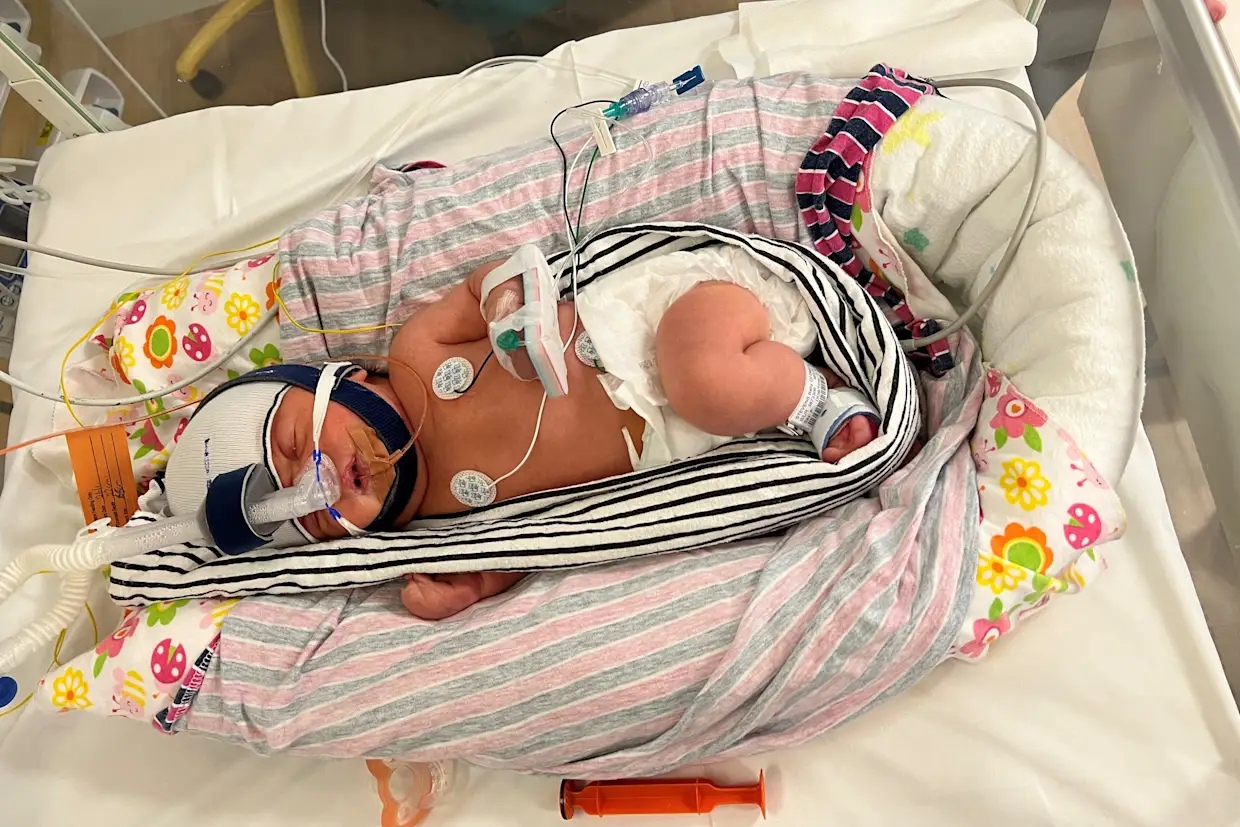
Born five weeks premature in January this year, Daisy was flown from a hospital in the regional town of Warwick, where the Stevens family live, to the Mater Mothers’ Hospital in South Brisbane for specialized NICU care.
Debb, 33, said Daisy’s arrival was a “whirlwind” after spending five weeks at a hotel in Brisbane alone on “labour watch” after her membranes ruptured at 28 weeks.
“It wasn’t a great environment, and I got so frustrated that I checked myself out and came home to Warwick,” she reveals. “Then at 34 weeks I felt my waters break at a chiro appointment and little Daisy arrived in a hurry just 1.5 hours later.”
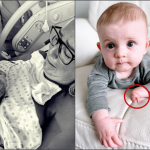
Debb becomes emotional as she describes the moment she first laid eyes on her second child, a surprise baby girl with fused fingers and webbed toes.
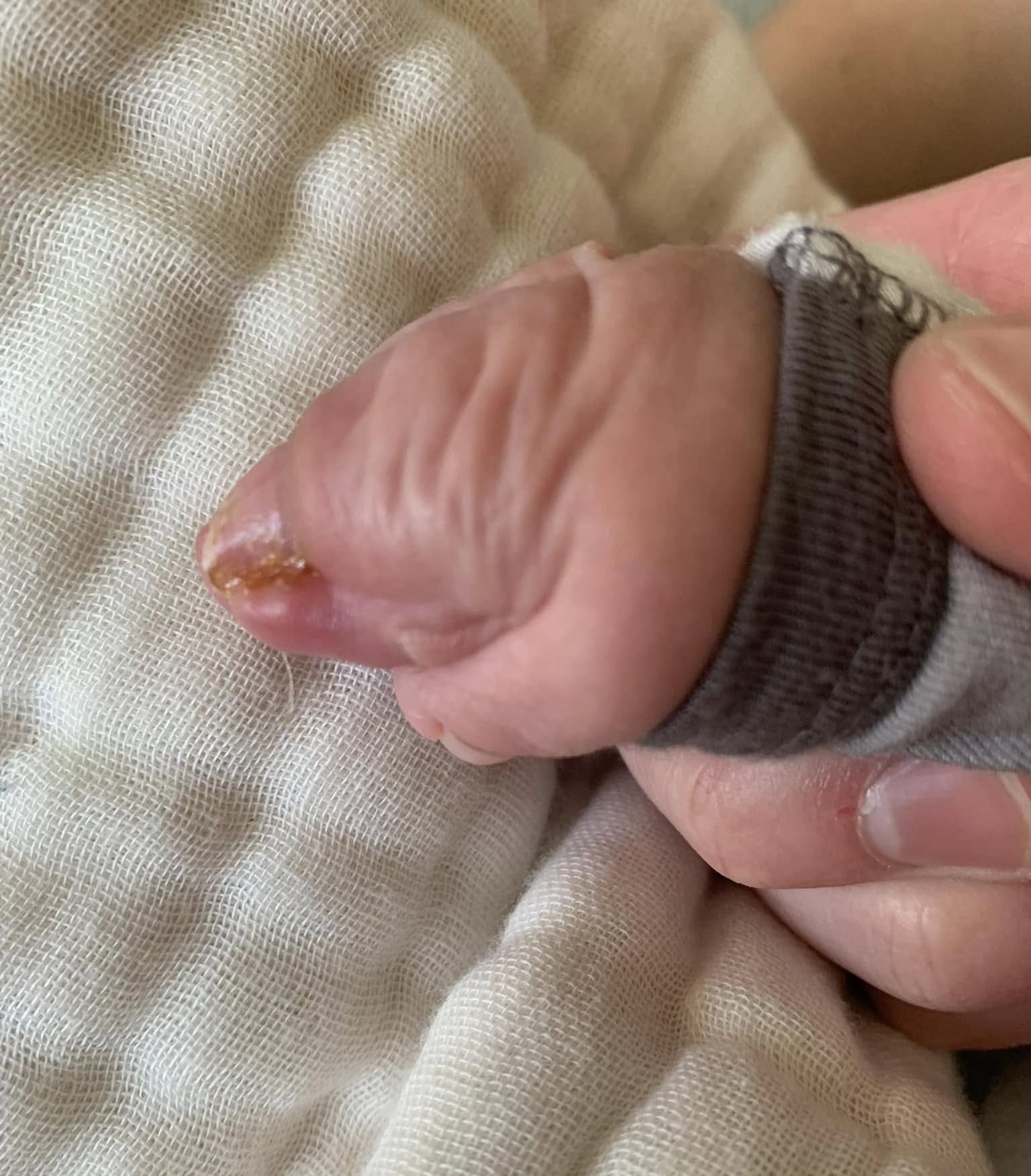
“To be honest, initially I was shocked and overwhelmed,” she reveals. “Throughout my pregnancy there was a huge part of me hoping they had gotten it all wrong. I couldn’t even process what it meant that she wouldn’t visibly have any fingers, that they were underneath the skin… and she just had little stumps.”
“Her little face was also very bruised and swollen from the quick birth, so I was quite overwhelmed and emotional.”
After a quick cuddle, Daisy was taken for X-rays before being flown by the Royal Flying Doctor Service to Brisbane.
‘She was absolutely perfect and adorable’
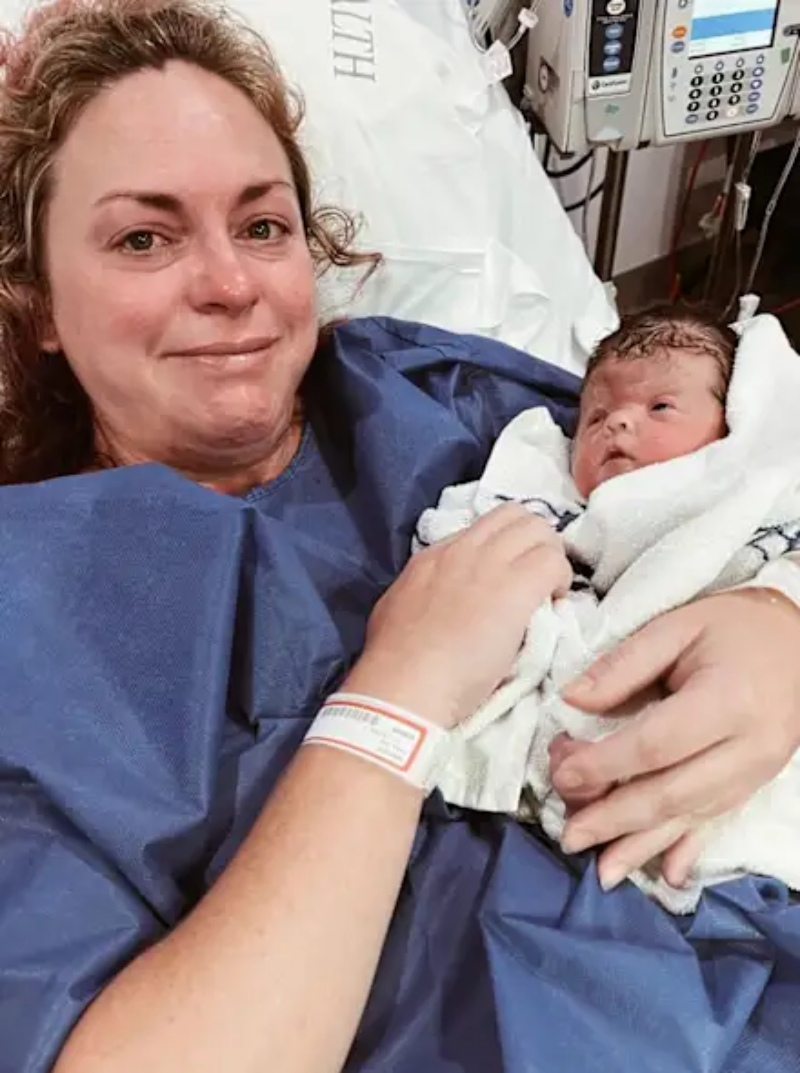
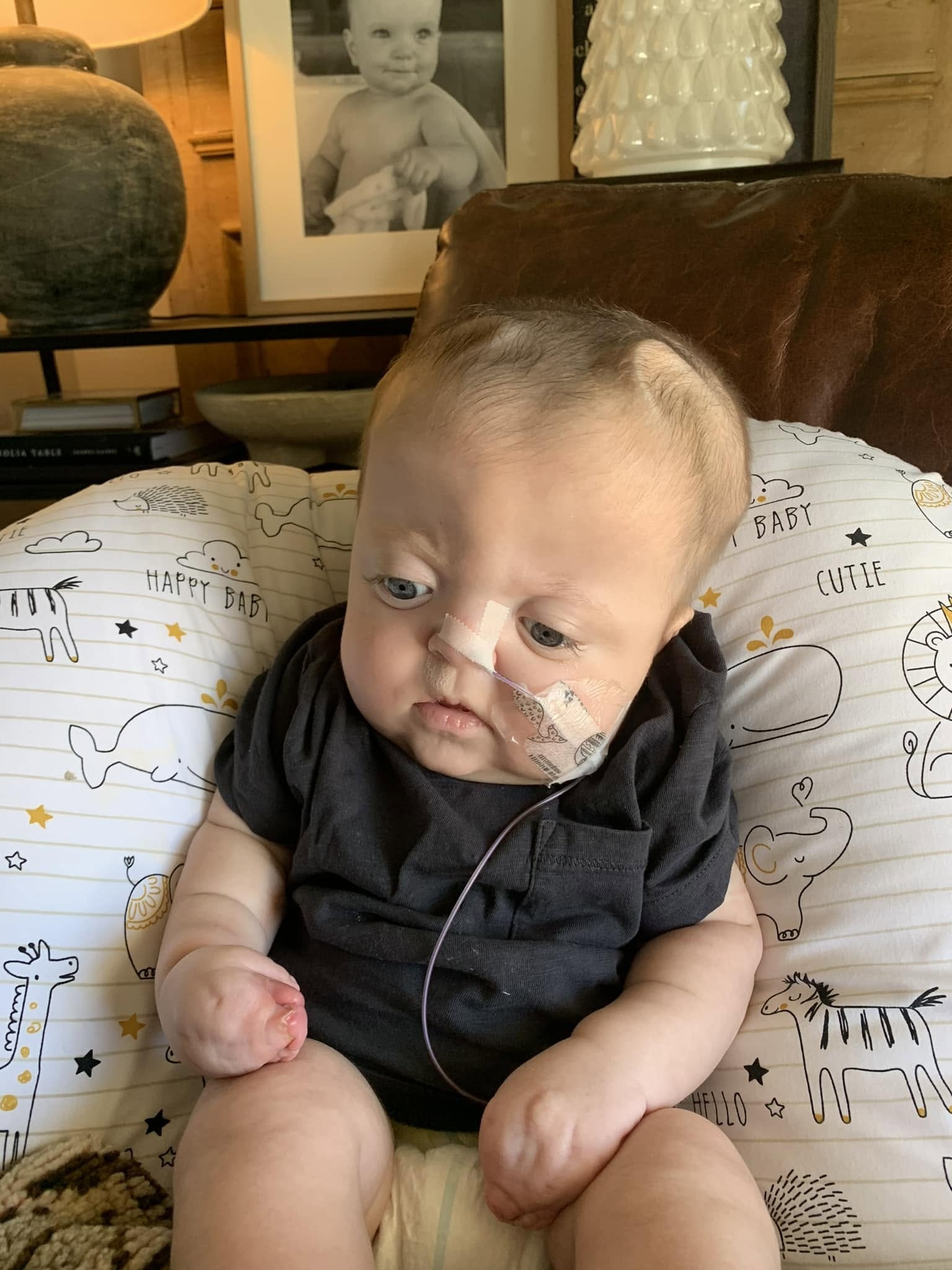
“When I finally got to see her again the next morning at the Mater NICU, she was this tiny gorgeous little thing with a big CPAP mask on, all snuggled up in pink blankets, and I just melted,” Debb recalls. “She was absolutely perfect and adorable, and I just knew we were going to be okay.”
While there is no cure for Apert Syndrome, surgery to correct the abnormal connections between bones begins soon after birth. In Daisy’s case, she is receiving world-leading reconstructive treatment from specialist surgeon Dr. Diana Kennedy.
Little Daisy has already had four surgeries to help open up her nasal passages so her breathing isn’t restricted, and she has also had her fingernails removed from her rosebud hands.
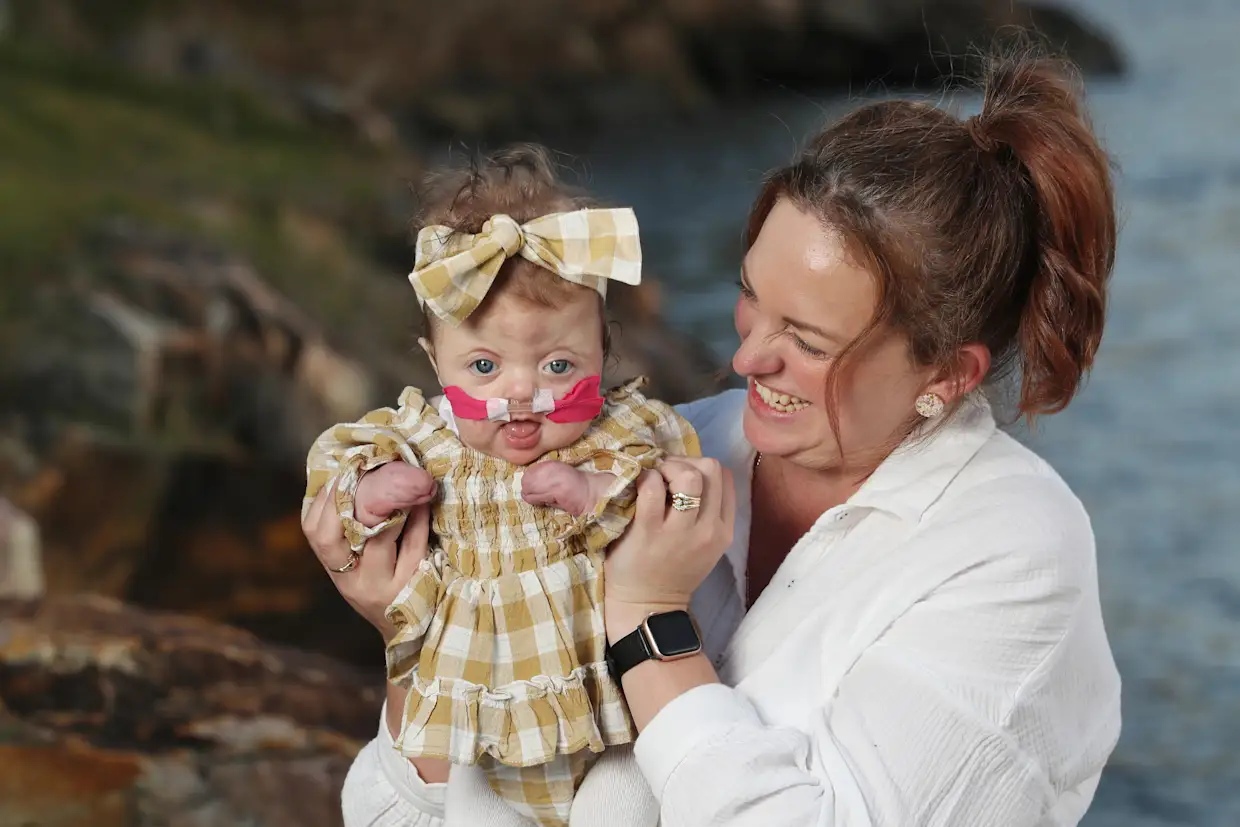
Next month, she will have her first major skull surgery — a posterior cranial vault procedure.
“Essentially, they will carefully separate her skull from ear to ear and expand the back of it to create more room so her brain can grow,” Debb explains. “At the moment, her little head can only grow upward because her skull is fused. This will be followed by other major surgeries to move her forehead forward and create more room around her brow bones.”
In what has been described as “putting a jigsaw puzzle back together,” Dr. Kennedy is helping reshape Daisy’s skull and face to give her the best possible quality of life, although they are significant procedures for someone so young.
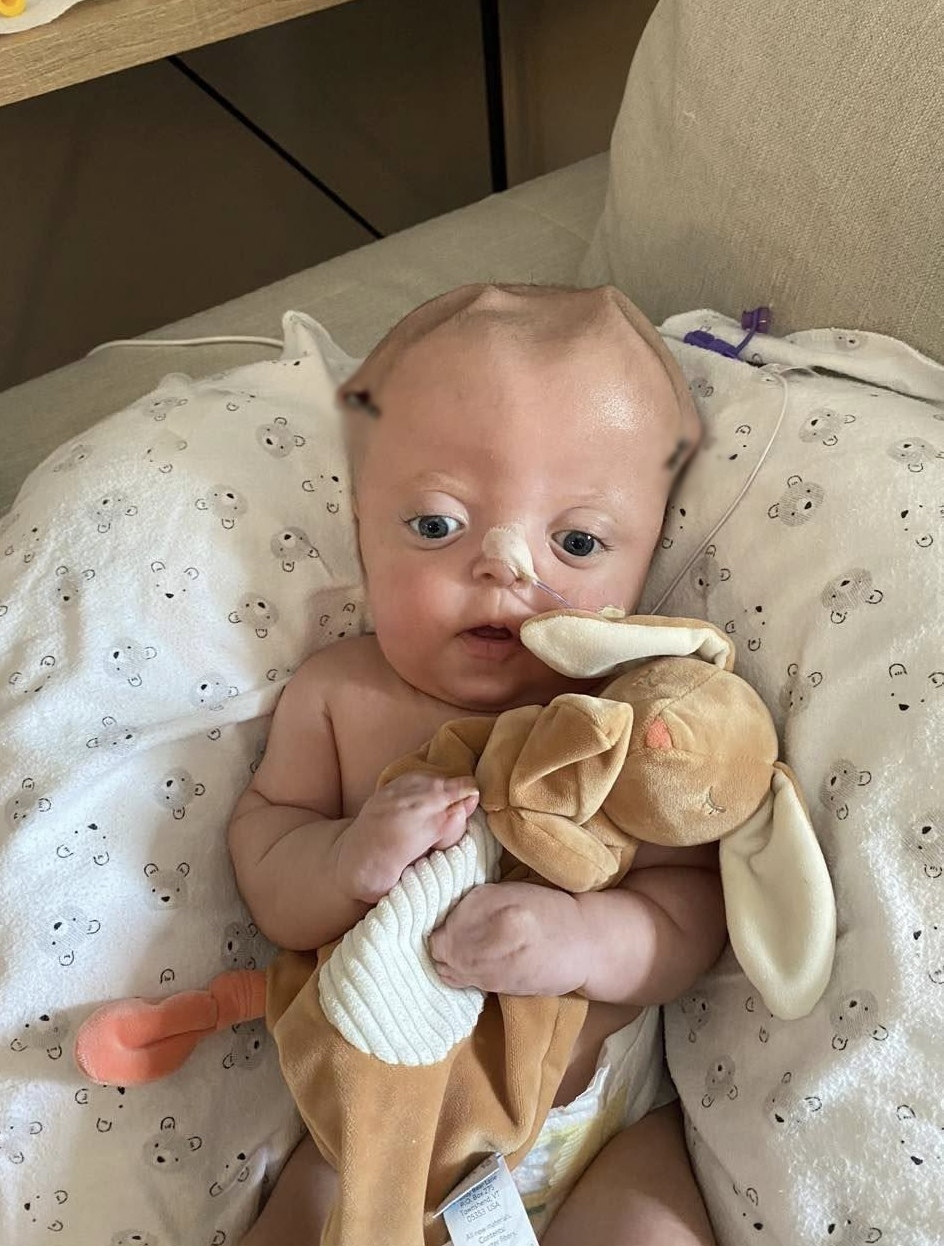
“Daisy’s condition is extremely rare,” Dr. Kennedy said. “We might treat three to four children across Queensland and northern New South Wales each year, and some years we may not treat any.”
“The aim of the surgeries is to restore Daisy’s physical anatomy as much as possible to support her development and daily function, while also helping her feel confident as she grows.”
“Reconstructing her skull to allow more room for her brain is just the first step. We will also move her brow bone forward to better protect her eyes while creating more space at the front of her skull.”
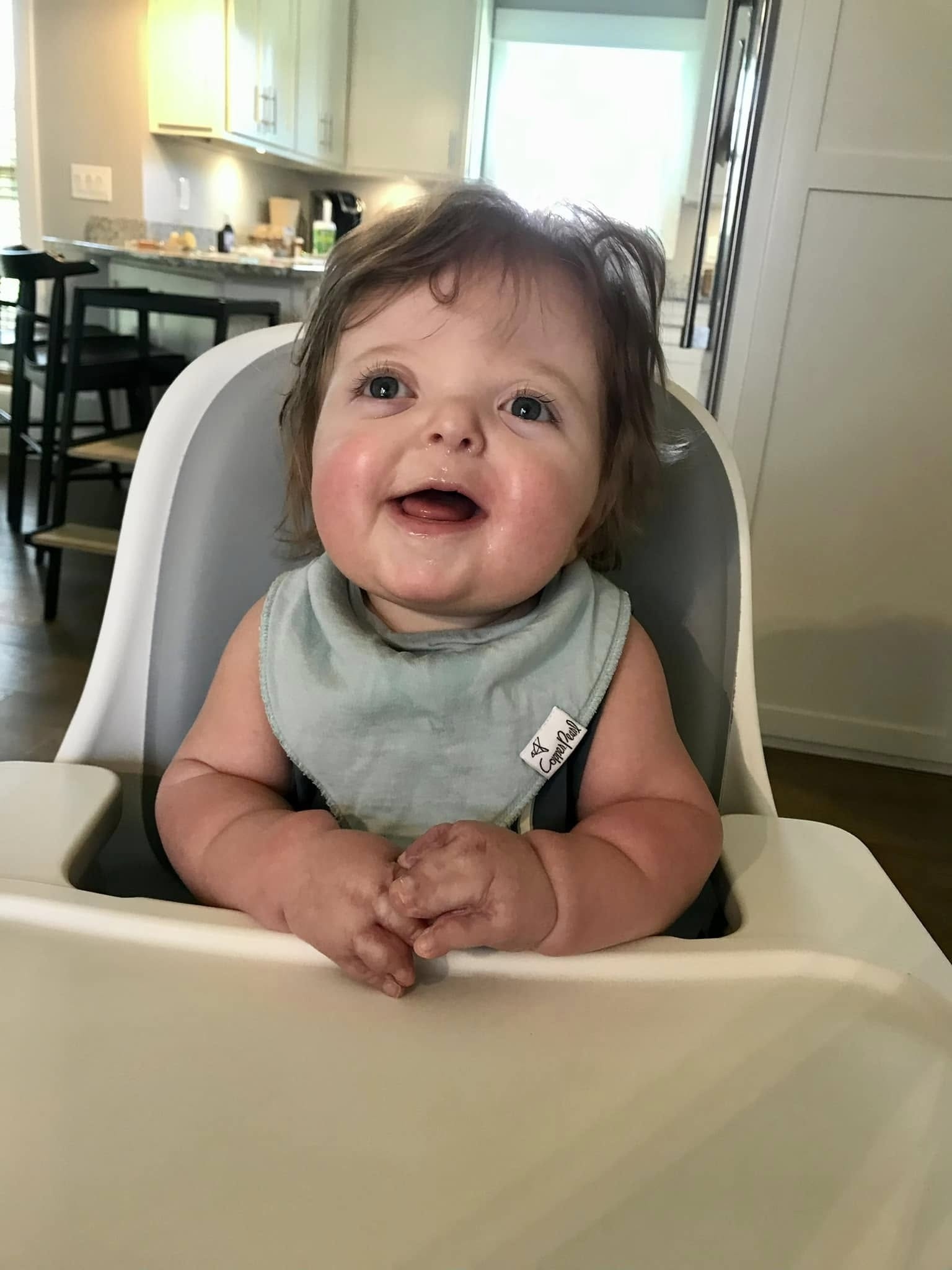
In the years ahead, Daisy will undergo more than 20 surgeries before starting school, including reconstructive hand surgery to create individual fingers and repair of her cleft palate to support feeding and speech development.
“One day she will be able to pick up a pen or play the piano. She’ll even be able to wear a pair of flip-flops if she wants to,” Debb said.
Daisy will also receive a range of early intervention therapies, including physiotherapy, occupational therapy, speech therapy and psychology. Her mum says she is already thriving and reaching her milestones.
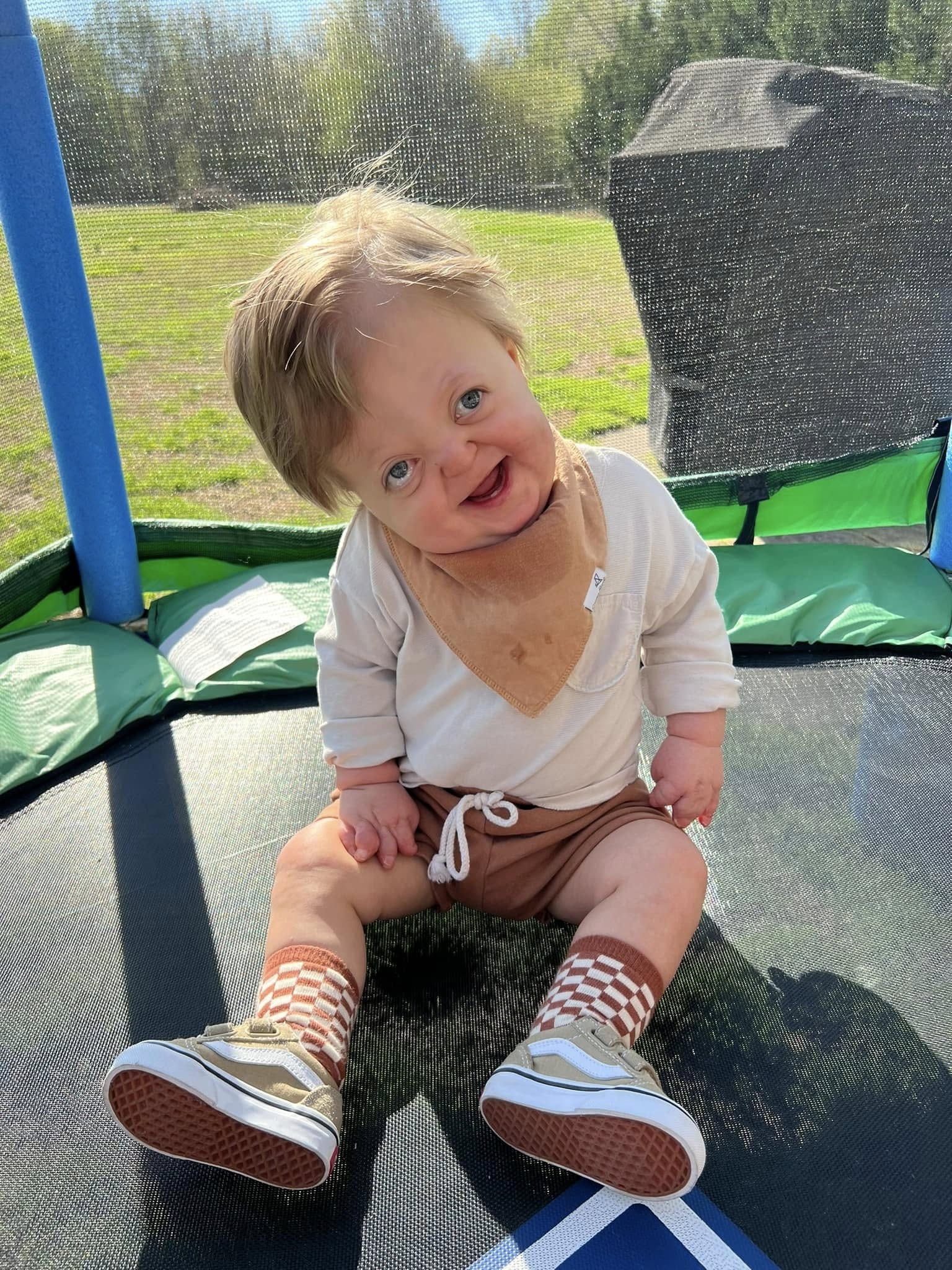
“She is very determined and very cheeky,” Debb says proudly. “She has the most mesmerizing big blue eyes that just light up, especially when she sees her big brother, Ollie. She is just a normal little girl, and it is amazing to watch her interact with her toys.
“Everyone in Warwick just adores her. We can’t walk down the street without 10 people stopping us for a chat.”
Debb has decided to share her family’s story to raise awareness about the rare condition and encourage greater inclusion among children.
“There is a real opportunity to help families teach their kids how to treat a child who may look a little different or play differently,” she says. “We really want parents to have these conversations, encourage compassion, and teach children how to respond to someone like Daisy.”
“The next generation of children, with the influence of social media—which can be both challenging and wonderful—gives us a chance to educate families.”
Debb is also hoping to connect with other Apert Syndrome families in Australia through her Instagram and Facebook pages.
“We don’t know of another family in Australia, so that can feel quite isolating,” she admits. “But it’s been amazing to connect with mums in the UK, the US and Mexico who have two- or three-year-old children with Apert Syndrome. They’ve shared so much support and advice.”
“While many people’s first reaction is sympathy when they meet us or hear about Daisy’s journey, that’s not what we want for her. She is an incredible gift.”
She adds: “Daisy is an incredible little person and has already taught us so much. She continues to overcome every challenge with amazing strength.”
Source: nine.com.au