Jeremy Sumpter Grew Up—But Hollywood Never Let Him Leave Peter Pan Behind

More than two decades after Jeremy Sumpter flew through a moonlit London sky, strangers still stop him almost every day.
They remember the mischievous smile, the sword fights and the boy who promised Wendy Darling that she would never have to grow up. Some of those viewers once regarded Sumpter as their first movie crush. Now, he has said, their daughters are discovering him in the same role.
That continuing affection is a gift. It is also a reminder of the strange problem at the center of his career.
Sumpter became famous by playing a child who remains young forever. Although the actor grew into adulthood and continued working, Hollywood’s image of him seemed to remain suspended in Neverland.
He appeared in acclaimed television, studio action movies and a long list of smaller projects. Yet nothing came close to replacing Peter Pan as the performance that defined him.
Now in his late 30s, Sumpter is attempting another transformation—moving toward leading roles, producing and directing while accepting that the boy who never grew up may always travel with him.
A Dark Beginning Before Neverland
Sumpter was born in California in 1989 and raised largely in Kentucky. He entered modeling competitions as a child before moving with his family to Los Angeles to pursue acting.
His first substantial film role was not a cheerful family part.
In Bill Paxton’s 2001 psychological thriller Frailty, Sumpter played the younger version of Adam Meiks, one of two brothers raised by a father who believes God has ordered him to destroy people disguised as demons.
The material required Sumpter to respond to fear, violence and moral confusion without playing the situation as conventional childhood terror. His performance earned him a Saturn Award nomination and demonstrated that he could handle serious dramatic work.
Two years later, he was selected for a role with a completely different cultural history.
Sumpter would become Peter Pan.

Becoming the First Boy to Lead a Major Live-Action Peter Pan
P.J. Hogan’s 2003 adaptation broke with a long theatrical tradition.
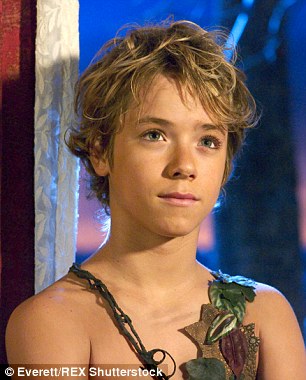
For generations, women had commonly played Peter in stage productions. Hogan’s film instead cast an actual adolescent boy as J.M. Barrie’s ageless hero, making Sumpter the first boy to lead a major English-language live-action theatrical version of the story.
He was 13 when he won the role.
The production demanded far more than charm. Sumpter trained extensively in gymnastics, weightlifting, sword fighting and wire work. He has recalled practicing sword combat for as many as five hours a day and performing nearly all his own stunts.
The physical preparation changed his body while the movie was still being filmed in Australia. He grew several inches during production, forcing the filmmakers to adjust sets and camera positions so Peter would not suddenly appear taller than Captain Hook. According to the production’s account, even the nursery window used in his flying scenes had to be enlarged as he grew.
That growth created an almost perfect real-life contradiction. Sumpter was playing the child who refused adulthood while his own body was visibly racing toward it.
Onscreen, he combined athletic confidence with emotional uncertainty. His Peter enjoyed danger and attention but became frightened whenever Wendy asked him to imagine love, responsibility or a future beyond endless adventure.
Rachel Hurd-Wood, who played Wendy, gave the story its emotional counterweight. Their chemistry made this version of Peter Pan unusually attentive to the feelings both characters were afraid to name.
For many young viewers, the movie was not simply another fantasy adaptation. Sumpter became the face of Peter Pan for their generation.

A Beloved Movie That Struggled in Theaters
The role brought Sumpter international recognition, a Saturn Award and a Young Artist Award.
But the movie itself entered theaters during a difficult holiday season in December 2003. Despite generally favorable responses to its visual beauty and emotional approach, it failed to become the major commercial success its expensive production required.
That outcome mattered.
A blockbuster can generate sequels, long-term studio relationships and a clear path for its young star. A well-liked financial disappointment creates fewer opportunities. Sumpter emerged famous enough to be remembered but without a franchise continuing to build around him.
Hollywood still appeared ready to test him as a leading actor.
In 2004, he starred in the CBS drama Clubhouse as Pete Young, a teenager who obtains his dream job as a batboy for a professional baseball team. The series had a respected cast, including Dean Cain, Christopher Lloyd and Mare Winningham.
It was canceled after only a few episodes had aired.
The abrupt ending illustrated the uncertainty Sumpter would repeatedly encounter. He had moved directly from carrying an ambitious studio fantasy to leading a network series, yet neither project gave him a stable bridge into adult stardom.
Growing Older Without a Clear Hollywood Category
Sumpter continued acting through his teenage years, but the projects became smaller and less visible.
He appeared in the 2005 television drama Cyber Seduction: His Secret Life and later took supporting roles in independent films. Like many former child stars, he entered an awkward casting period.
He was no longer the delicate, airborne Peter whom audiences remembered. At the same time, he had not yet developed the screen identity of an adult leading man.
Hollywood often knows exactly what it wants from a child performer. The transition becomes harder when that child’s appeal was connected to a specific face, voice and moment of adolescence.
Sumpter’s problem was intensified by the permanence of Peter Pan. Every new performance arrived beside a character designed never to age.
His most significant television role came in 2008, when he joined NBC’s Friday Night Lights as J.D. McCoy.
J.D. was a gifted young quarterback introduced as possible competition for Matt Saracen. His talent was shaped by intense pressure from his controlling father, and his arrival disrupted the relationships surrounding the Dillon Panthers.
The series gave Sumpter more complicated material than many of his post-Peter Pan films. J.D. was confident on the field but emotionally constrained at home, another young person caught inside an identity created for him by adults.
Sumpter appeared across the show’s third and fourth seasons, but the role did not turn him into a television lead. When the story shifted away from the original Dillon team, J.D. largely disappeared with it.
Studio Movies, but Never Another Defining Role
Sumpter remained visible through occasional larger productions.
In 2011’s Soul Surfer, he played Byron Blanchard, the older brother of surfer Bethany Hamilton, portrayed by AnnaSophia Robb. The inspirational drama became a modest box-office success and introduced him to another family audience.
Three years later, he appeared in the disaster film Into the Storm as Jacob, a young cameraman working with a team of storm chasers. The movie placed him back inside a large-scale effects production filled with tornadoes, collapsing buildings and physical danger.
Yet neither role carried the emotional or cultural weight of Peter Pan.
Other projects included horror films, thrillers, television movies and independent productions such as The Culling, The Squeeze, Billionaire Ransom, The Legend of 5 Mile Cave and Chapel.
The filmography did not stop. Public attention did.
That distinction is important. Sumpter did not disappear in the literal sense, nor did he publicly reject acting. He continued accepting roles and developing projects, but much of the work reached smaller audiences.
To casual viewers, the gap between Peter Pan and his adult career could look empty. Inside it were years of auditions, productions and attempts to establish a new identity.

The Role That Still Finds Him Every Day
Sumpter has not responded to his most famous role with resentment.
In a 2025 interview, he said fans still recognized him daily. Some had watched the movie as children and were now sharing it with another generation. He described his connection to the film as a blessing and asked why he would ever feel embarrassed about having played such an extraordinary character.
His affection makes sense.
Peter Pan gave him experiences few young actors receive. He learned sword fighting, performed aerial work and spent months inside elaborate sets. The role connected him with audiences across countries and decades.
But embracing the past does not mean surrendering the future.
Sumpter has spoken about wanting to move fully into an adult leading-man phase. After slowing his career while focusing on his family and the birth of his daughter, he began promoting new projects, including action films and his planned directorial debut.
He has said that decades spent on sets taught him how the entire filmmaking process works. Directing would allow him to use that experience rather than depending solely on another person’s decision to cast him.
His planned romantic comedy Strawberry Roan would also reunite him with Hurd-Wood, placing the former Peter and Wendy together again under very different circumstances. The project has been announced as Sumpter’s intended directing debut, though its eventual production and release remain future developments rather than completed achievements.
Escaping Neverland Without Destroying It
Jeremy Sumpter’s career is not a simple story of failure after childhood fame.
He continued acting. He appeared in a celebrated television drama, worked in studio films and built a substantial list of independent credits. He also created a life beyond the attention that followed him at 13.
But the promise surrounding Peter Pan was larger than what followed.
Viewers saw his athletic ability, screen presence and natural mischief and imagined the adult star he might become. Hollywood never supplied the single transformative role that would allow that prediction to replace the earlier image.
The irony remains unusually sharp.
Sumpter became famous as a boy terrified of growing up. When the actor did grow up, the industry seemed unsure what to do with him. The character remained young, recognizable and loved while the performer had to keep proving that he could become someone else.
Perhaps directing offers the clearest way forward.
An actor waits for permission to enter another person’s story. A filmmaker can begin constructing his own.
Sumpter no longer needs to escape Peter Pan by rejecting it. The movie is part of his history, and the affection surrounding it has outlasted its disappointing original box office.
His challenge is to build something beside it.
Peter Pan never had to grow up.
Jeremy Sumpter did—and that may turn out to be the most difficult role he has ever played.