AnnaSophia Robb Was Everywhere in Our Childhood—Then Hollywood Stopped Looking Closely

For a generation of moviegoers, AnnaSophia Robb seemed to appear in nearly every corner of childhood.
She befriended a lonely girl through a scruffy dog in Because of Winn-Dixie. She chewed forbidden gum inside Willy Wonka’s factory. She opened the door to an imaginary kingdom in Bridge to Terabithia, raced toward another planet in Race to Witch Mountain and portrayed real-life surfer Bethany Hamilton in Soul Surfer.
By her late teens, Robb had already built a résumé filled with studio films, literary adaptations and emotionally demanding roles. She had a recognizable face, a natural screen presence and the ability to carry stories designed for both children and adults.
The next step appeared obvious: Hollywood would turn her into a major grown-up star.
That breakthrough never arrived in the expected way.
Robb did not disappear. She continued acting, attended college and gradually moved into darker films, limited series, television dramas and theater. Yet no adult role replaced Leslie Burke as the performance that defined her for millions of viewers.
Her career became a reminder that talent and early success do not guarantee the one project capable of changing everything.
A Child Actor Who Rarely Felt Artificial
Robb was born in Denver in 1993 and began performing in church before moving into commercials and television.
Her first feature-film lead came in 2005 with Because of Winn-Dixie, based on Kate DiCamillo’s novel. She played Opal, a lonely preacher’s daughter whose friendship with a stray dog helps her connect with the isolated people around her.
Robb was only 11, but she approached the character without the exaggerated cuteness often expected from young performers. Opal’s optimism existed beside sadness, particularly her longing for the mother who had left the family.
That same year, Robb appeared as Violet Beauregarde in Tim Burton’s Charlie and the Chocolate Factory.
The role required an entirely different energy. Violet was competitive, boastful and determined to turn every experience into another victory. Robb embraced the character’s comic aggression before Violet ignored Willy Wonka’s warning and transformed into a giant blueberry.
Two highly visible films in one year established her range.
She could play vulnerable without becoming passive and confident without losing the audience. Hollywood appeared to have found a young actress capable of moving between intimate drama and elaborate fantasy.
The Role That Broke a Generation’s Heart
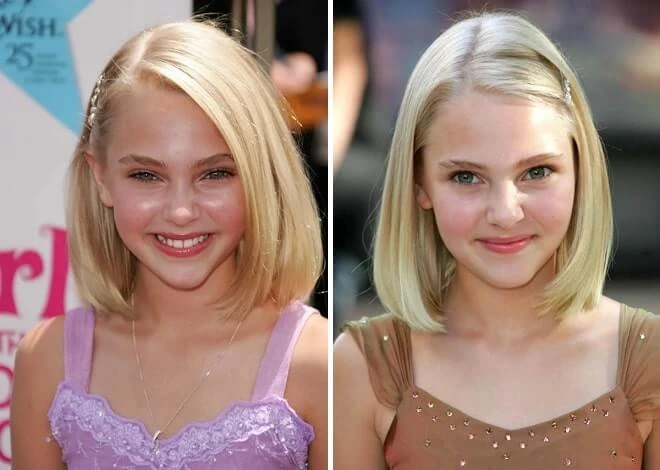
Robb’s defining performance arrived in 2007 with Bridge to Terabithia.
Based on Katherine Paterson’s novel, the film follows Jesse Aarons, played by Josh Hutcherson, and Leslie Burke, the imaginative new student who changes his understanding of friendship and courage.
Leslie does not wait for Jesse to become confident. She pulls him beyond his fear.
Together, they invent Terabithia, a fantasy kingdom hidden in the woods. The place allows them to transform bullies, loneliness and family struggles into adventures they can control.
Robb gave Leslie intelligence, warmth and a fearless curiosity that made her seem almost impossible to contain. She was not written as a romantic reward for Jesse. She was the person who taught him how to imagine a larger life.
Then the story took her away.
Leslie dies in an accident while attempting to reach Terabithia alone. The film does not show the event directly. Jesse learns about it after returning from a trip, and the sudden absence becomes more devastating because Robb had made Leslie feel so vividly alive.
Young viewers who expected a fantasy adventure instead confronted grief, guilt and the permanence of death.
Robb became closely associated with that emotional shock. Even years later, fans approached her to explain how deeply the movie had affected them. The role proved that she could leave an imprint far beyond the length of her screen time.
It also created a difficult standard for every performance that followed.
Bigger Movies Did Not Produce a Bigger Future
Robb continued working in studio projects throughout her teenage years.
She appeared in Jumper and starred opposite Dwayne Johnson in Disney’s Race to Witch Mountain in 2009. The science-fiction adventure performed solidly and kept her visible as a young studio lead.
In 2011, she portrayed Bethany Hamilton in Soul Surfer.
Hamilton lost her left arm in a shark attack at age 13 and later returned to competitive surfing. Robb trained extensively for the role, and visual effects were used to remove her arm from the finished footage.
The movie required her to portray physical trauma, frustration, faith and the difficult process of rebuilding an identity around changed circumstances. It became another success with family audiences and strengthened the perception that Robb could handle inspirational dramas.
By then, however, she was approaching the transition that reshapes every child actor’s career.
Studios no longer saw her only as a girl who could anchor a family film. She now needed adult roles that would introduce her to audiences again.
That transition depended on the right project arriving at the right moment.
Carrie Bradshaw Looked Like the Breakthrough
In 2013, Robb became the young Carrie Bradshaw in The CW’s The Carrie Diaries.
The series served as a prequel to Sex and the City, following Carrie as a teenager in the 1980s before she became the Manhattan columnist played by Sarah Jessica Parker.
It was a highly visible assignment. Robb had to honor a character already embedded in popular culture without merely imitating Parker’s performance.
Her Carrie was ambitious, romantic and increasingly fascinated by New York. The role allowed Robb to move beyond family movies while still working within a youthful coming-of-age story.
It also appeared capable of becoming the long-running television vehicle her career needed.
That did not happen.
The Carrie Diaries lasted for two seasons and 26 episodes before The CW canceled it in 2014. The series developed a loyal audience and later gained additional affection through streaming, but it never became the cultural phenomenon of its predecessor.
For Robb, the cancellation closed the most obvious path toward adult stardom just as it had begun.
She had successfully carried a television series. What she did not receive was enough time for viewers to fully replace the child actress they remembered with the adult performer she was becoming.
Choosing Education Over Constant Visibility
After the series ended, Robb enrolled at New York University.
She had long emphasized the importance of education and wanted an experience that did not revolve entirely around production schedules. She graduated in 2018.
The decision gave her space to develop outside Hollywood, but it also interrupted her visibility during years when other young performers were chasing franchises and prestige television roles.
Robb continued acting while studying.
She appeared in the admired coming-of-age film The Way, Way Back, the Civil War drama Mercy Street and the independent film Freak Show. In 2019, she joined Hulu’s The Act, playing Lacey, a fictionalized friend within the disturbing story of Gypsy Rose Blanchard and Dee Dee Blanchard.
She later portrayed the younger version of Reese Witherspoon’s character in Little Fires Everywhere and starred in projects including The Expecting, Words on Bathroom Walls, Dr. Death and Lansky.
The work demonstrated persistence and range.
What it did not provide was a single, dominant adult character capable of reorganizing the public’s idea of her.

Rebel Ridge Revealed the Actor She Had Become
Robb received one of her strongest adult film opportunities in Netflix’s 2024 thriller Rebel Ridge.
She played Summer McBride, a courthouse employee who helps a former Marine, portrayed by Aaron Pierre, uncover corruption within a small-town law-enforcement system.
Summer is not a nostalgic extension of Robb’s earlier characters. She is an adult carrying legal trouble, personal vulnerability and the fear of losing custody of her child.
Robb’s performance is restrained and practical. Summer helps because she understands the system and knows how easily it can destroy people with fewer resources. The film also avoids forcing a romance between her and Pierre’s character, allowing their connection to develop through trust and shared danger.
The critically praised movie became a major streaming success and gave Robb renewed attention.
Still, the industry did not immediately build a star vehicle around her.
In 2025, she joined the ensemble drama Grosse Pointe Garden Society as Alice, a teacher drawn into secrets and murder within an affluent suburban community. NBC canceled the series after one season, repeating a familiar pattern: a promising television role ended before it could become a lasting chapter.
That same year, Robb returned to the New York stage in the Off-Broadway production All Nighter, playing one of several former college friends confronting hidden tensions during a reunion.
Theater offered something screen fame could not—the chance to work without being measured against box-office numbers, algorithms or childhood nostalgia.

She Did Not Vanish—Our Attention Moved Elsewhere
AnnaSophia Robb’s career is sometimes described as a mystery because her early promise seemed so obvious.
But there was no single scandal, disappearance or dramatic decision that ended her rise.
She grew older. A potentially transformative television series was canceled. She chose college during a competitive stage of her career. She accepted independent films and ensemble roles rather than attaching herself to a single blockbuster franchise.
Hollywood also changed around her.
Family films no longer created the same reliable ladder from child performer to adult star. Streaming expanded the number of available roles while making individual performances easier to overlook. An actor could work constantly without occupying the cultural center.
Robb’s career therefore looks different depending on what is being measured.
She did not become one of the small group of actresses whose names alone launch major productions. She also never stopped building a serious body of work.
The gap lies between a stable career and the enormous future audiences imagined after Bridge to Terabithia.
Leslie Burke remains young forever, racing through the woods and challenging Jesse to see beyond the world in front of him. Robb had to grow beyond that image while viewers carried it with them.
She is no longer the girl who seemed to appear in every childhood movie.
She is a working adult actress still waiting for the role that makes everyone notice she never left.