Christian Bale’s Four-Minute Meltdown Shocked Hollywood—But Audiences Would Not Abandon Batman
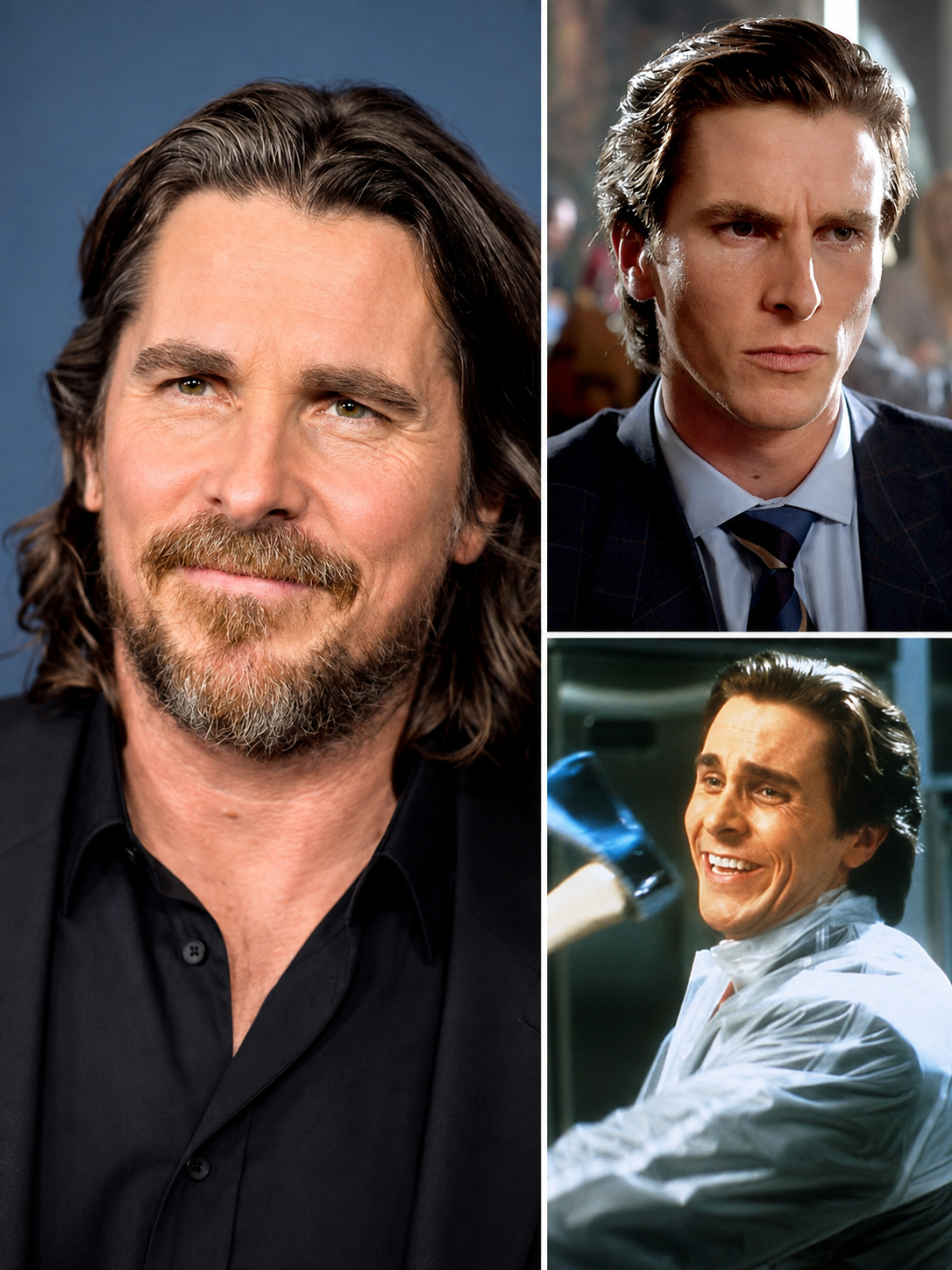
For nearly four minutes, Christian Bale sounded nothing like the controlled, disciplined actor Hollywood had learned to admire.
He shouted at cinematographer Shane Hurlbut, repeatedly used profanity and threatened to leave Terminator Salvation unless the crew member was fired. Hurlbut attempted to apologize, but Bale continued.
The confrontation occurred during production in July 2008. The recording remained private for months before appearing online in February 2009, where it spread rapidly through news broadcasts, comedy shows and remixes.
Suddenly, Bale’s celebrated intensity looked less like artistic commitment and more like intimidation.
He was accused of behaving like a bully toward a crew member who did not possess the same power or fame. His reputation as one of Hollywood’s most serious actors, strengthened by American Psycho, The Machinist and Christopher Nolan’s Batman films, could no longer be separated from the sound of him losing control.
Yet the scandal did not destroy his career.
Bale apologized without defending the outburst as acceptable, returned as Batman, won an Academy Award and became one of the most respected actors of his generation.
His survival revealed both the strength of his professional reputation and the danger of confusing dedication with permission to mistreat others.
The Actor Who Turned Transformation Into a Reputation
Long before the leaked recording, Bale was known for approaching roles with unusual physical and psychological commitment.
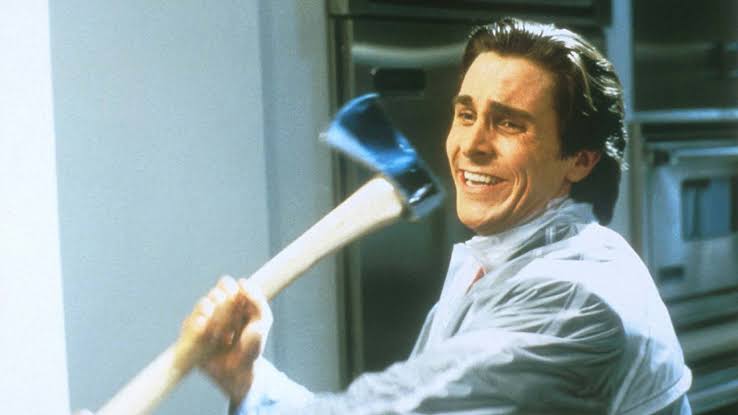
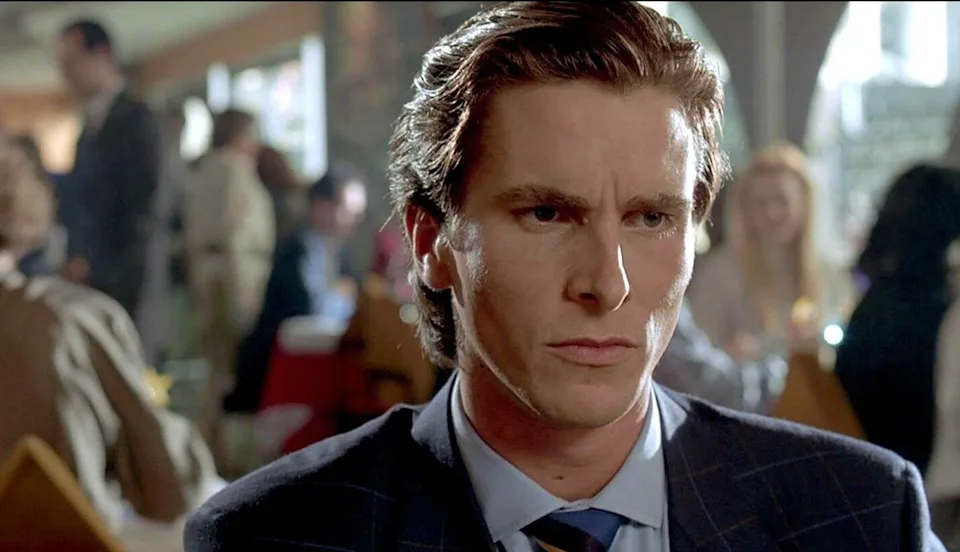
In American Psycho, released in 2000, he played Patrick Bateman, a wealthy investment banker whose polished surface conceals vanity, emptiness and homicidal violence.
The role required Bale to be charismatic and repellent at the same time. He developed Bateman’s appearance, voice and movements with obsessive precision, creating a performance that later became one of the defining portrayals of toxic masculinity and status obsession.
Then came The Machinist in 2004.
To play Trevor Reznik, an industrial worker destroyed by insomnia and guilt, Bale lost a dramatic amount of weight. His skeletal appearance became part of the film’s marketing and helped create the public image of an actor willing to push his body further than almost anyone else.
Soon afterward, he reversed that transformation to play Bruce Wayne in Batman Begins.
Christopher Nolan’s 2005 film rebuilt Batman as a psychologically wounded man who turns fear into discipline. Bale’s performance separated the private Bruce, the public billionaire and the masked vigilante into distinct identities.
He continued his collaboration with Nolan in The Prestige and returned as Batman in The Dark Knight.
Released in July 2008, The Dark Knight became a cultural and commercial phenomenon. Heath Ledger’s Joker dominated much of the discussion, but Bale remained the moral center of the story, playing a hero forced to accept hatred in order to protect Gotham’s hope.
By the time Bale began filming Terminator Salvation, his intensity was not merely a working method.
It had become part of his legend.
What Happened on the Terminator Salvation Set
Bale played resistance leader John Connor in Terminator Salvation, the fourth installment of the science-fiction franchise.
During the filming of a scene with Bryce Dallas Howard, Hurlbut reportedly moved into Bale’s sightline while checking a light. Bale considered the interruption distracting and reacted immediately.
What followed went far beyond a brief complaint.
In the recording, Bale insulted Hurlbut’s professionalism, demanded that he remain off the set and threatened to quit if the cinematographer repeated the mistake. Even as Hurlbut apologized, Bale continued speaking over him.
The intensity of the tirade became difficult to justify through the original disruption.
Film sets require concentration. Actors may need silence and consistency during emotionally demanding scenes. Crew members also need access to lighting, equipment and positions in order to perform their jobs.
A professional disagreement could have been addressed directly.
Instead, Bale used his status to dominate the exchange.
The recording circulated privately before leaking in early February 2009. Once it became public, the argument was no longer a problem between two colleagues. Millions of listeners could hear the power imbalance for themselves.
Some fans tried to defend Bale by pointing to his commitment to the scene. Others argued that the very intensity people admired had finally revealed its ugliest form.
The central question became uncomfortable: When does devotion to the work become an excuse for abusive behavior?
A Viral Scandal Before Social Media Fully Took Over
The recording spread during a transitional period in celebrity culture.
YouTube, blogs and online entertainment sites could already turn private material into a global event, but stars did not yet have today’s direct social-media channels for controlling their responses.
The audio inspired dance remixes, reenactments and late-night jokes. Individual phrases became catchphrases detached from the actual workplace conflict.
That comedy risked minimizing what had happened.
The recording was entertaining because Bale’s anger sounded so extreme. But Hurlbut was not a fictional opponent, and the exchange was not a performance. He was a crew member being publicly humiliated by the star of a major production.
Bale’s status made the outburst more serious, not less. He possessed the influence to threaten another worker’s employment in front of the crew.
The incident also challenged the romantic image of the demanding artistic genius.
Hollywood has often celebrated actors and directors who scream, intimidate or create fear in the name of achieving great work. The results can become evidence used to excuse the process.
Bale’s recording made that logic harder to accept.
A strong performance does not require another person to absorb unlimited aggression.
Bale Refuses to Defend the Indefensible
Several days after the recording became public, Bale called the Los Angeles radio program Kevin and Bean.
He apologized and described his behavior as completely out of order. He said he had acted like a punk and offered no excuse for taking the confrontation so far.
Bale explained that he had allowed the emotional state of John Connor to blur into his real behavior. He had been working inside the character’s anger and desperation, then reacted as though the interruption threatened something larger than a scene.
But he did not present that explanation as justification.
He called the outburst inexcusable.
Bale also clarified that he had not genuinely wanted Hurlbut fired, despite saying so during the argument. According to Bale, the two men resolved the conflict on the same day and continued working together for approximately another month.
He praised Hurlbut’s work on the movie and asked audiences not to punish the entire cast and crew for his lapse in judgment.
The apology mattered because it addressed the essential wrongdoing.
Bale did not insist that listeners lacked context, even though context existed. He did not argue that serious actors were entitled to behave that way. He did not blame Hurlbut for provoking him.
He acknowledged that professional dedication had crossed into unacceptable conduct.
Why Batman Survived the Recording
The scandal reached the public after The Dark Knight had already become an enormous success.
Audiences had spent years accepting Bale as Bruce Wayne, and the film had elevated Nolan’s Batman series beyond ordinary superhero entertainment. The emotional impact of Ledger’s final completed performance also gave the movie a significance no off-set controversy could easily replace.
Bale therefore entered the scandal with substantial public goodwill.
His existing reputation was not based solely on celebrity charm. It rested on performances widely regarded as serious, physically demanding and artistically ambitious.
That distinction helped him.
The recording made Bale look arrogant and frightening, but it did not persuade most viewers that his work had become dishonest. Many separated the performer’s behavior from the performances they valued.
Hollywood also continued offering him important opportunities.
Terminator Salvation received mixed reviews and failed to revive the franchise as hoped, but Bale’s career moved forward. In 2010, he played Dicky Eklund in The Fighter, portraying a former boxer struggling with addiction and the damage he had caused his family.
The performance earned Bale the Academy Award for Best Supporting Actor in 2011.
One year later, he returned as Bruce Wayne in The Dark Knight Rises, completing Nolan’s trilogy in another worldwide blockbuster.
The comeback was not theoretical.
Within three years of the leak, Bale had won an Oscar and again led one of Hollywood’s largest franchises.
Respect Earned Through the Work—and the Apology
Bale’s career continued expanding after Batman.
He received further Oscar nominations for American Hustle, The Big Short and Vice. He portrayed race-car driver Ken Miles in Ford v Ferrari and appeared in projects ranging from Hostiles to The Pale Blue Eye.
His physical transformations remained a major part of his reputation, though Bale later spoke about the risks of repeatedly gaining and losing extreme amounts of weight.
The on-set recording never disappeared from his biography. It still resurfaces whenever discussions turn to celebrity meltdowns or abusive behavior in filmmaking.
But it did not become part of an established public pattern involving repeated confrontations with crew members.
That difference also helped preserve his standing.
A sincere apology cannot undo humiliation, and one incident does not become harmless simply because it appears isolated. Yet accountability becomes more credible when the behavior is acknowledged and not continually repeated.
Bale’s later reputation remained centered on demanding work rather than reports of ongoing mistreatment.
Dedication Is Not a License to Intimidate
The most dangerous interpretation of the incident is that Bale’s talent made the outburst understandable.
It did not.
Concentration matters on a film set. So do hierarchy, safety and professional respect. A star can request another take, identify a distraction or insist on better working conditions without reducing a colleague to a target.
Bale’s own apology recognized that boundary more clearly than some of his defenders did.
His intensity helped create Patrick Bateman, Trevor Reznik and Bruce Wayne. It did not make every expression of that intensity acceptable.
Audiences continued supporting him because the recording showed a terrible moment rather than the totality of his work. His direct apology gave them a reason to believe he understood the difference.
Batman survived because the films were already larger than the scandal, and Bale’s later performances gave the public new reasons to discuss him.
But the recording remains useful precisely because it complicates the mythology surrounding great actors.
Christian Bale’s commitment deserves respect when it produces extraordinary work.
It stops deserving admiration the moment another person is expected to endure humiliation for it.