From Two Hearts to Six: A Couple’s Patient Longing Turns Into a Historic Quadruplet Miracle
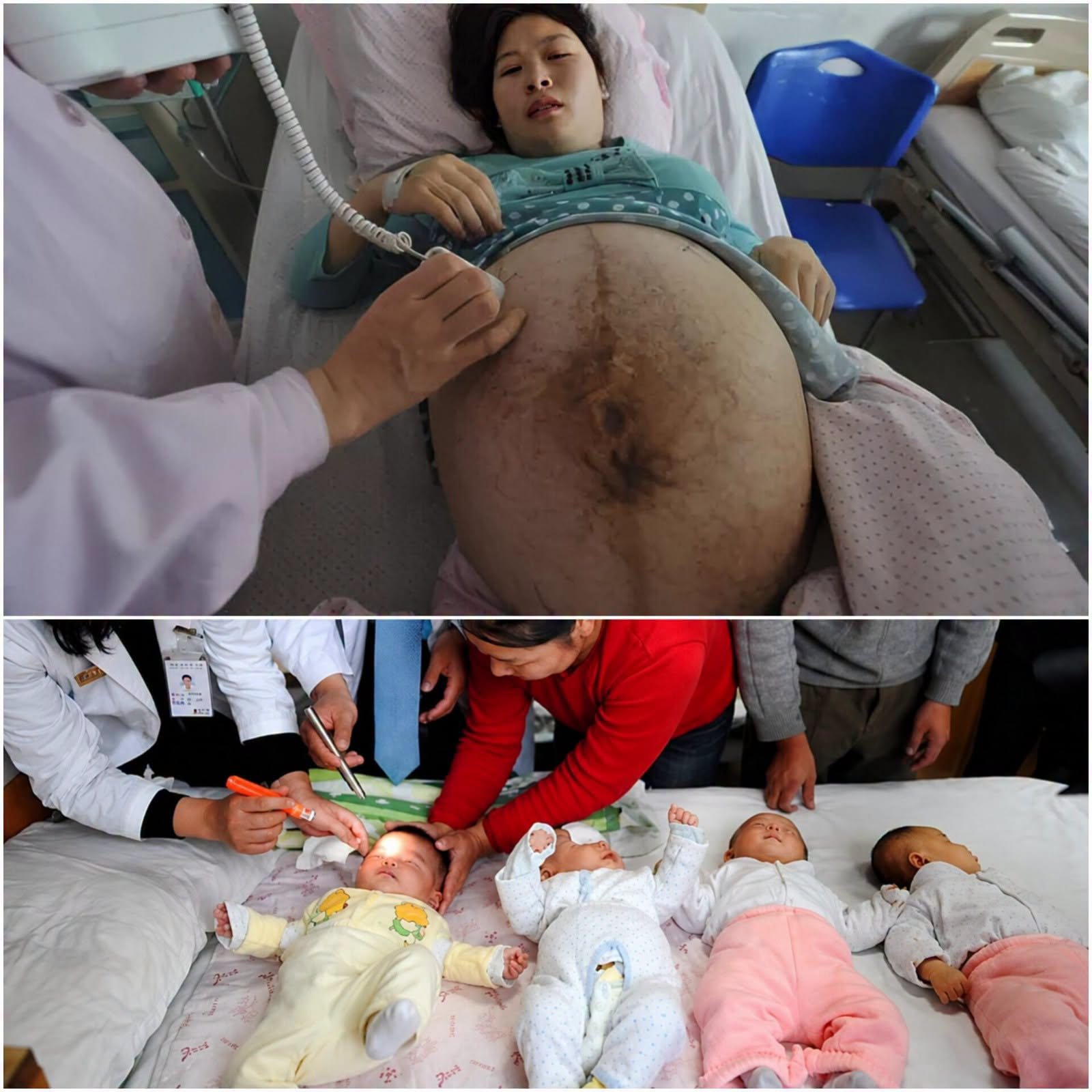
From Two Hearts to Six: A Couple’s Patient Longing Turns Into a Historic Quadruplet Miracle
After two agonizing years of trying to start a family, Xiaoli and her husband finally received the miraculous news they had prayed for: a positive pregnancy test. Their hearts overflowed with relief, and their joy multiplied during their first ultrasound when doctors confirmed they were expecting twins. Excitedly, the couple began transforming their home and preparing their lives for two long-awaited newborns.
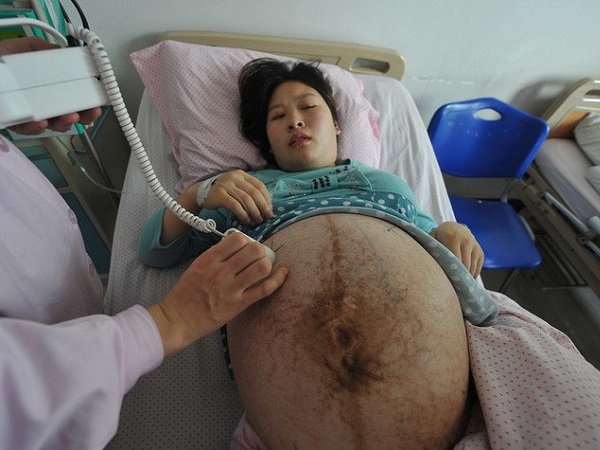
However, just four weeks later, a routine medical checkup altered their future forever. Observing that Xiaoli’s belly was growing significantly faster than normal for her gestational age, her physician decided to perform an in-depth ultrasound. As the transducer scanned her abdomen, the medical team made an incredible discovery. Both of the original fertilized embryos had independently split, creating two distinct sets of identical twins inside her womb. Instead of the two babies they had prepared for, the couple was now carrying four.
This extraordinary medical phenomenon—carrying two separate sets of identical twins simultaneously—is an exceptionally rare occurrence that immediately classified the pregnancy as high-risk, requiring intense medical supervision. As the weeks passed, the physical burden grew exponentially. By her fourth month, the immense weight made simple, everyday tasks nearly impossible, forcing Xiaoli to leave her job to focus entirely on resting. Her family quickly stepped in, providing round-the-clock assistance to ensure her health remained stable.
At 32 weeks, to minimize complications and protect both mother and infants, her obstetric team performed a scheduled cesarean section. The surgical procedure was a resounding success, welcoming four healthy infants into the world: two boys and two girls. Because they arrived eight weeks premature, the quadruplets were immediately transferred to the neonatal intensive care unit for specialized observation and strength building.
Outside the delivery room, anxious family members erupted in tears of happiness upon hearing that all four babies were thriving. After roughly a month of dedicated neonatal care, the quadruplets achieved every health milestone required to finally go home. Reproductive specialists later noted that such a pregnancy occurs through a pure stroke of natural coincidence—when two separate eggs are fertilized and both undergo a rare embryonic division. For a patient couple who waited years just for one child, their patience was ultimately answered with four times the blessing.