LINDSEY CLANCY’S DEFENSE BEGINS CASE WITH EMOTIONAL TESTIMONY ABOUT HER MENTAL HEALTH AND FAMILY LIFE
- ThanhThuy
- August 18, 2026
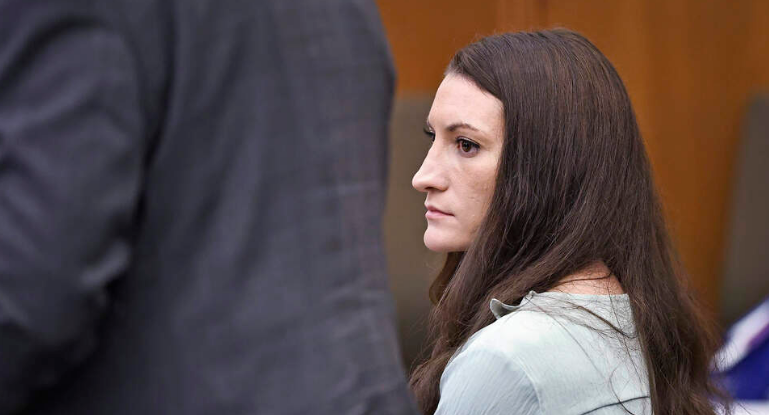
LINDSEY CLANCY’S DEFENSE BEGINS CASE WITH EMOTIONAL TESTIMONY ABOUT HER MENTAL HEALTH AND FAMILY LIFE
PLYMOUTH COUNTY, MASSACHUSETTS — After prosecutors rested their case in the high-profile trial of Lindsey Clancy, the defense began presenting witnesses Tuesday, shifting the courtroom’s focus toward her relationship with her children and the dramatic deterioration in her mental health before their deaths.
Clancy is accused of killing her three young children at the family’s Duxbury home in January 2023.
Her defense argues that severe mental illness played a central role in what happened.
Before testimony began, defense attorney Kevin Reddington asked the judge to find Clancy not guilty based on a recent legal ruling or, alternatively, reduce the charges to second-degree murder.
The judge rejected the request, meaning the defense would proceed with its witnesses.
 DEFENSE: “THIS WAS NOT THE WOMAN HER FAMILY KNEW”
The first witnesses called by the defense focused on a central theme: the woman Clancy’s family and friends knew before her mental health deteriorated.
Former co-worker Margaret Hamp described Clancy as a compassionate and caring labor-and-delivery nurse.
Hamp also recalled how deeply concerned Clancy was about her children.
The testimony was intended to give jurors a picture of Clancy before the events of January 2023—and to demonstrate the dramatic changes her loved ones say they witnessed during the months leading up to the deaths.
HER SISTER DESCRIBES A DRAMATIC CHANGE
Clancy’s sister, Allison Ozaga, testified that she began noticing significant changes in Clancy around Thanksgiving 2022.
According to Ozaga, Clancy later described worsening symptoms, including problems she associated with medication and thoughts of suicide.
The defense is using that testimony to argue that Clancy’s mental state had deteriorated substantially before the tragedy.
Her attorneys have maintained that she was suffering from a serious psychiatric condition when the children died.
 “I’M REALLY SICK”
Clancy’s mother, Paula Musgrove, provided some of the most emotional testimony of the day.
Musgrove described her daughter as a “wonderful” and fun mother who appeared increasingly unwell beginning in the fall of 2022.
She recalled receiving an October message from Clancy asking her to come stay with her.
Clancy reportedly told her mother that she was “really sick”, was suffering from severe insomnia and did not want to be alone.
Musgrove said she and her husband subsequently spent extended periods with Clancy and her family as her condition continued to deteriorate.
“THE MEDICATIONS WERE DESTROYING HER MIND”
One of the most significant moments came when Musgrove recalled a conversation in which Clancy complained that her medications were “destroying her mind.”
According to her mother, Clancy said she wanted to feel like herself again and wanted to enjoy her children.
The testimony presented an image of a mother desperately trying to recover from a rapidly worsening mental-health crisis.
But Musgrove’s most difficult testimony came when she described a conversation involving Clancy and her husband, Patrick Clancy.
A TERRIFYING CONFESSION
Musgrove told jurors that Clancy nervously revealed she had experienced thoughts about harming her children.
The revelation was deeply alarming to her family.
Yet, according to the testimony, her relatives continued trying to support her while seeking ways to help her through what they believed was a severe mental-health crisis.
That testimony could become particularly important as the defense attempts to establish Clancy’s mental state at the time of the killings.
THE DEFENSE’S CENTRAL ARGUMENT
The defense is expected to argue that Clancy was experiencing a severe psychiatric disorder that affected her ability to understand reality and control her actions.
The prosecution, however, has presented its own evidence and arguments regarding Clancy’s actions and state of mind.
The jury will ultimately have to decide whether the prosecution has proved the required elements of the charges beyond a reasonable doubt and how, if at all, Clancy’s mental state affects criminal responsibility.
A CASE THAT HAS SHOCKED MASSACHUSETTS
The deaths of Clancy’s three children—Cora, Dawson and Callan—have drawn national attention.
The case has also generated intense discussion about postpartum mental illness, psychiatric treatment, medication and the legal standard for criminal responsibility.
But inside the courtroom, the question is narrower.
Jurors must evaluate the evidence presented by both sides and determine what happened and whether Clancy is legally responsible under Massachusetts law.
THE DEFENSE HAS ONLY JUST BEGUN
The prosecution’s case is now complete.
The defense has begun calling witnesses who knew Clancy personally and who can describe the changes they observed in the months before the tragedy.
Her mother and sister have provided deeply personal accounts of insomnia, psychiatric symptoms, medication concerns and disturbing thoughts.
More testimony is expected as the defense continues presenting its case.
And with both sides now having the opportunity to put their evidence before the jury, the trial is entering its most consequential stage.
For the Clancy family, the testimony is an attempt to explain how a mother they knew as loving and devoted could reach a point of unimaginable tragedy.
For prosecutors, the evidence presented throughout the trial is intended to establish criminal responsibility.
Now, it is up to the jury to weigh those competing narratives.
Clancy is presumed innocent unless and until proven guilty. Descriptions of her mental state in this article are based on testimony and arguments presented in court and should not be interpreted as independent medical conclusions.