3 YEARS LATER, A NAME AT LAST: 19-YEAR-OLD REBECCA McMAHAN IDENTIFIED — BUT THE MYSTERY OF HER DEATH DEEPENS
3 YEARS LATER, A NAME AT LAST: 19-YEAR-OLD REBECCA McMAHAN IDENTIFIED — BUT THE MYSTERY OF HER DEATH DEEPENS
For more than half a century, investigators had a body but no name. Now, advanced DNA genealogy has finally identified the young woman whose remains were discovered partially buried in a California desert in 1974. Rebecca Jean McMahan was only 19 when she disappeared. The question that remains is perhaps even more haunting: Who killed her, and how did she end up alone in the desert?
HOT SPRINGS, Calif. — For decades, she was known only as an unidentified young woman.
There was a body.
There were fingerprints and dental records.
There were photographs, investigative files and memories of a 19-year-old woman who had suddenly disappeared.
But there was no name.
Now, more than 50 years after her remains were discovered, investigators have finally restored her identity.
Her name was Rebecca Jean McMahan, also known as Becky McMahan and Becky Solis.
And with that breakthrough comes a new mystery.
:max_bytes(150000):strip_icc():focal(749x0:751x2):format(webp)/Desert-Hot-Springs-Southern-California-081826-66ef62bbb4db4bcc9708accc6f64414e.jpg) WHO WAS RESPONSIBLE FOR HER DEATH?
WHO WAS RESPONSIBLE FOR HER DEATH?
A BODY DISCOVERED IN THE DESERT
On January 19, 1974, investigators were called to an isolated area of desert near Hot Springs, California, in Riverside County.
There, they discovered the partially buried remains of a young woman.
She had apparently been left in the open desert, far from the life she had known.
At the time, investigators had no way of knowing who she was.
Traditional identification efforts — including fingerprint and dental-record comparisons — failed to produce a match.
And so the case went cold.
For more than five decades, the victim remained a Jane Doe.
HER FAMILY HAD ALREADY BEEN LOOKING FOR HER
The most heartbreaking part of the mystery was that Rebecca had already been reported missing.
She was 19 years old when her family reported her missing on July 3, 1973.
She had last been seen in Bell Gardens, California, on June 11.
Before disappearing, Rebecca had reportedly told family members that she planned to travel to Palm Springs for a vacation.
Then she vanished.
Her family had no idea that months later, authorities would discover her remains in the desert.
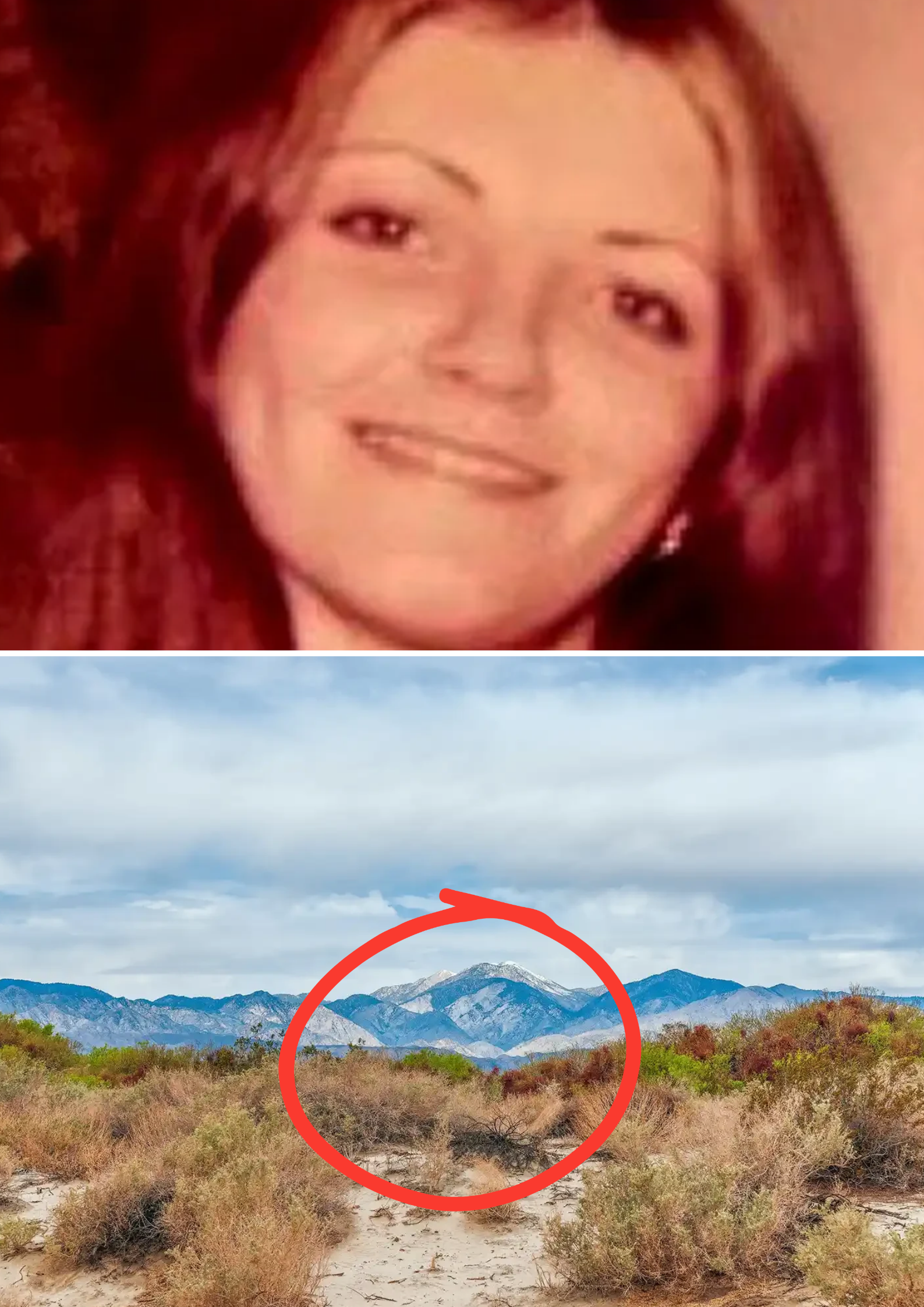
:max_bytes(150000):strip_icc():focal(599x0:601x2):format(webp)/Rebecca-Jean-McMahan-identified-50-years-after-her-body-was-found-081826-6f4b24b2c41046949cac0861f7e0d722.jpg) A YOUNG WOMAN WITH A LIFE OF HER OWN
A YOUNG WOMAN WITH A LIFE OF HER OWN
Investigators have now been able to put a face and identity to the remains.
Rebecca was described as a white woman with:
- Long brown hair
- Hazel eyes
- A height of approximately 5 feet 3 inches to 5 feet 4 inches
- A weight estimated between 120 and 145 pounds
- A butterfly tattoo on the right side of her chest
- An “SS” tattoo on her ankle
Authorities also determined that Rebecca had lived in several locations during the years leading up to her disappearance, including communities in Washington and Southern California.
Those details, once merely characteristics of an unidentified victim, now belong to a real person with a family, a history and a name.
THE TECHNOLOGY THAT FINALLY BROKE THE CASE
The breakthrough came decades after investigators had exhausted many of the traditional methods available to them.
In 2024, the Riverside County Regional Cold Case Homicide Team reopened the investigation.
Instead of simply going back through old reports, investigators turned to modern forensic science.
Bone samples from the unidentified remains were sent to a forensic laboratory for DNA testing.
Scientists were eventually able to develop a DNA profile.
That profile was then uploaded to a consumer genealogy database.
A genealogist working with the cold-case team identified a potential connection to a close relative in California.
The relative voluntarily provided a DNA sample.
The comparison ultimately confirmed what investigators had been searching for since 1974:
THE JANE DOE WAS REBECCA JEAN McMAHAN.
THE IDENTIFICATION SOLVES ONE MYSTERY — AND OPENS ANOTHER
For Rebecca’s family, learning her identity after more than 50 years is an extraordinary breakthrough.
But investigators are emphasizing that this is not the end of the case.
It is the beginning of the next phase.
Now detectives want to understand what happened between Rebecca’s disappearance and the discovery of her remains.
Who was she with?
Where did she go after she was last seen?
Did she ever make it to Palm Springs?
How did she end up in the remote desert?
And most importantly:
WHO WAS RESPONSIBLE FOR HER DEATH?
Authorities have not publicly identified a suspect.
They have also not released a definitive explanation of how Rebecca died.
Instead, the Riverside County Regional Cold Case Homicide Team is asking the public for information that could help reconstruct her final days.
WHY THE 1973 TIMELINE MATTERS
Rebecca disappeared in an era when investigators had none of today’s digital tools.
There was no smartphone location history.
No social-media trail.
No modern DNA databases capable of connecting an unidentified victim to distant relatives.
A person could disappear, cross state lines and leave investigators with almost nothing but memories and paper records.
That technological gap helped keep Rebecca’s identity hidden for more than five decades.
Today, genetic genealogy has changed what investigators can accomplish.
A tiny amount of biological information can potentially connect an unidentified victim to relatives who may never have known that the connection existed.
Rebecca’s case is another striking example of how a cold case can suddenly come alive decades later.
THE FAMILY FINALLY HAS A NAME TO GRIEVE
For years, Rebecca’s relatives may have had no certainty about what happened to her.
They knew she disappeared.
They knew they never saw her again.
But they did not know where she was.
Now they know.
Her remains have been identified as those of Rebecca Jean McMahan.
That does not erase the pain.
But it provides something families of unidentified victims often spend decades desperately seeking:
certainty about the identity of their loved one.
And that certainty gives investigators somewhere to begin.
POLICE ARE ASKING FOR THE ONE DETAIL THAT COULD CHANGE EVERYTHING
Cold-case investigators are now appealing to anyone who may have known Rebecca or encountered her around the time she disappeared.
Authorities stress that even information that seems insignificant could potentially help.
Someone may remember seeing Rebecca.
Someone may remember a trip to Palm Springs.
Someone may remember a vehicle, a conversation or a person connected to her disappearance.
And because more than five decades have passed, investigators are also asking people who previously knew something but never came forward to reconsider what they remember.
The Riverside County Regional Cold Case Homicide Team can be reached at 951-955-0257 or by email at coldcaseunit@rivcoda.org.
A 53-YEAR-OLD MYSTERY HAS ENTERED A NEW CHAPTER
For more than 50 years, the California desert held a secret.
The woman found there had no name.
Her family had no answers.
And investigators had no clear path forward.
Now, modern DNA technology has changed all of that.
The woman once known only as Jane Doe has her identity back.
Rebecca Jean McMahan was 19 years old.
She disappeared in 1973.
Her remains were discovered months later.
And after more than five decades of uncertainty, investigators finally know who she was.
But one enormous question remains.
HOW DID A 19-YEAR-OLD WOMAN FROM SOUTHERN CALIFORNIA END UP PARTIALLY BURIED IN A REMOTE DESERT — AND WHO PUT HER THERE?
The answer has remained hidden for more than half a century.
Now detectives are hoping that giving Rebecca her name back will finally help them uncover the rest of her story.