The Director of Unfaithful Says He Hid Cookies in Richard Gere’s Clothes for a Very Specific Reason
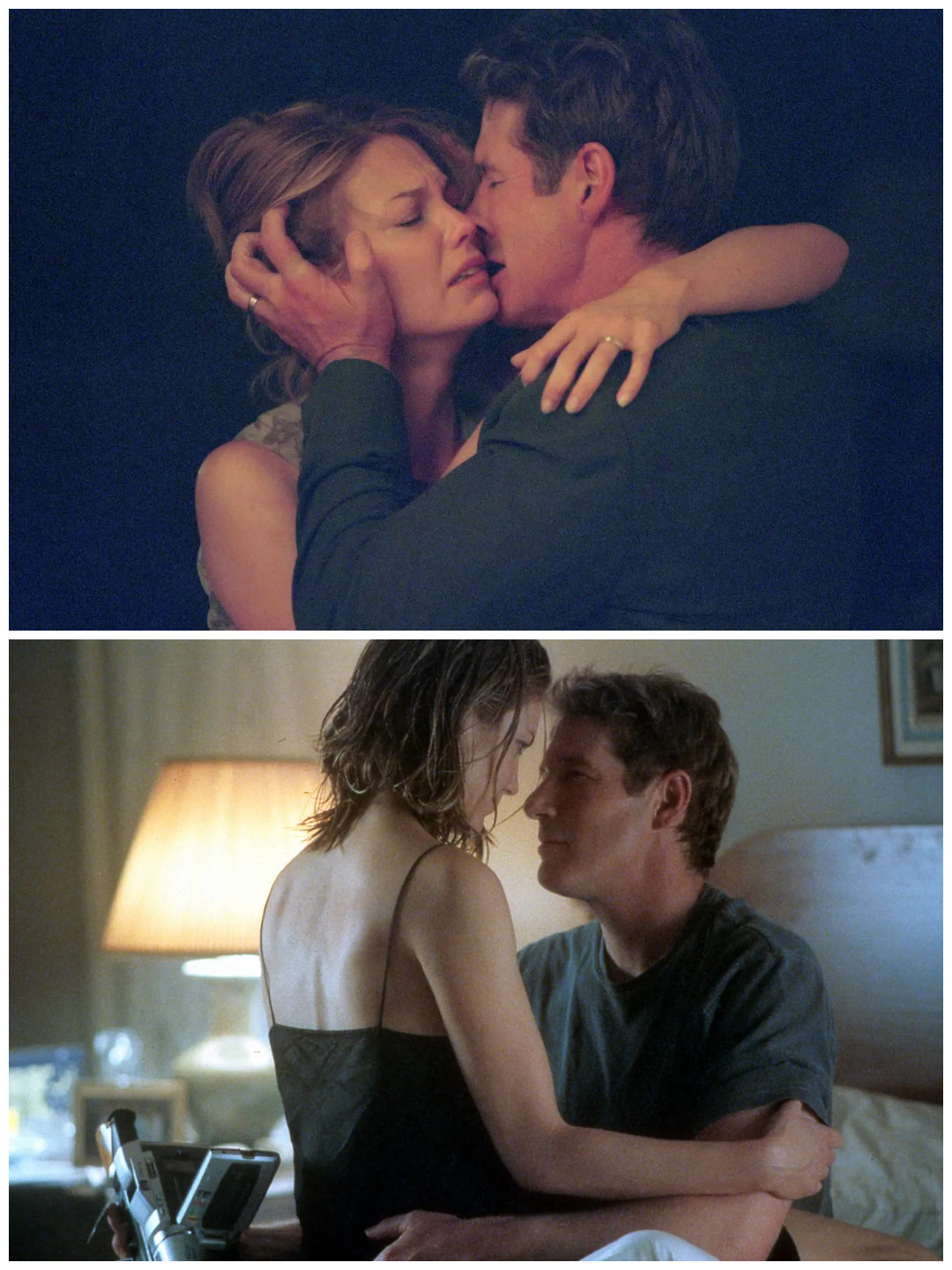
Richard Gere had a problem on the set of Unfaithful that most actors would probably consider a compliment.
According to director Adrian Lyne, Gere looked too good.
Too athletic.
Too much like Richard Gere.
For a movie built around a married woman being drawn into an affair with a younger, mysterious stranger, Lyne wanted Gere’s husband character, Edward Sumner, to feel more ordinary and domestic.
Gere, however, arrived with decades of movie-star charisma already attached to him.
So Lyne came up with an unusual solution.
He started secretly putting cookies and other food into Gere’s clothes.
The idea was simple, even if the method was bizarre: if Gere ate more and gained a little weight, perhaps he would look less like the polished romantic leading man audiences had known for years.
It did not exactly go according to plan.
Gere ate the food for about a day.
Then he figured out what his director was trying to do.
Lyne Wanted Richard Gere to Look More Ordinary
Lyne shared the story during an Aug. 14 screening of Unfaithful at the Academy Museum, where he reflected on the making of the 2002 erotic drama.
The film stars Diane Lane as Connie Sumner, a suburban wife whose seemingly comfortable marriage begins to fracture after she meets Paul Martel, played by Olivier Martinez.
Gere plays Connie’s husband, Edward.
That casting created a subtle problem for Lyne.
Gere was already one of Hollywood’s most recognizable romantic stars, known for films such as Pretty Woman, An Officer and a Gentleman and Runaway Bride.
Audiences were accustomed to seeing him as the man at the center of the romance.
But in Unfaithful, Lyne needed the emotional balance to work differently.
Connie’s husband was not supposed to look like an obvious fantasy figure competing with her lover.
He was supposed to feel settled, familiar and grounded — a man belonging to the world of marriage, family routines and suburban stability.
Lyne apparently thought Gere’s naturally athletic appearance made that harder.
He wanted him slightly heavier and, in Lyne’s description, more “homely.”
That is where the cookies came in.:max_bytes(150000):strip_icc():format(webp)/diane-lane-unfaithful-2-102125-336eb642a60d4498a7ab5ea6a97a18a7.jpg)
The Director Tried to Feed Him Without Saying Why
Rather than simply telling Gere he wanted him to gain weight, Lyne tried a more indirect approach.
He began hiding food in Gere’s clothes.
Cookies were among the snacks.
Lyne’s hope was apparently that Gere would discover the food, eat it and gradually put on a little weight without turning the process into a major discussion.
For a brief period, it worked.
Gere ate the snacks.
Then he realized there was a reason food kept appearing around him.
Once he understood that Lyne was trying to fatten him up for the role, the scheme was effectively over.
It is the kind of behind-the-scenes story that sounds almost too strange to be real: a director attempting to alter one of Hollywood’s most famous leading men by quietly stuffing snacks into his wardrobe.
But the reason reveals something important about the visual logic of Unfaithful.
Lyne was thinking carefully about how audiences would read the triangle at the center of the film.
Richard Gere Was Supposed to Be the Stable Husband, Not the Fantasy
The central tension in Unfaithful depends on contrast.
Connie has a life that appears secure.
She has a husband, a son and a comfortable home.
Then she encounters Paul, a French bookseller whose world feels unpredictable, sensual and dangerous.
The affair grows partly because he represents something outside the structure of her existing life.
If Edward looked like an impossibly glamorous romantic hero himself, Lyne apparently worried that the contrast would become less convincing.
Gere needed to embody familiarity.
Martinez needed to embody temptation.
That does not mean Edward is unattractive.
Quite the opposite.
The casting works partly because the audience understands that Connie is not leaving an obviously terrible marriage for an obviously better man.
Her choices are messier than that.
Still, Lyne wanted Gere’s appearance to reinforce the distinction between the two worlds.
He wanted a husband.
Not a movie star.
The problem was that he had cast one of the most famous movie stars alive.:max_bytes(150000):strip_icc():format(webp)/Unfaithful-Richard-Gere-081526-f4eaebd14630484ca8a6cde4755683aa.jpg)
The Scheme Failed, but Gere’s Performance Did Not
Lyne’s cookie strategy did not ultimately transform Gere into a dramatically different-looking man.
But the director has made clear that he remains impressed by Gere’s work in the film.
That matters because Edward is a deceptively difficult role.
For much of Unfaithful, the audience spends more time following Connie and her affair than Edward’s perspective.
Yet once he begins to suspect what is happening, Gere has to shift the movie’s emotional center.
Edward is wounded, suspicious, angry and humiliated.
But Gere does not play him as a simple villain or a clueless husband.
His restraint becomes one of the reasons the second half of the film grows increasingly tense.
The audience knows far more than Edward does.
Then, gradually, he catches up.
By the time he fully confronts the reality of Connie’s affair, the calm suburban husband Lyne wanted has become something much more volatile.
Diane Lane Became the Film’s Emotional Center
Although the cookie story is about Gere, Unfaithful is inseparable from Diane Lane’s performance.
Lane’s portrayal of Connie earned her an Academy Award nomination for Best Actress.
Much of the movie depends on her ability to make Connie’s behavior feel conflicted rather than simple.
She experiences excitement, guilt, fear and obsession, sometimes within the same sequence.
Lyne famously specializes in stories where desire destabilizes ordinary lives, and Unfaithful fits squarely within that tradition.
The film is not merely asking whether Connie will continue the affair.
It is interested in what happens when one impulsive choice begins contaminating every other part of her life.
That makes Edward’s ordinariness essential.
The more stable her home seems, the more dangerous her secret becomes.:max_bytes(150000):strip_icc():format(webp)/Adrian-Lyne-081526-1-20fb3fd6a9cc47868087e7e429c993e4.jpg)
Lyne Has Always Been Obsessed With Small Details
The story also fits Lyne’s filmmaking style.
Across films such as Fatal Attraction, 9½ Weeks, Indecent Proposal and Unfaithful, Lyne has often focused on physical details, gestures and visual contrasts that communicate desire or discomfort before characters say anything directly.
Trying to change Gere’s body shape may have been an extreme version of that instinct.
Lyne was not simply thinking about whether Gere could play Edward emotionally.
He was thinking about what the audience would feel the moment Gere appeared on screen.
Did he look too athletic?
Too polished?
Too romantic?
Too much like the man viewers had already seen sweeping women off their feet in other movies?
For Lyne, those associations mattered.
Apparently enough to start hiding cookies.
It Makes Gere’s Casting Funnier in Retrospect
There is something amusing about the problem now.
If a director wanted a completely ordinary-looking suburban husband, casting Richard Gere was always going to create challenges.
By 2002, Gere’s image was already deeply established.
He did not need to say anything for audiences to bring decades of associations with them.
Lyne could change the clothes.
He could adjust the lighting.
He could encourage a little weight gain.
But he could not erase the fact that the actor playing Edward Sumner was Richard Gere.
In the end, perhaps that tension helped the movie.
Edward is ordinary enough to belong to Connie’s domestic world, but charismatic enough that her betrayal never feels visually easy to explain.
The affair is not about escaping an obviously undesirable husband.
It is about something more irrational.
More dangerous.
And far more uncomfortable.
The Cookies Became One of the Movie’s Strangest Behind-the-Scenes Stories
More than two decades after Unfaithful was released, Lyne’s memory gives fans a new detail to look for.
Watch Gere closely the next time Edward appears.
There was once a director behind the camera hoping he might look just a little less fit.
And for at least one day, that director was quietly trying to make it happen with snacks.
Gere caught on.
The plan failed.
But Lyne still got the performance he needed.
And somehow, the story of Unfaithful now includes one more secret:
While Diane Lane’s character was hiding an affair, Adrian Lyne was hiding cookies in Richard Gere’s clothes.