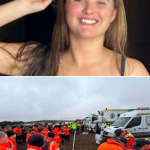
8-YEAR-OLD GIRL D/ES AFTER RARE “BRAIN-EATING” AMOEBA INFECTION

8-YEAR-OLD GIRL DIES AFTER RARE “BRAIN-EATING” AMOEBA INFECTION
An **8-year-old Louisiana girl has died after contracting a rare and devastating brain infection believed to have been caused by swimming in warm freshwater during a family trip.
Lillian Smart became critically ill after a suspected exposure to Naegleria fowleri, a microscopic amoeba commonly known as the “brain-eating amoeba.” Health officials confirmed the rare infection, which attacks the brain and can progress extremely quickly.
 HER FAMILY’S HEARTBREAK
Lillian had been receiving treatment in a pediatric intensive care unit in Ruston, Louisiana, since August 15.
Her family said she died just one day after celebrating her birthday.
In a heartbreaking tribute, her parents described the devastating moment they lost their daughter and said the damage to her brain had become too severe for her body to recover.
“Everyone did everything they could to keep her here,” her family said in a tribute shared online.
WHAT IS THE “BRAIN-EATING” AMOEBA?
Naegleria fowleri is a microscopic organism that can live in warm freshwater, particularly during periods of high temperatures.
The infection it causes is called primary amebic meningoencephalitis, or PAM.
But there is an important detail many people don’t know:
A person does not become infected by swallowing contaminated water.
The amoeba can enter the body when contaminated water goes up the nose, allowing the organism to travel toward the brain.
 THE ILLNESS CAN PROGRESS WITH TERRIFYING SPEED
Early symptoms can resemble many ordinary illnesses.
They may include:
- Severe headache
- Fever
- Nausea
- Vomiting
As the infection progresses, patients can develop stiffness, seizures, confusion and coma.
The infection is extremely rare but is almost always fatal, according to the CDC.
In Lillian’s case, her condition deteriorated rapidly despite efforts by medical professionals to save her.
WHY WARM FRESHWATER CAN CARRY A RISK
Naegleria fowleri is associated with warm freshwater environments and has been reported in parts of the southern United States.
Louisiana has recorded other cases in previous years, including infections linked to contaminated water entering the nose during activities involving water.
Health officials emphasize that the infection remains very rare, even though the consequences can be catastrophic.
A FAMILY TRIP ENDS IN TRAGEDY
What began as a family outing became an unimaginable medical emergency.
Lillian went swimming during the trip.
Days later, she was hospitalized.
Doctors fought to save her as the infection caused severe damage to her brain.
Then, shortly after her eighth birthday, her family said goodbye.
Her death has once again drawn attention to the dangers associated with warm freshwater — while also highlighting just how extraordinarily uncommon this infection is.
WHAT PARENTS SHOULD KNOW
Health officials do not suggest avoiding all freshwater activities.
Instead, awareness of the risk can help people take precautions in warm freshwater environments.
The CDC notes that Naegleria fowleri infections are extraordinarily uncommon.
But when swimming in warm freshwater, avoiding situations where water is forced up the nose can reduce the potential risk. “HOW DO WE PUT ONE FOOT IN FRONT OF THE OTHER?”
For Lillian’s family, however, this is no longer simply a public-health warning.
It is the loss of a daughter whose eighth birthday had just been celebrated.
Her family now faces the painful task of moving forward without her.
A microscopic organism.
A family swim.
A little girl who never made it home.
Lillian Smart’s tragic case is a reminder that some of the rarest dangers can emerge from places families normally associate with summer memories and fun.
Her family says they are heartbroken — and still trying to understand how life can continue without their little girl.