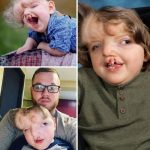
BORN WITH 𝖠 𝖦𝖠𝖯 𝖨𝖭 𝖧𝖨𝖲 𝖲𝖪𝖴𝖫𝖫, THIS LITTLE BOY SURVIVED AGAINST THE ODDS AND LEFT HIS FAMILY CALLING HIM A MIRACLE
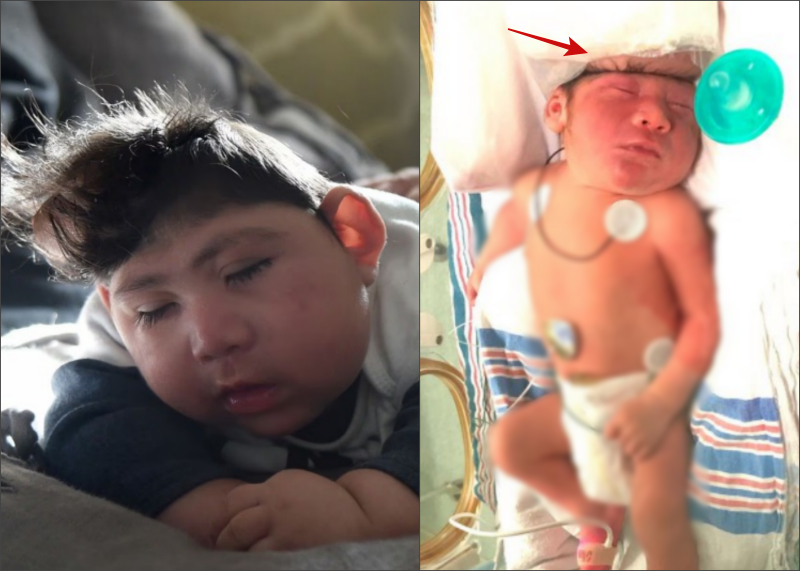
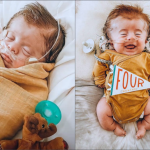
Seven months have passed, and little Lucas is eating, getting fussy, and developing much like other babies his age.
When Maria Santa Maria was ten weeks pregnant with her third child, doctors discovered that her baby had an extremely serious condition: exencephaly, also known as anencephaly.
Ultrasound images showed that part of the baby’s skull had not formed. This meant his developing brain was directly exposed to the amniotic fluid inside the womb. Babies diagnosed with exencephaly were generally expected to survive for no more than a day.
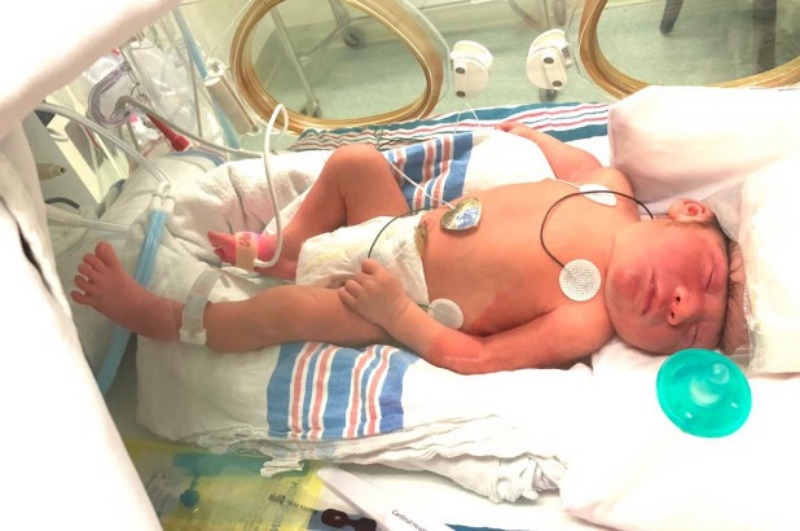
Doctors called Maria in and told her she had two choices: One was to end the pregnancy at that point. The other was to wait until delivery, when she and her baby might have only a few minutes together.
Maria chose the second option. But her son made it to seven months, and continued to live despite the condition’s extremely low survival odds. Lucas became the first known child to survive after being diagnosed with exencephaly.
Before becoming pregnant with Lucas, Santa Maria was already a mother to three healthy daughters. So the New Jersey woman was stunned when doctors told her that her fourth child was unlikely to survive.
“They kept telling me that my baby wouldn’t be able to live,” Maria said. Day after day, her baby continued growing inside her, yet she felt as though she was slowly losing the little boy she loved.
Lucas was diagnosed with exencephaly, an extremely rare birth defect estimated to occur in around 3 out of every 10,000 births. In this condition, the baby’s skull does not fully form, leaving part of the developing brain exposed and directly surrounded by amniotic fluid.
Typically, exencephaly causes the fetal brain to develop abnormally and can severely affect the brain before birth. One case reported in 2009 involved a fetus with exencephaly that reached full term but survived for only three hours.
An examination showed that the child’s brain was covered by a thick membrane, swollen in some areas, with unusually developed blood vessels.
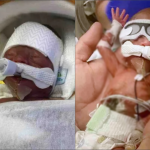
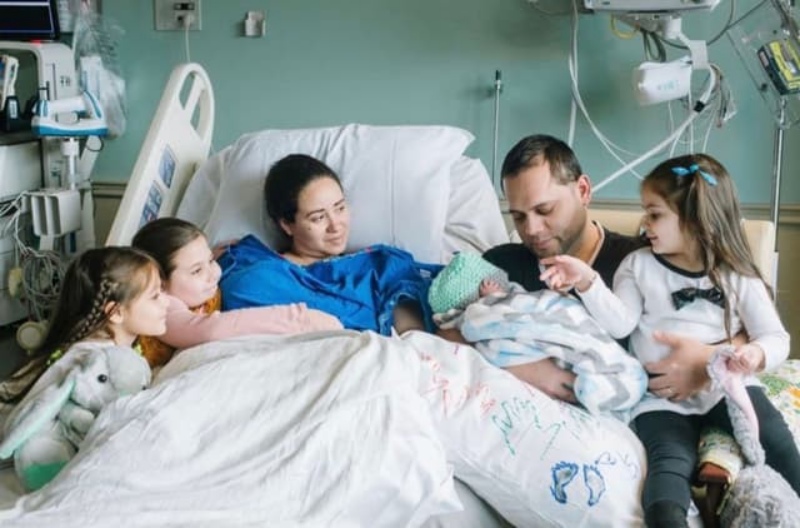
When Lucas was born, Maria had prepared herself emotionally for the possibility that he might not survive. Her three young daughters also came to the delivery room to meet — and possibly say goodbye to — their little brother.
His father, Augusto, had even called a funeral home.
But hours passed, and Lucas was still breathing. He drank milk and had already lived longer than any other child with exencephaly known to his family. Maria began to hope that her son might have a chance.
Tim Vogel, director of Pediatric Neurosurgery at the North Jersey Brain and Spine Center, proposed an operation. Based on his experience, Dr. Vogel believed that if he could stabilize the portion of Lucas’s brain protruding from his skull like a water-filled balloon, Maria might eventually be able to take her baby home.
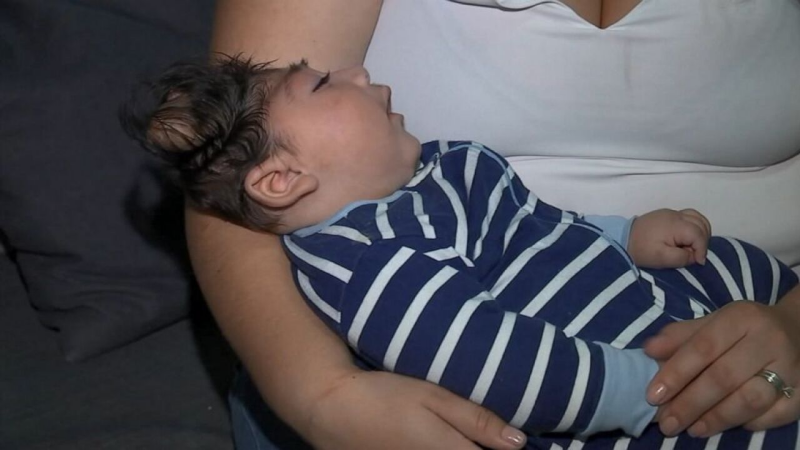
But there was still a major concern. “If he went home and this fluid-filled sac ruptured, there would be very little we could do,” Dr. Vogel said.
To help Lucas survive, doctors had to remove part of the basal ganglia, an area of the brain involved in movement control. The remaining portion was carefully protected.
Because very young children can have a remarkable ability to adapt as they develop, Dr. Vogel hoped that the remaining portion of Lucas’s basal ganglia could reorganize and take on functions normally handled by the missing tissue.
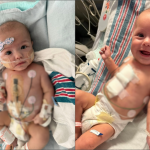
The procedure was also expected to reduce the risk of future seizures and additional neurological complications. Several weeks after surgery, Lucas was discharged and went home.
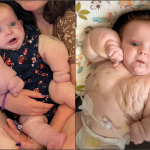
The baby was developing similarly to other seven-month-old children, Dr. Vogel said. Lucas could now eat cereal and baby food, and he often cried for his mother when he woke up. He had also begun physical therapy.
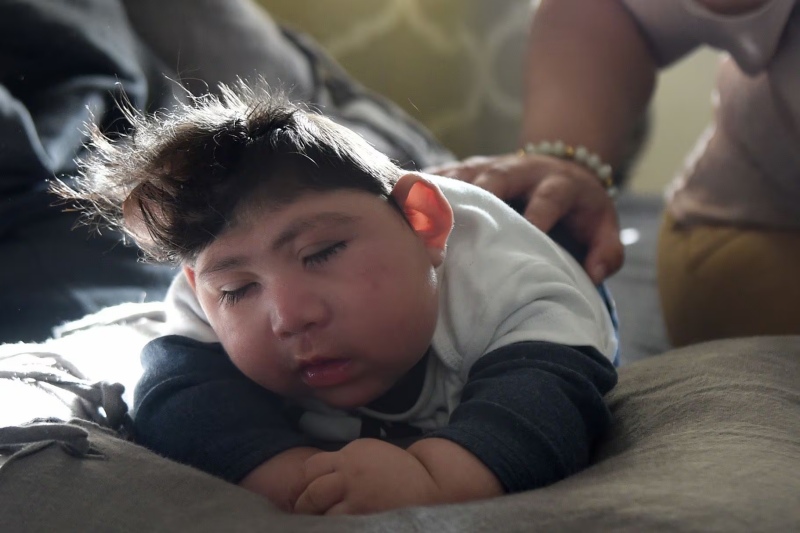
“I think what he has shown has gone beyond our expectations,” Dr. Vogel said. “In fact, we see him eating, trying to crawl and working through physical therapy — he has made remarkable progress.”
Vogel said he would continue following Lucas as he grows. The doctor plans to do everything possible to protect Lucas’s brain and support his neurological development.
“Lucas will be with me for a long time,” Vogel said. Every time he sees the little boy, he feels encouraged by the remarkable strength Lucas continues to show.
Santa Maria and Augusto are now simply enjoying the happiness of being parents. Before, they had never dared to imagine such a hopeful outcome for Lucas.
The little boy has also become a source of hope for families whose children receive difficult diagnoses before birth. “Mothers often say, even if we only have five minutes with our baby, every second will be worth it,” Maria said. “Thank God, we have received so much more.”