Dolly Parton’s Team Reveals Cancer Diagnosis After Her Death at 80 — Just Days After She Vowed to Keep Working
Four days before Dolly Parton died, she was still talking about the things she hoped to accomplish.
The country music legend acknowledged that her health had become difficult, but her message was not one of surrender. She was recovering, she said, and she intended to keep working for as long as possible.
Then, on Tuesday, Aug. 25, Parton died at age 80.
Hours later, her representatives revealed what had been happening privately: Parton had faced what they described as a “brief battle with cancer.” The specific type of cancer was not disclosed.
Parton spent her final days at Vanderbilt-Ingram Cancer Center in Nashville. She had been admitted on Friday, Aug. 21, and died there four days later with loved ones around her.
Her team’s statement focused not only on her illness but on what they believed defined her life — the joy, humor, generosity and compassion she carried through decades of extraordinary fame.
That generosity, they noted, reached people she would never personally meet. Her Imagination Library distributed hundreds of millions of books, while Parton also helped support medical research connected to a vaccine used around the world.
Those efforts became part of a legacy that extended far beyond her records, movies and rhinestone-covered stage costumes.:max_bytes(150000):strip_icc():focal(999x0:1001x2):format(webp)/dolly-parton-portraits-PEOPLE-1-41d751a2c5634481b9b0e8f653d643ba.jpg)
Her Health Had Become a Growing Concern
Although the cancer diagnosis was not publicly detailed before her death, Parton had been increasingly open about experiencing health problems.
Before entering the hospital, she had been dealing with kidney and autoimmune issues.
On Aug. 21 — the same day she was admitted to Vanderbilt-Ingram Cancer Center — Parton spoke about her recent decline and explained that she had not always given her own health the attention it needed.
One reason was deeply personal.
She said she had spent considerable time caring for her husband, Carl Dean, and had overlooked some of her own medical concerns while watching over him.
Dean, Parton’s husband of nearly 60 years, died in March 2025.
His death marked an enormous change in her life. The couple had shared more than six decades together, including a marriage that remained unusually private despite Parton becoming one of the most recognizable entertainers in the world.
After Dean was gone, Parton found herself confronting both grief and her own health struggles.
She also reminded fans that difficult health periods were not entirely new to her.
Parton recalled struggling for several months in the early 1980s with women’s health issues while also dealing with problems involving her weight.
But she believed modern celebrity culture made illness feel more public than it had decades earlier.
With social media operating around the clock, she said, every rumor or update could be magnified almost instantly. Parton characteristically found humor in that reality, joking about once being a favorite subject of tabloids and now finding herself discussed across social media and artificial intelligence.
Yet underneath the joke was a serious message.
She was not finished.
Even while acknowledging that she was still healing, Parton made clear that she continued working.
She had dreamed herself into what she jokingly described as a corner, with too many ideas and ambitions still waiting to become real.
Only four days later, she was gone.:max_bytes(150000):strip_icc():focal(999x0:1001x2):format(webp)/dolly-parton-portraits-PEOPLE-3-7158c815c73b4e2688f8c9ac0c5ad4d5.jpg)
Her Nephew Delivered the News She Had Asked Him to Share
The responsibility of announcing Parton’s death fell to her nephew Bryan Seaver.
Seaver identified himself as the son of Cassie Parton and said he was speaking on behalf of the Parton and Owens families.
The assignment was not unexpected.
Years earlier, Parton had personally asked Seaver to make the announcement when the day eventually arrived.
For more than two decades, Seaver had also served as his aunt’s head of security, following his father, Larry, who had held the job before him.
That history made his message both professional and intensely personal.
Seaver explained that he had imagined what the moment might someday feel like, but the reality carried a weight he had never been able to fully anticipate.
Within the family, the superstar known simply as Dolly to the world carried many other names. She was an aunt, sister and grandmother figure across generations.
Seaver expressed both pride and sadness while reflecting on his family’s faith and their belief that Parton had been reunited with Dean, her parents and other loved ones.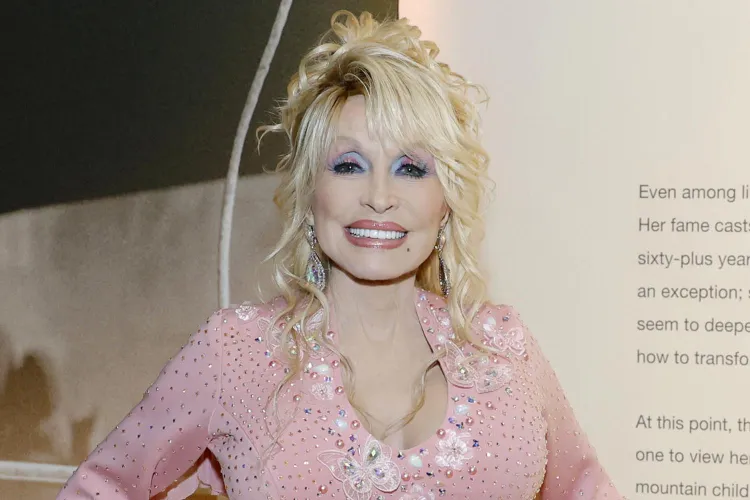
A Career That Started With ‘Hello, I’m Dolly’
Parton’s death closed one of the most successful careers in country music history.
Her debut album, Hello, I’m Dolly, arrived in 1967.
What followed was a body of work that crossed genres and generations. Songs including “Jolene,” “9 to 5” and “I Will Always Love You” became deeply embedded in American popular culture.
Over the course of her career, Parton sold more than 160 million albums worldwide and became the best-selling female country artist of all time.
But the scale of her career can obscure something that remained central to her public personality: she never seemed interested in presenting herself only as an untouchable superstar.
Her humor was often self-deprecating. Her Tennessee upbringing remained part of her identity. And even as her fame expanded into film, television, business and philanthropy, she repeatedly returned to the importance of ordinary human connection.
Her marriage reflected that balance.
Dean avoided the spotlight almost completely, even while his wife became internationally famous.
Parton once explained that he supported her enthusiastically as long as she did not try to pull him into the public side of her career.
She also liked joking about the secret behind their long marriage: spending enough time apart to appreciate the time they had together.
For nearly six decades, that arrangement worked.
After Dean’s death, Parton remembered the depth of the relationship and the many years they had shared.
Then came a period in which grief, work and her own medical challenges increasingly overlapped.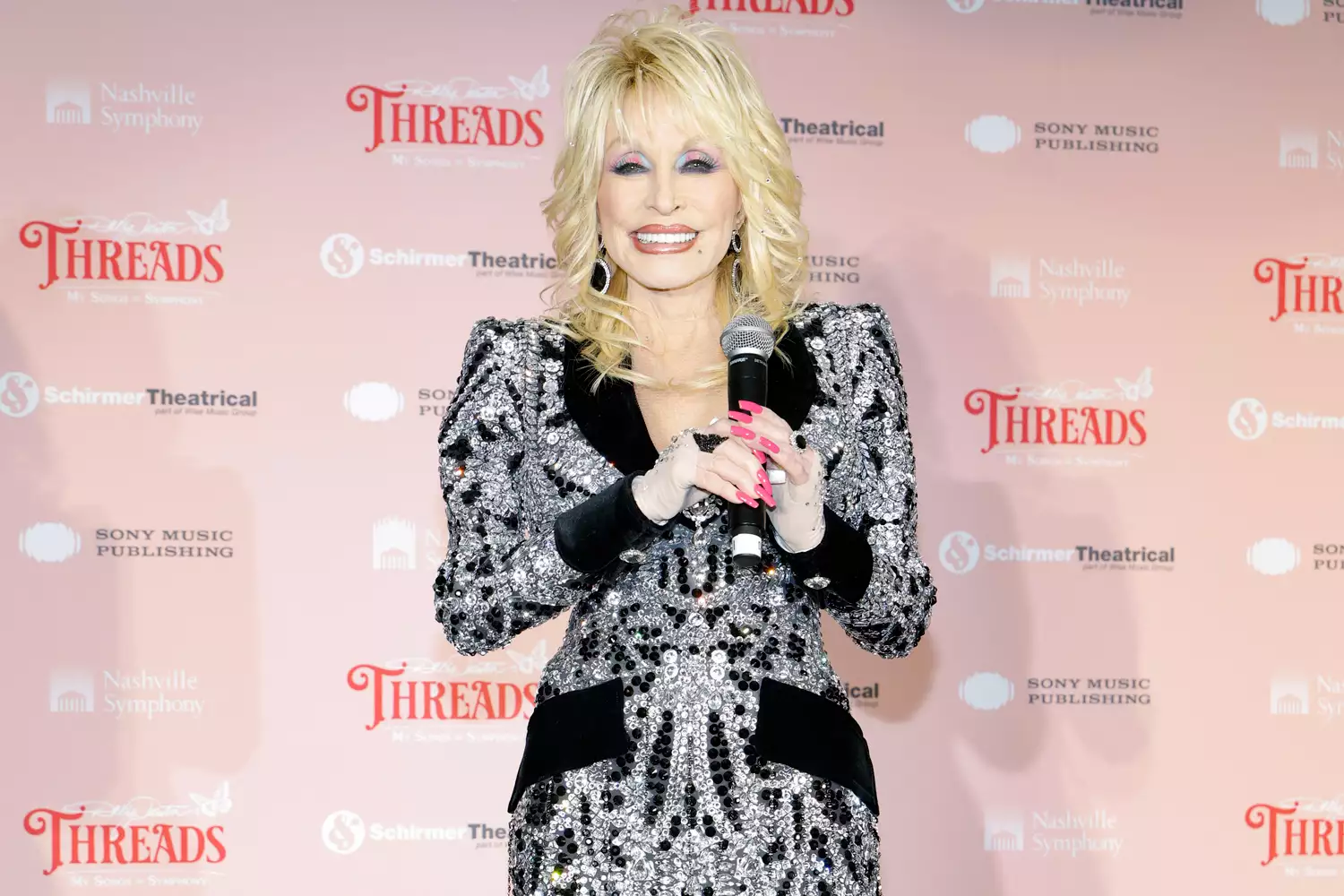
She Was Still Looking Forward
Perhaps the most striking detail about Parton’s final days is how little her language sounded like a farewell.
She knew she was facing serious health difficulties.
She had lost the husband who had been beside her for most of her adult life.
She had been receiving medical care.
Yet when she spoke shortly before entering the hospital, she emphasized movement rather than retreat: “still healin’, I’m still workin’.”
She was thinking about projects.
She was thinking about ideas.
She was thinking about what she could still bring to life.
Her representatives ultimately described a short battle with cancer that ended at Vanderbilt-Ingram Cancer Center on Aug. 25, with the people closest to her nearby.
The illness ended her life at 80.
But the final picture offered by those around her was unmistakably Dolly Parton: a woman surrounded by love, remembered for generosity, and still imagining what she might create next until almost the very end.