Luke Evans Wrote Tim Curry a Private Letter 3 Weeks Before His Death. They Had Never Met
Luke Evans never got the chance to meet Tim Curry.
But just weeks before Curry’s death, Evans decided there was something he needed to tell the actor whose most famous performance had followed him onto a Broadway stage every night.
So he wrote him a letter.
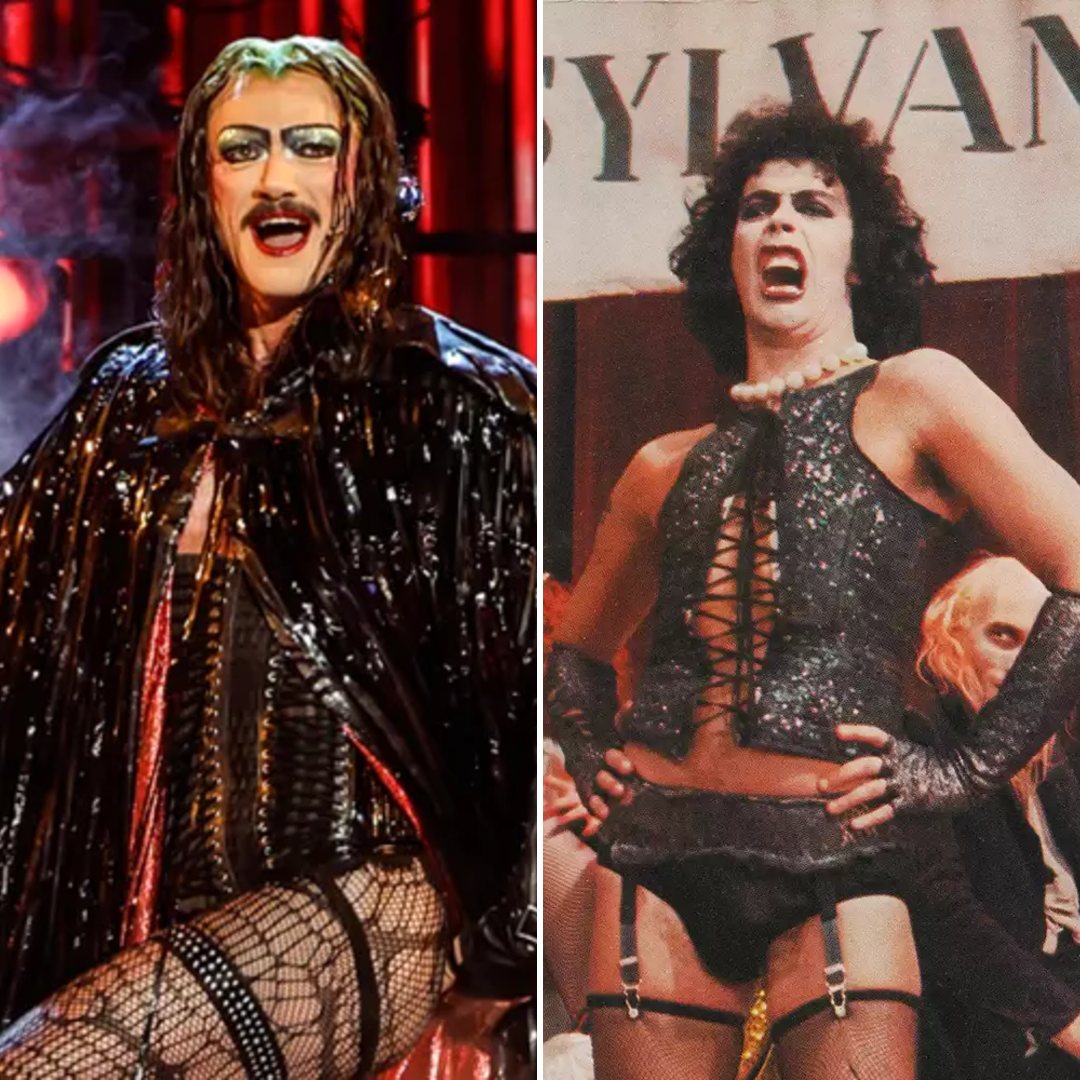
At the time, Evans was nearing the end of his run as Dr. Frank-N-Furter in Broadway’s 2026 revival of The Rocky Horror Show. Curry had originated the role more than half a century earlier, first onstage and then in the 1975 film The Rocky Horror Picture Show, creating a performance so distinctive that nearly every actor who has played Frank since has had to contend with it.
Evans knew that better than most.
His letter was not written as a memorial. It was not composed after Curry’s death, when actors, costars and admirers around the world began sharing stories about what he had meant to them.
Evans wrote while Curry was still alive.
Three weeks later, Curry was gone.
And the private note suddenly became something much closer to a goodbye.:max_bytes(150000):strip_icc():focal(749x0:751x2):format(webp)/luke-evans-tim-curry-2-2f5c25f9ab8f48fa93b68051530ab862.jpg)
Evans Was Living With Curry’s Legacy Every Night
For seven months, Evans had been stepping into the fishnets and heels of Frank-N-Furter.
That meant inheriting one of the most instantly recognizable characters in musical theater and cult cinema — and a role almost inseparable from the actor who first made it famous.
Curry originated Frank when The Rocky Horror Show premiered at London’s Royal Court Theatre in 1973. He later took the production to Los Angeles and Broadway before bringing the character to the screen in 1975.
The film initially had a modest reception but eventually became a phenomenon through midnight screenings, audience participation and generations of fans who discovered Curry’s flamboyant, fearless performance.
More than 50 years later, Evans understood that playing Frank meant entering territory Curry had defined.
That was what he wanted Curry to know.
In the letter, Evans explained that anyone who takes on Frank is inevitably joining a creative conversation Curry began decades earlier.
He had felt that presence throughout his own Broadway run.
But Evans also wanted to make one distinction especially clear.
He had never tried to copy Tim Curry.:max_bytes(150000):strip_icc():focal(728x269:730x271):format(webp)/Tim-Curry-red-carpet-2-012524-74ed88deb4d54b3a873944b9e61d9c1e.jpg)
‘I’ve Never Tried to Recreate What You Did’
Trying to imitate Curry’s Frank-N-Furter would have been an almost impossible assignment.
The voice, physicality, expressions, humor and unpredictable charisma of Curry’s performance were uniquely his.
Evans knew comparisons were unavoidable.
Instead of fighting them, he told Curry he considered being compared with him an extraordinary compliment — while recognizing that the original performance could never simply be duplicated.
“I’ve never tried to recreate what you did,” Evans wrote.
His goal, he explained, had been to honor the character Curry created while finding his own route through Frank.
That distinction reveals something important about the letter.
Evans was not merely writing fan mail.
He was one professional performer addressing another about what it feels like to inherit a role that has become permanently associated with its creator.
Every night Evans walked onto the stage, there were audience members who already knew how Curry had said certain words, moved through certain songs and transformed Frank into something larger than the script itself.
Evans had to acknowledge that history without becoming trapped inside it.
He Had Never Even Met Curry
What makes the letter more affecting is that there was no long personal friendship behind it.
Evans said the two men had never met.
There were no years of backstage conversations or shared performances to look back on.
Curry had influenced Evans from a distance.
And yet, while approaching the end of his Broadway run, Evans apparently felt strongly enough about that influence that he wanted Curry to hear his gratitude directly rather than merely discussing it publicly in interviews.
He thanked Curry not only for Frank-N-Furter but for the larger example his career had given performers who followed him.
Curry’s work stretched far beyond Rocky Horror.
He terrified generations of viewers as Pennywise in the 1990 television adaptation of It. He brought frantic comic energy to Clue, appeared in Annie, played Darkness in Legend and later turned up memorably in Home Alone 2: Lost in New York and Muppet Treasure Island.
Onstage, he received Tony Award nominations for Amadeus, My Favorite Year and Spamalot.
But Frank remained different.
It was the character that Curry had originated himself.
Evans was not simply taking over a part Curry once performed. He was walking through a door Curry had helped create.:max_bytes(150000):strip_icc():focal(999x0:1001x2):format(webp)/luke-evans-1-3576867326334467a82434b0597b38ba.jpg)
Evans Wanted to Know Whether Curry Would Approve
Toward the end of his letter, Evans moved from professional admiration to something more personal.
He hoped Curry would approve of what another actor had done with Frank.
More specifically, he hoped Curry would approve of the joy Evans had found while playing him.
Evans closed by imagining Curry looking on as “one more Frank” enjoyed his time in the heels.
There was nothing tragic about that sentiment when Evans wrote it.
He was finishing a demanding Broadway run and reaching out to the man who had made the role possible.
The letter was a thank-you.
Then the timing changed its meaning.
Evans played his final performance as Frank-N-Furter at Studio 54 on August 23.
Tim Curry died on August 25 at age 80. News of his death prompted tributes from across the entertainment world, including former costars and performers influenced by his work.
Evans then decided to show the public what he had written.:max_bytes(150000):strip_icc():focal(749x0:751x2):format(webp)/rocky-horror-picture-show-broadway-5-042326-c65f00a94ac34c83b812eefd4e8ba035.jpg)
The Letter Existed Before Everyone Was Saying Goodbye
That is what separates Evans’ message from many celebrity tributes that followed Curry’s death.
Those tributes were heartfelt, but they were responses to loss.
Evans’ letter was different.
It already existed.
He had already decided Curry deserved to hear those words.
He had already told him that the role he created continued to challenge and inspire actors more than 50 years later.
He had already acknowledged that no matter how many performers put on Frank’s costume, there would only ever be one Tim Curry.
After Curry’s death, Evans described him as an inspiration and a singular presence whose influence had reached generations of performers.
But perhaps the most meaningful tribute was the one Curry did not have to wait until after his death to receive.
Three weeks earlier, an actor he had never met had taken the time to write.:max_bytes(150000):strip_icc():focal(734x299:736x301):format(webp)/Tim-Curry-Rocky-Horror-Picture-Show-d7c1e775ef754ac18b5d8dbd7c185be7.jpg)
A Role Can Outlive a Performance
Frank-N-Furter has long since become bigger than any single production of The Rocky Horror Show.
Actors will continue to play him. Audiences will continue dressing as him. Midnight screenings will continue introducing new fans to the strange world Curry helped make immortal.
But Evans’ letter captures something that often gets lost when iconic roles are revived again and again.
The next performer is never starting from zero.
Someone came first.
For Frank-N-Furter, that person was Tim Curry.
Luke Evans spent seven months discovering his own version of the character.
Before he took off the heels for the final time, he wanted Curry to know that he had never forgotten whose footsteps were underneath them.
Neither man could have known how little time remained.
That is why a private thank-you written three weeks earlier now reads like something neither of them intended it to be:
a farewell.