LINDSAY CLANCY’S FATE NOW IN JURY’S HANDS AS DELIBERATIONS BEGIN IN EMOTIONAL MASSACHUSETTS TRIAL
LINDSAY CLANCY’S FATE NOW IN JURY’S HANDS AS DELIBERATIONS BEGIN IN EMOTIONAL MASSACHUSETTS TRIAL
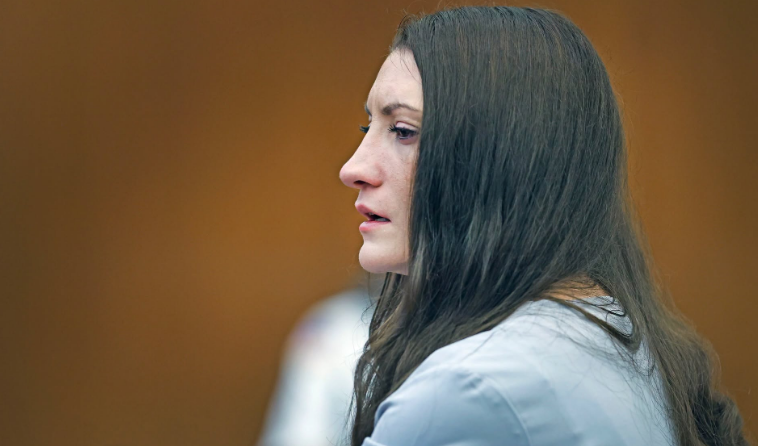
DEDHAM, MASS. — The fate of Lindsay Clancy is now in the hands of a Massachusetts jury after jurors began deliberating Wednesday afternoon in the closely watched trial of the mother accused of killing her three young children before attempting to take her own life.
Jury deliberations began at 12:34 p.m. EDT, following emotional closing arguments that placed one question above everything else:
Was Lindsay Clancy criminally responsible for her actions at the time of the killings?
The defense says she was suffering from severe mental illness and psychosis and could not fully understand or control what she was doing.
Prosecutors argue that Clancy was struggling with serious depression but nevertheless understood right from wrong and was capable of controlling her actions.
Now, jurors must decide which account is supported by the evidence.
 DEFENSE PAINTS PICTURE OF A MOTHER IN PSYCHIATRIC CRISIS
Defense attorney Kevin Reddington urged jurors to look at Clancy’s mental state rather than simply the devastating outcome.
He repeatedly described his client as a devoted mother whose mental health deteriorated dramatically before the tragedy.
Reddington challenged the medical care Clancy received and pointed to testimony from defense experts who concluded that she was experiencing psychosis.
The defense argued that Clancy’s condition had progressed to a point where she was no longer capable of appreciating the wrongfulness of her conduct or conforming her behavior to the law.
HER SUICIDE ATTEMPT BECOMES A KEY PART OF THE DEFENSE
Reddington also focused heavily on what happened after the children were found.
Clancy attempted to take her own life by cutting herself and going through a second-story window.
She survived but suffered catastrophic injuries that left her paralyzed.
The defense argued that the severity of the attempt undermined the prosecution’s suggestion that Clancy had carefully staged events or was acting according to a calculated plan.
If she had been deliberately attempting to manipulate investigators, Reddington argued, the extent of her own actions would make little sense.
For the defense, the suicide attempt was evidence of the depth of her psychiatric crisis.
 PROSECUTORS SAY THE EVIDENCE SHOWS PLANNING
The Commonwealth presented a fundamentally different narrative.
Prosecutors acknowledged that Clancy had been struggling with depression and mental-health difficulties.
But they argued that those struggles did not prevent her from understanding the consequences of her actions.
The prosecution pointed to her communications, phone activity and internet searches before the killings.
They argued that Clancy deliberately created an opportunity to be alone with the children by sending her husband, Patrick, out on errands.
According to prosecutors, those actions demonstrated preparation and awareness rather than an uncontrolled psychotic episode.
THE CHILDREN REMAINED AT THE CENTER OF THE CLOSING ARGUMENT
As the prosecution delivered its final argument, prosecutors turned the jury’s attention to the three children.
Cora.
Dawson.
Callan.
The Commonwealth reminded jurors of the lives the children might have lived.
Prosecutors said Cora wanted to become a doctor.
Dawson dreamed of becoming a firefighter.
And Callan, they argued, “never got a chance to dream.”
The prosecution contended that Clancy intentionally harmed each child and continued until she believed they were no longer alive.
The emotional argument ended with prosecutors asking jurors to find Clancy guilty.
THE CASE DOES NOT SIMPLY ASK WHAT HAPPENED
The judge’s instructions made clear that the jury’s task goes beyond determining whether Clancy committed the acts.
The Commonwealth must prove beyond a reasonable doubt that she was criminally responsible at the time.
Under the legal standard explained to jurors, a defendant may be found not guilty by reason of insanity if a mental disease or defect left the person unable to appreciate the wrongfulness of their conduct or unable to conform their behavior to the law.
That means the jury must examine Clancy’s mental state at the precise time the children were harmed.
TWO SIDES, ONE TIMELINE
Both sides have examined many of the same events.
But they have reached completely different conclusions.
The defense sees a woman overwhelmed by severe psychiatric illness and psychosis.
The prosecution sees a mother who was struggling but remained capable of making decisions, understanding consequences and deliberately carrying out her actions.
The jury must now determine which interpretation is supported by the evidence.
THE DELIBERATIONS HAVE BEGUN
At 12:34 p.m., the courtroom entered a new phase as jurors began discussing the case privately.
There is no predetermined timetable for their decision.
They may request testimony, review evidence or ask the judge questions before reaching a verdict.
For Clancy, the stakes could not be higher.
For the families and loved ones of Cora, Dawson and Callan, the deliberations mark another painful step toward an outcome in a case that has drawn national attention.
A DECISION THAT COULD DEFINE THE CASE
The trial has raised difficult questions about mental illness, psychiatric treatment and criminal responsibility.
At its core, however, the jury faces a much narrower legal question:
Did Lindsay Clancy understand the wrongfulness of her actions and have the ability to conform her conduct to the law when the children were harmed?
If jurors find that prosecutors proved criminal responsibility beyond a reasonable doubt, Clancy could be convicted.
If they conclude that a qualifying mental disease or defect prevented her from appreciating the wrongfulness of her actions or controlling her conduct, the legal outcome could be very different.
For now, there is no verdict.
The jury is deliberating.
And after years of investigation, testimony and courtroom arguments, the next chapter of the Lindsay Clancy case rests entirely with twelve jurors.
The wait for their decision has officially begun.