LINDSAY CLANCY “SCARED” AS JURY REMAINS DEADLOCKED AFTER TWO DAYS OF DELIBERATIONS
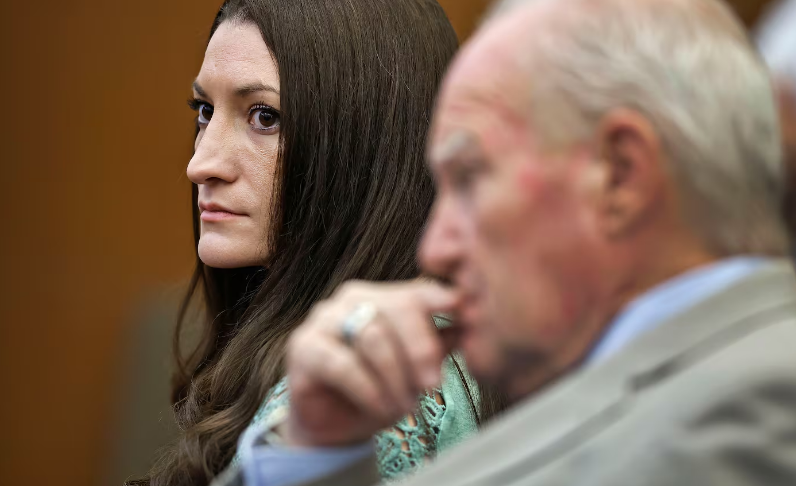
LINDSAY CLANCY “SCARED” AS JURY REMAINS DEADLOCKED AFTER TWO DAYS OF DELIBERATIONS
PLYMOUTH, Mass. — Lindsay Clancy is facing the most uncertain days of her life as a Massachusetts jury continues weighing whether she should be held criminally responsible for the deaths of her three young children.
Clancy is “nervous” and “scared” as the jury deliberates, according to her defense attorney, Kevin Reddington.
And after two full days of deliberations, jurors still have not reached a verdict.
The 12-member jury was dismissed Friday afternoon and is scheduled to return Monday, Aug. 31, to continue its deliberations.
:max_bytes(150000):strip_icc():focal(749x0:751x2):format(webp)/lindsay-marie-clancy-013023-1-176600bdc3614f6ca230e63734b87361.jpg) TWO DAYS — AND NO ANSWER
TWO DAYS — AND NO ANSWER
The jury began deliberating Thursday after more than a month of testimony in Plymouth Superior Court.
On Friday, jurors spent roughly another day reviewing the evidence before being excused for the weekend.
They also made a highly significant request: jurors asked to examine the knife Clancy allegedly used during her suicide attempt and prescription medication bottles connected to the case.
The requests offer no clear indication of which way the jury is leaning.
Instead, they underscore how closely jurors are examining the evidence surrounding Clancy’s mental state.
THE CENTRAL QUESTION IS NOT WHETHER SHE KILLED HER CHILDREN
One unusual aspect of the trial is that the defense has not disputed that Clancy was responsible for the deaths of her three children.
The legal battle has centered on a different question:
Was Lindsay Clancy criminally responsible for her actions at the time?
Clancy has pleaded not guilty by reason of lack of criminal responsibility.
Her defense argues that she was experiencing severe postpartum psychosis and bipolar disorder, compounded by psychiatric medication, when she killed her children.
Prosecutors acknowledge that Clancy was struggling with mental health problems.
But they argue that mental illness did not prevent her from understanding what she was doing or controlling her actions.
:max_bytes(150000):strip_icc():focal(749x0:751x2):format(webp)/lindsay-clancy-court-080426-1-0d554916be174019b004a84bdf0e8019.jpg) THREE CHILDREN AT THE CENTER OF THE CASE
THREE CHILDREN AT THE CENTER OF THE CASE
The case involves Clancy’s three children:
- Cora, 5
- Dawson, 3
- Callan, 8 months
The children died at the family’s Duxbury home on Jan. 24, 2023.
Afterward, Clancy attempted to take her own life by jumping from a second-story window. She survived but suffered paralysis and now uses a wheelchair.
Those events have become the focus of an extraordinarily complicated legal battle over mental illness, intent and criminal responsibility.
THE DEFENSE: A MOTHER LOST IN PSYCHOSIS
Reddington has portrayed Clancy as a loving mother whose mental health deteriorated dramatically after the birth of her children.
He argued that she was suffering from postpartum psychosis and that excessive psychiatric medication contributed to a break from reality.
Defense experts testified that Clancy experienced hallucinations and believed that killing her children was somehow protecting them.
One defense psychiatrist described her as “frankly psychotic” at the time of the incident, while the defense emphasized her history of seeking psychiatric care before the tragedy.
Reddington has also pointed to Clancy’s own suicide attempt as evidence of the severity of her mental crisis.
PROSECUTORS: SHE KNEW WHAT SHE WAS DOING
The prosecution has offered a dramatically different interpretation.
Assistant District Attorney Jennifer Sprague argued that Clancy’s actions demonstrated planning and deliberate decision-making.
Prosecutors have pointed to the sequence of events leading up to the children’s deaths, including efforts to create time alone with them.
They have also challenged Clancy’s claim that a male voice commanded her to kill her children.
Forensic psychologist Kirk Heilbrun testified that the brief auditory hallucination Clancy described was highly unusual and concluded that she retained “moral awareness” during the killings.
The prosecution’s position is essentially that Clancy may have been severely depressed and mentally ill — but that does not necessarily mean she was incapable of understanding that her actions were wrong.
THE JURY HAS FIVE POSSIBLE OUTCOMES
Jurors have been instructed that they have several possible verdicts available.
They can find Clancy guilty of first-degree murder, second-degree murder or manslaughter.
They can also find her not guilty.
Or they can find her not criminally responsible because of mental illness.
That last outcome would not necessarily mean she simply walks free.
A finding of not criminally responsible could result in her being committed to a secure psychiatric facility, potentially for an indefinite period.
WHY THE DELIBERATIONS COULD TAKE TIME
The jury has heard testimony from more than 70 witnesses and been presented with competing medical opinions about Clancy’s psychological state.
The evidence includes psychiatric evaluations, testimony from medical professionals, statements from family members and details surrounding Clancy’s behavior before and after the killings.
Now, jurors must determine which interpretation best fits the evidence.
Was Clancy experiencing a psychotic break that prevented her from appreciating the wrongfulness of her actions?
Or was she suffering from serious mental illness while still retaining enough awareness and control to be held criminally responsible?
That distinction could determine whether she spends the rest of her life in prison or in psychiatric custody.
CLANCY’S EMOTIONAL REACTION
During the closing arguments, Clancy became visibly emotional as both sides discussed her children.
Her attorney spoke about Cora, Dawson and Callan and portrayed their mother as someone who had loved them deeply before her mental health crisis.
The prosecution, meanwhile, emphasized the children’s individual personalities and futures they would never experience.
The courtroom has repeatedly returned to the same heartbreaking reality: three children died, and their mother is now waiting to learn what the law believes should happen to her.
A CASE THAT HAS GONE FAR BEYOND ONE COURTROOM
The Clancy case has attracted national attention because it has raised difficult questions about postpartum psychosis, psychiatric treatment and the limits of criminal responsibility.
It has also reignited debate about whether mothers experiencing severe mental health crises are receiving adequate medical support before those crises become emergencies.
Patrick Clancy, Lindsay’s former husband, has publicly spoken about forgiveness and has helped advocate for improved maternal mental health care through the Heard Foundation, established in memory of their children.
MONDAY COULD BRING THE ANSWER
For now, there is no verdict.
The jury has been sent home for the weekend after two days of deliberation and will return Monday morning.
Until then, Clancy remains in legal limbo.
Her attorney says she is scared and nervous.
The prosecution believes the evidence establishes criminal responsibility.
The defense believes the evidence shows a profound psychiatric crisis.
And 12 jurors now hold the power to decide which interpretation will define the next chapter of Lindsay Clancy’s life.
After years of investigation, weeks of testimony and two days behind closed doors, the question remains the same: was Lindsay Clancy legally responsible for what happened on that January night — or was she too mentally ill to understand the wrongfulness of her actions?
The answer could come Monday.