Top Gun: Maverick Never Brought Charlie Back — Its New Romance Was Hiding in the 1986 Movie All Along
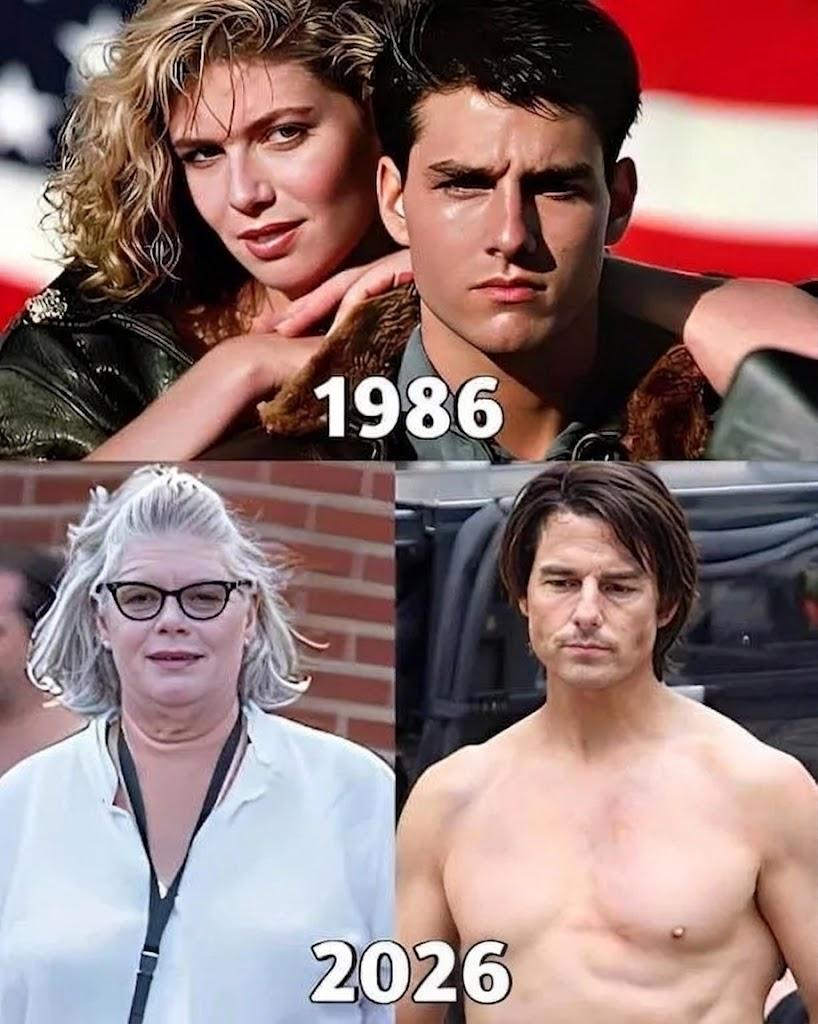
When Top Gun arrived in theaters in 1986, Kelly McGillis’ Charlie Blackwood was far more than the woman who caught Pete “Maverick” Mitchell’s attention.
She could challenge him.
Charlie was the civilian instructor who walked into the elite Navy fighter-weapons school with expertise Maverick could not simply charm his way around. Their relationship grew out of friction: he was reckless, competitive and convinced of his own instincts; she was intelligent, professionally established and perfectly willing to tell him when his flying crossed the line.
Paramount has continued to identify McGillis as one of the original film’s principal stars and Charlie as Maverick’s civilian instructor. Alongside Tom Cruise’s Maverick, Val Kilmer’s Iceman and Anthony Edwards’ Goose, she became part of the character chemistry that made Top Gun one of the defining blockbusters of the 1980s.
By the end of the film, Charlie and Maverick had found their way back to each other.
Then Hollywood waited 36 years to continue the story.
And when Top Gun: Maverick finally arrived in 2022, Charlie was nowhere to be found.
The Sequel Brought Back Iceman — but Not Charlie
Top Gun: Maverick was hardly afraid of nostalgia.
Tom Cruise returned, of course, now playing an older Maverick who had somehow remained a captain while many of his contemporaries advanced around him.
The sequel also built much of its emotional story around Goose’s legacy. Miles Teller played Goose’s son, Bradley “Rooster” Bradshaw, whose complicated relationship with Maverick gave the film one of its central conflicts.
Most significantly, Val Kilmer returned as Tom “Iceman” Kazansky.
The reunion between Maverick and Iceman became one of the film’s most emotional scenes, connecting the swaggering rivals of 1986 to two older men carrying decades of shared history.
But Charlie received no comparable return.
She is not brought into Maverick’s present-day story, and Kelly McGillis confirmed before the sequel’s release that she had not been asked to participate.
Director Joseph Kosinski later explained the broader creative thinking behind leaving both McGillis and Meg Ryan out of the sequel. He said those were not storylines the filmmakers had been pursuing and that he did not want every part of the movie continually looking backward. Introducing new characters, he said, was important.
That explanation makes sense when watching the finished film.
But there is a clever twist hidden inside it.
Because Maverick’s new love interest was not entirely new.

Penny Benjamin Had Been Waiting Since 1986
Jennifer Connelly plays Penny Benjamin in Top Gun: Maverick, a bar owner, sailor and single mother who clearly has a complicated history with Maverick.
Their relationship initially feels like something invented to show audiences what Maverick’s romantic life might look like decades after Charlie.
It wasn’t.
Penny Benjamin already existed in the original Top Gun.
Audiences just never saw her.
Early in the 1986 movie, Maverick and Goose are being reprimanded by their commander after Maverick disobeys orders to help another pilot return safely to the aircraft carrier.
The commander runs through Maverick’s disciplinary history, including his notorious high-speed passes over control towers.
Then comes another offense: an incident involving an admiral’s daughter.
Goose immediately knows the name.
“Penny Benjamin?”
Maverick’s reaction says plenty.
It lasts only seconds, but the movie has quietly established that before Charlie ever entered the picture, Maverick already had a memorable history with Penny.
And the reference does not end there.
Later, when Maverick spends time with Goose and Carole Bradshaw, Carole brings Penny up again, teasing Maverick about the stories Goose has told her. She refers to the time Maverick “went ballistic” with Penny Benjamin.
In 1986, it was essentially a character joke — another piece of evidence that Pete Mitchell had been causing trouble in the air and with women long before audiences met him.
More than three decades later, that tiny piece of dialogue became the foundation of an entire relationship.

The Sequel Turned a Throwaway Reference Into a Love Story
That choice allowed Top Gun: Maverick to do something unusually effective for a legacy sequel.
It could introduce Jennifer Connelly as someone audiences had never seen while still giving her character a history with Maverick stretching back before the original movie.
There was no need for Penny and Maverick to meet for the first time.
They already knew each other.
There was no need for a long explanation of why these two people were comfortable falling back into familiar rhythms.
Their shared past had been built into the franchise since 1986.
Connelly explained that Penny and Maverick were conceived as people who had dated when they were young and had repeatedly moved into and out of each other’s lives over the years.
That history also explains the tone of their relationship.
Penny does not behave like someone dazzled by the famous Navy pilot.
She knows him too well.
She can challenge him, embarrass him and recognize his patterns. She has an established life of her own, including her bar, her daughter Amelia and her love of sailing. Connelly described Penny as independent and adventurous — someone capable of being a genuine match for Maverick rather than simply following him into his world.
That gives the sequel’s romance an interesting balance.
It replaces Charlie without pretending Maverick has no past.
At the same time, it uses his past without simply recreating the romance audiences already watched.
Charlie and Penny Represent Two Different Mavericks
Charlie belonged to the Maverick of 1986.
Their attraction was inseparable from the young pilot’s ambition, arrogance and desire to prove that the rules did not quite apply to him.
Penny fits the older man.
By Top Gun: Maverick, Pete is still capable of breathtaking recklessness, but the movie is increasingly interested in what his lifestyle has cost him.
His career has stalled.
Goose’s death still follows him.
His relationship with Rooster has been badly damaged.
And his habit of never completely settling down no longer looks quite as glamorous at nearly 60 as it did when he was a young fighter pilot.
Penny therefore gives the film something Charlie could not automatically provide simply by returning: a relationship with roots in Maverick’s youth but unfinished business extending across much of his adult life.
The writers did not have to undo Charlie’s ending or invent a dramatic breakup scene.
They simply opened another door that the first movie had left slightly ajar.

Kelly McGillis Had Already Chosen a Different Life
McGillis, meanwhile, has spoken without much bitterness about the distance that eventually developed between her and Hollywood.
When discussing why she stepped away from the spotlight, she explained that it was not one dramatic decision to abandon acting.
Her priorities changed.
Raising her daughters and concentrating on her personal life became more important, she said, while relationships with other people came to matter more to her than her relationship with fame.
She also expressed support for Connelly receiving the opportunity to join the franchise.
In that sense, Charlie’s absence does not erase what Kelly McGillis brought to Top Gun.
The original romance remains part of Maverick’s story exactly where audiences left it.
But Top Gun: Maverick found a remarkably economical way to move forward.
It did not bring back the woman viewers remembered.
Instead, it went searching through a few seconds of dialogue from 1986 and found the woman they had never actually met.
Penny Benjamin had been part of Maverick’s past all along.
It simply took 36 years for her to walk onto the screen.