‘THE LEFT SIDE OF HER FACE WAS DEEP RED’: MOM VOWS TO RAISE HER BABY WITH A RARE PORT-WINE STAIN AS THE MOST CONFIDENT GIRL ON EARTH
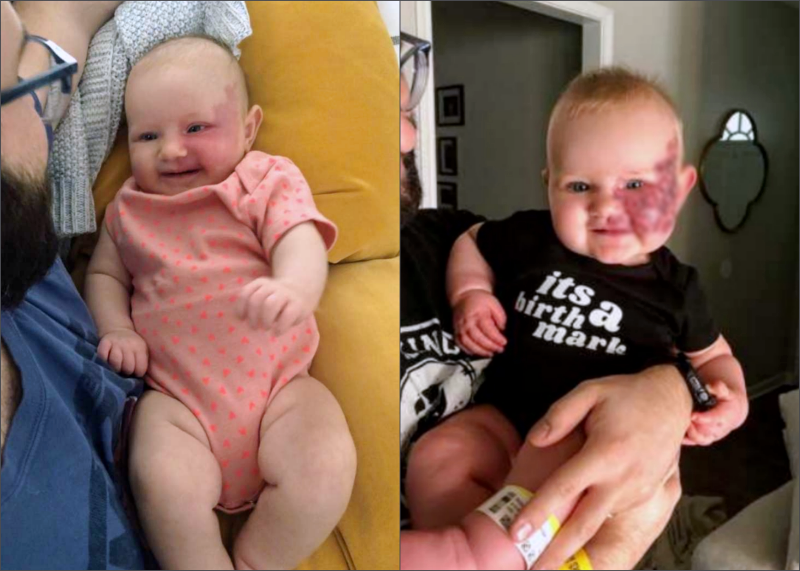
When Penelope Louise arrived in February, her mother Deborah expected nothing more than the joy of finally meeting the baby she had unexpectedly fallen completely in love with.
But moments after birth, she noticed something unusual.
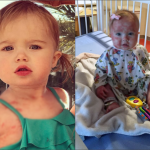
A deep red mark covered the left side of her newborn daughter’s face, stretching across part of her forehead and around her eye. At first, Deborah assumed it was simply bruising from birth.
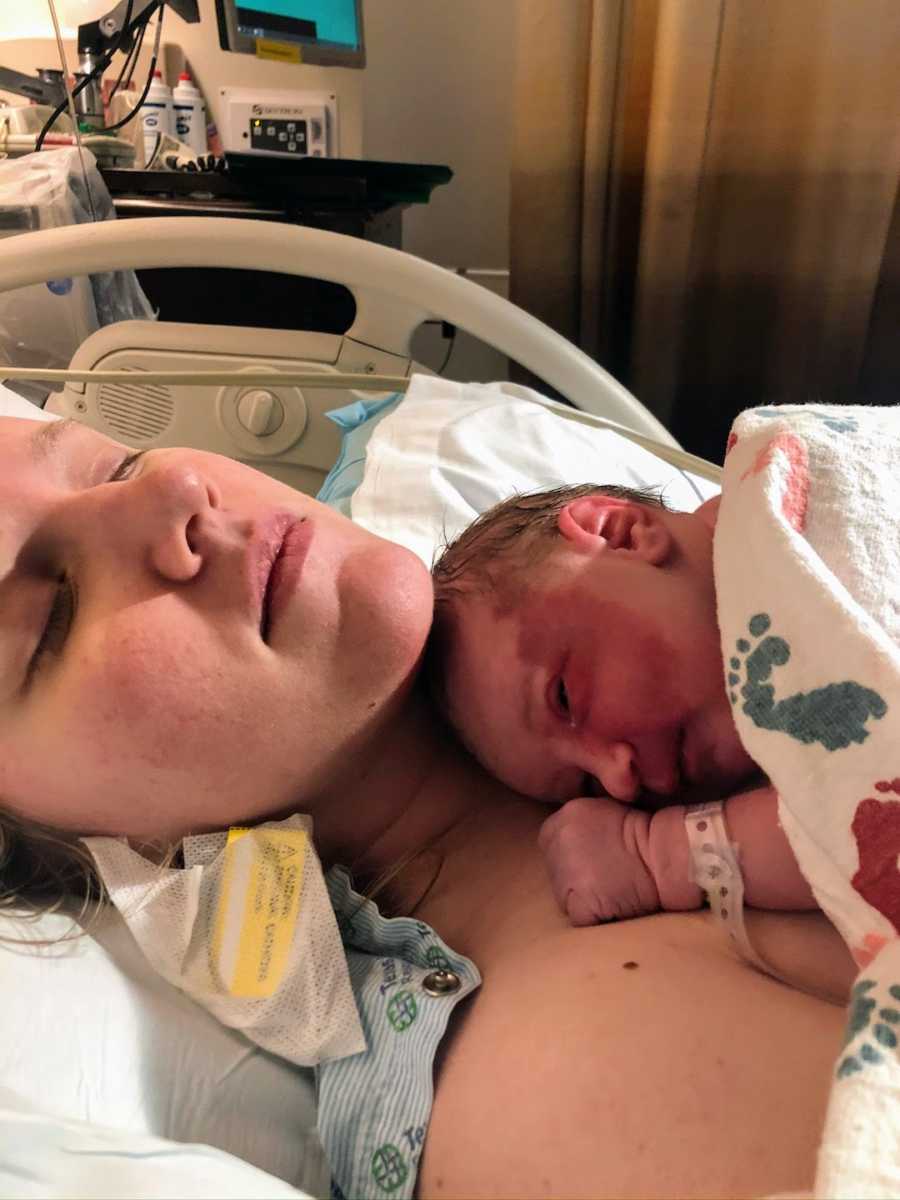
Then she heard nurses quietly discussing it.
One nurse reportedly said she did not think the mark would fade.
Deborah was still recovering from labor, holding her tiny daughter against her chest, when she was told that what she was seeing was actually a Port Wine Stain — a type of birthmark that can become more noticeable as a child grows.
“I told them I didn’t care if the ‘bruise’ was permanent because I loved her just the way she was,” Deborah recalled.
But the family soon learned there was more to consider than appearance.
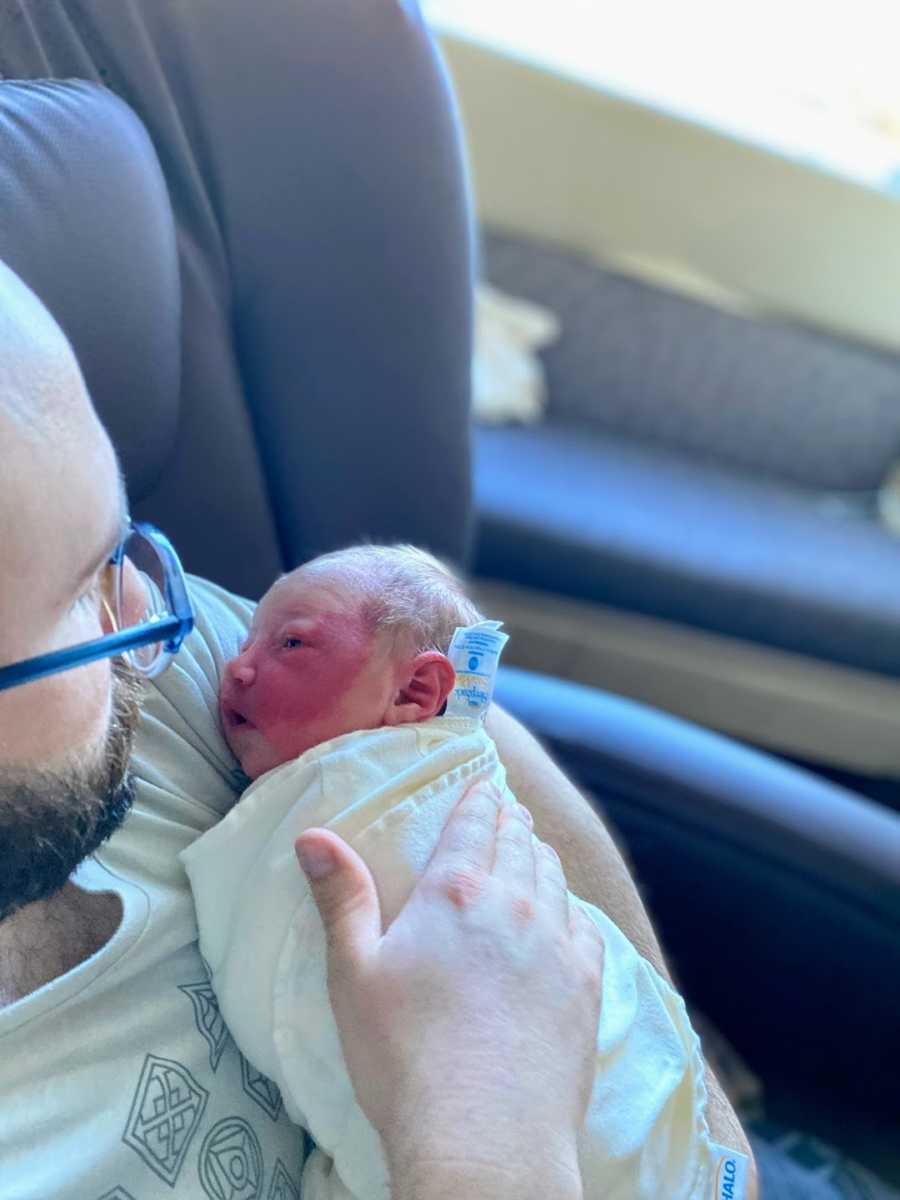
Because Penelope’s birthmark extended over her forehead and eye, doctors recommended regular eye examinations to monitor for glaucoma. They also discussed the possibility of an MRI to check for signs associated with Sturge-Weber syndrome.
Laser treatment was recommended to help manage the affected skin, with specialists suggesting Penelope could eventually need several treatments.
Then the COVID-19 pandemic arrived.
Medical appointments became increasingly difficult to arrange, and Penelope’s first treatment was repeatedly postponed. Each delay was emotionally difficult for her parents, who were already trying to navigate new parenthood while worrying about their daughter’s future.
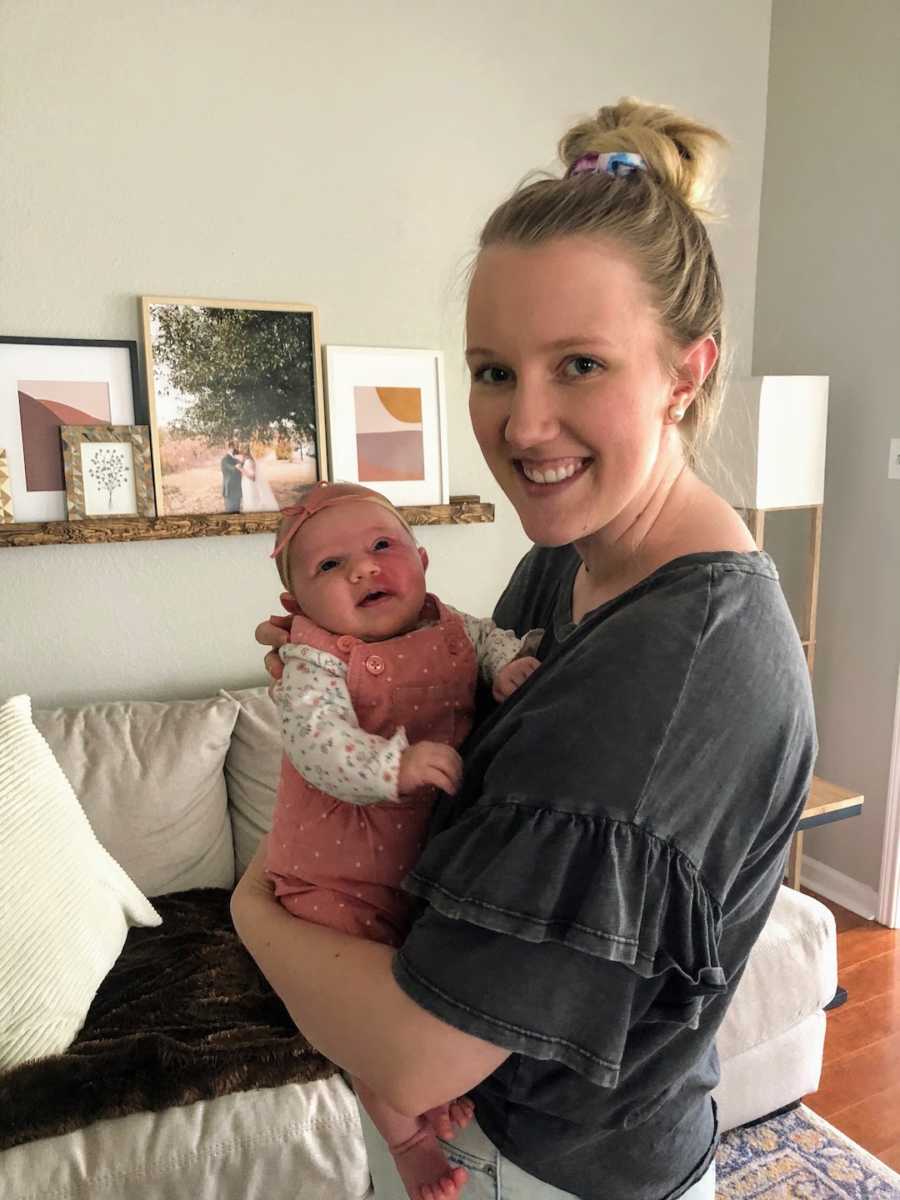
“I hated that she had to face medical appointments and possible discomfort so early in life,” Deborah shared. “I wished I could take all of that uncertainty away from her.”
Yet while the appointments were delayed, something beautiful was happening at home.
Deborah was getting to know the little girl behind the birthmark — her personality, her laughter, her determination to crawl, and all the tiny moments that made her daughter uniquely Penny.
Her family also began thinking about the world she would grow up in.

Deborah worried about people staring or asking insensitive questions. More than anything, she wanted Penelope to grow up confident and never believe that looking different made her any less beautiful or worthy.
“I want to raise the most confident girl to ever walk the planet,” she said. “I want her to know that I love her fiercely.”
Eventually, Penelope was able to begin laser treatment.
And the moment her parents had feared turned out to be far less frightening than they imagined.
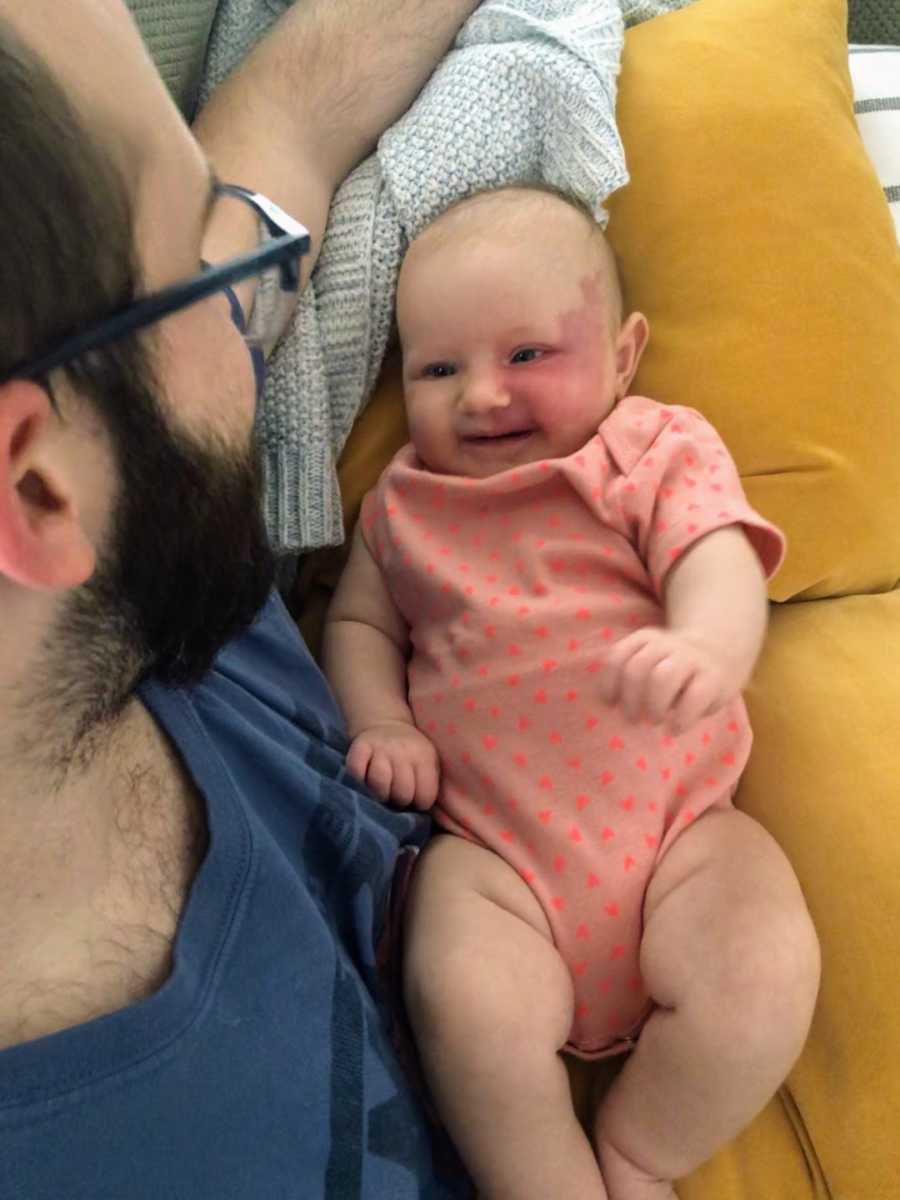
After her first treatment, Penny was smiling almost immediately.
“She handled it much better than her dad and I did,” Deborah said with a laugh.
At seven months old, Penelope continued to show no signs of glaucoma or brain involvement, while her first treatment was already showing promising results.
Her parents knew there would be more appointments and more uncertainty ahead, but they were learning to focus on the present rather than every possible “what if.”
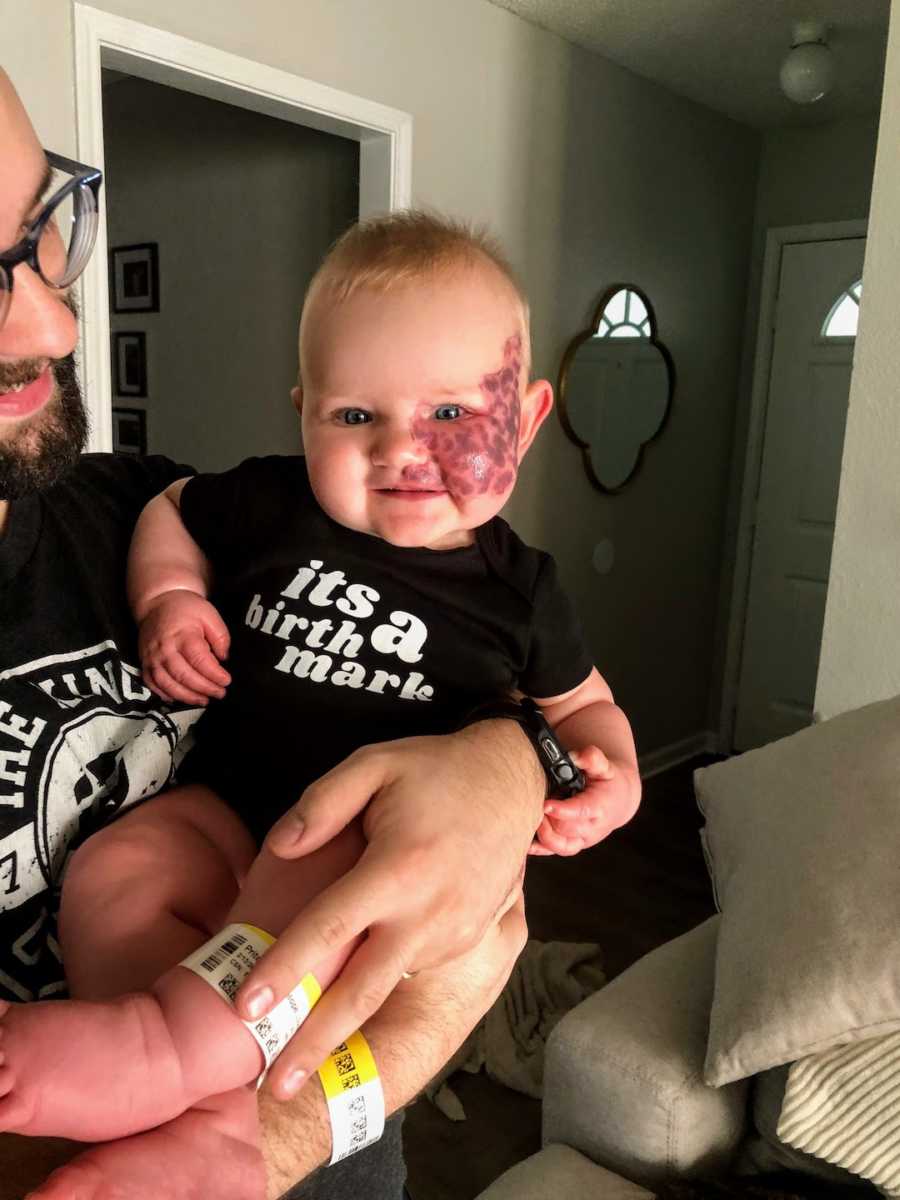
“We still don’t know why Penny was born with her birthmark,” Deborah said. “But we know we’ve been entrusted with her precious life, and we want to teach her to love every part of who she is.”
For Deborah, the journey has changed her, too.
Watching Penelope grow has taught her that progress does not always mean a dramatic medical breakthrough. Sometimes, it is simply a baby giggling in her grandfather’s arms, learning to sit, trying to crawl, making a mess with her food — and reminding her family that today is worth celebrating.
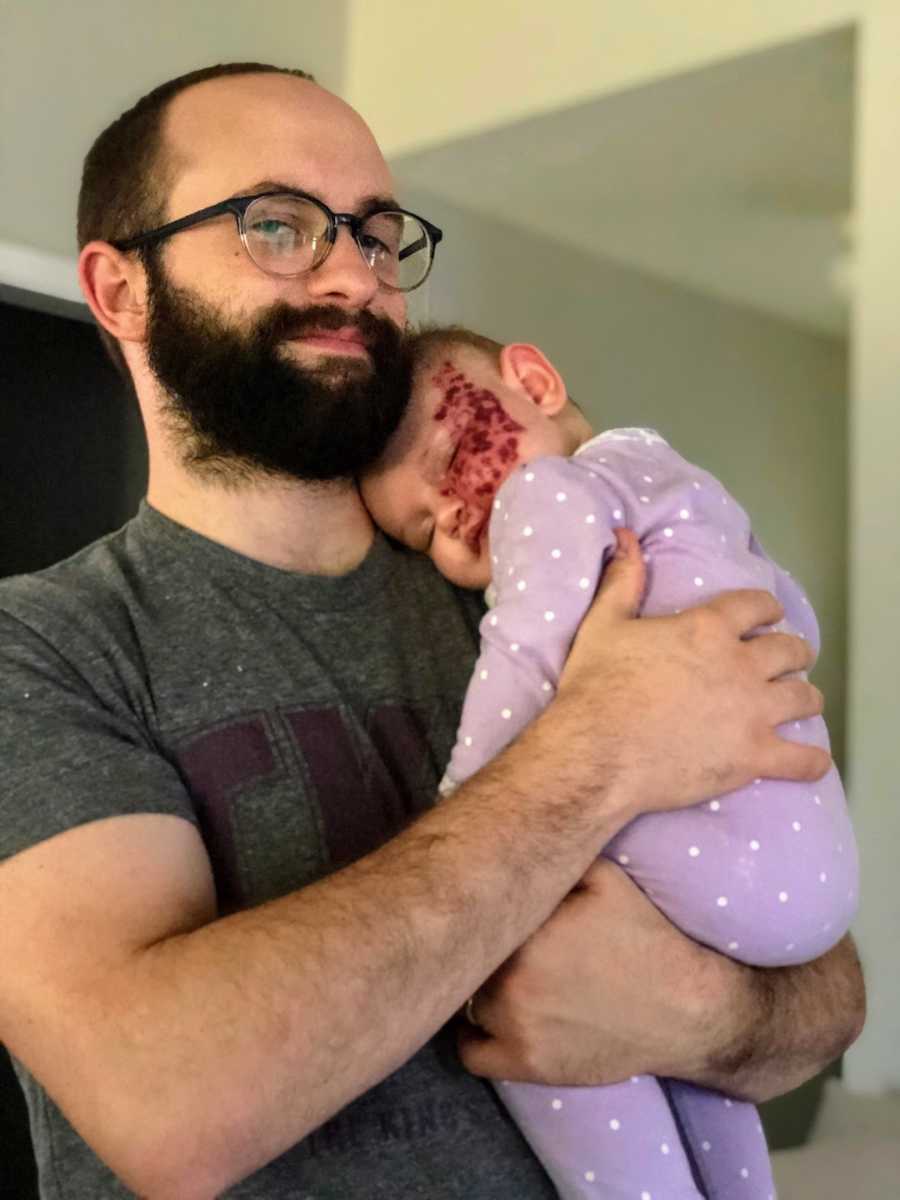
“Just like Penny’s birthmark is progressive, so are she and I,” Deborah reflected.
“And so is our world.”